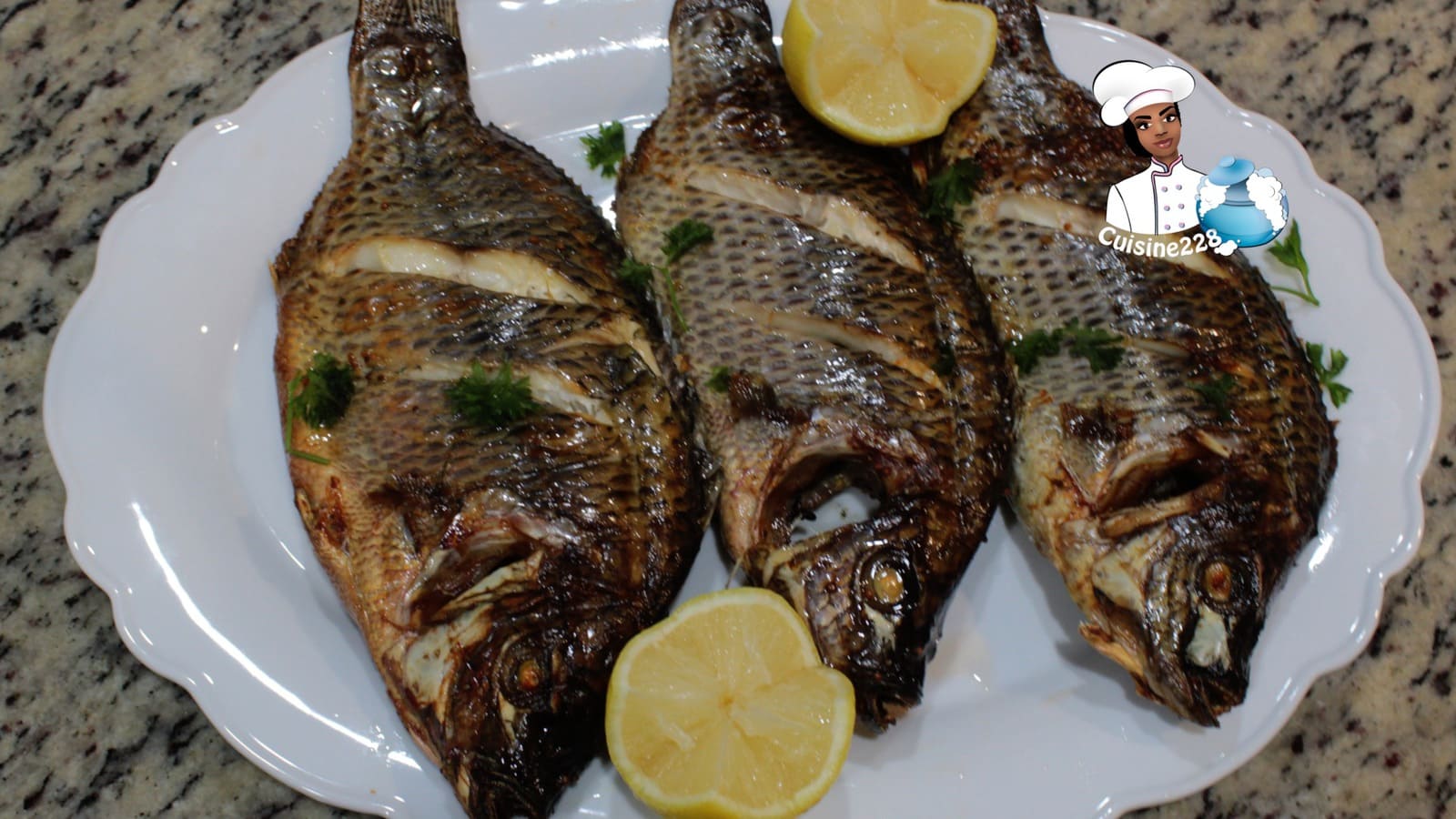
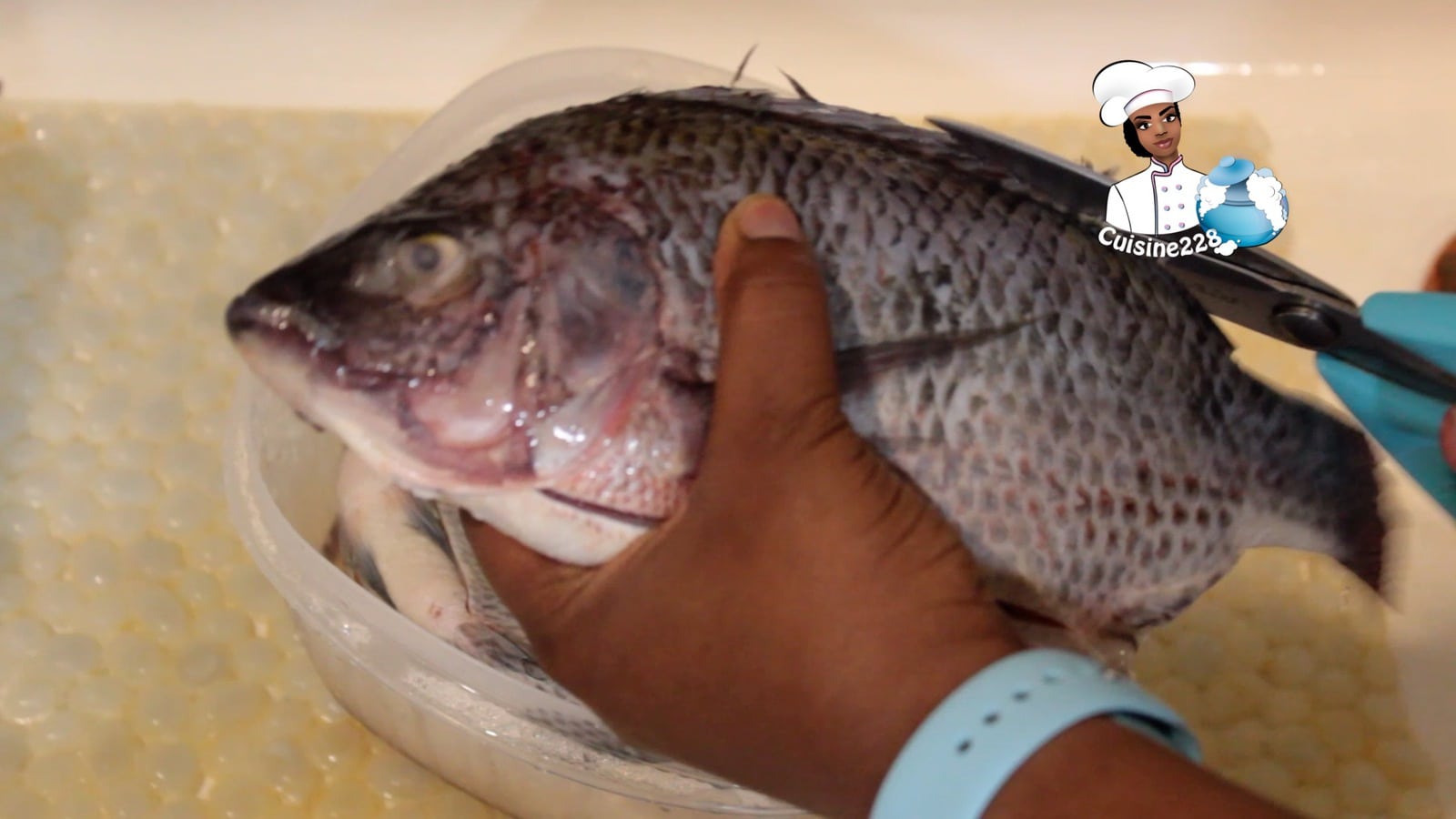
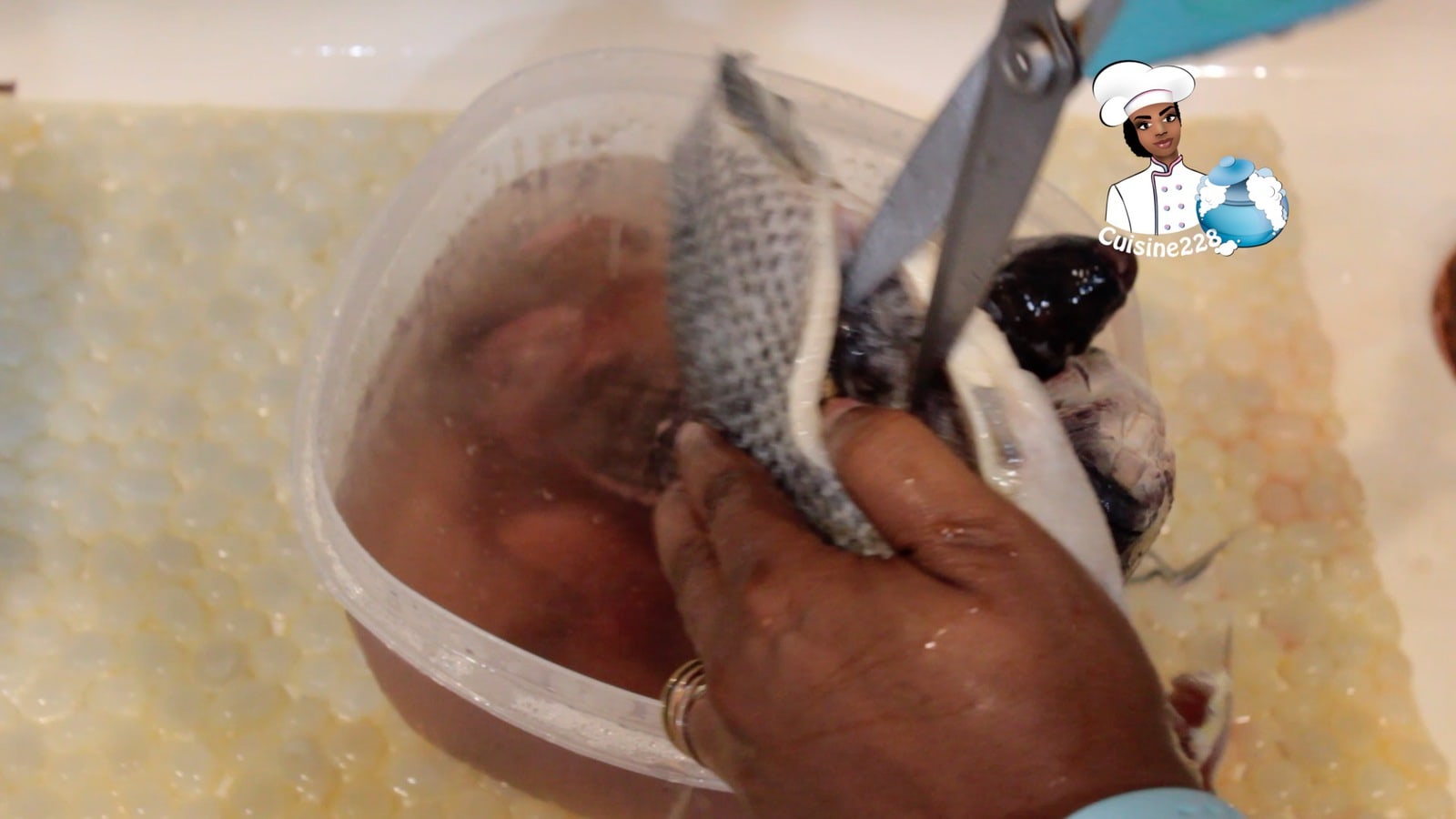
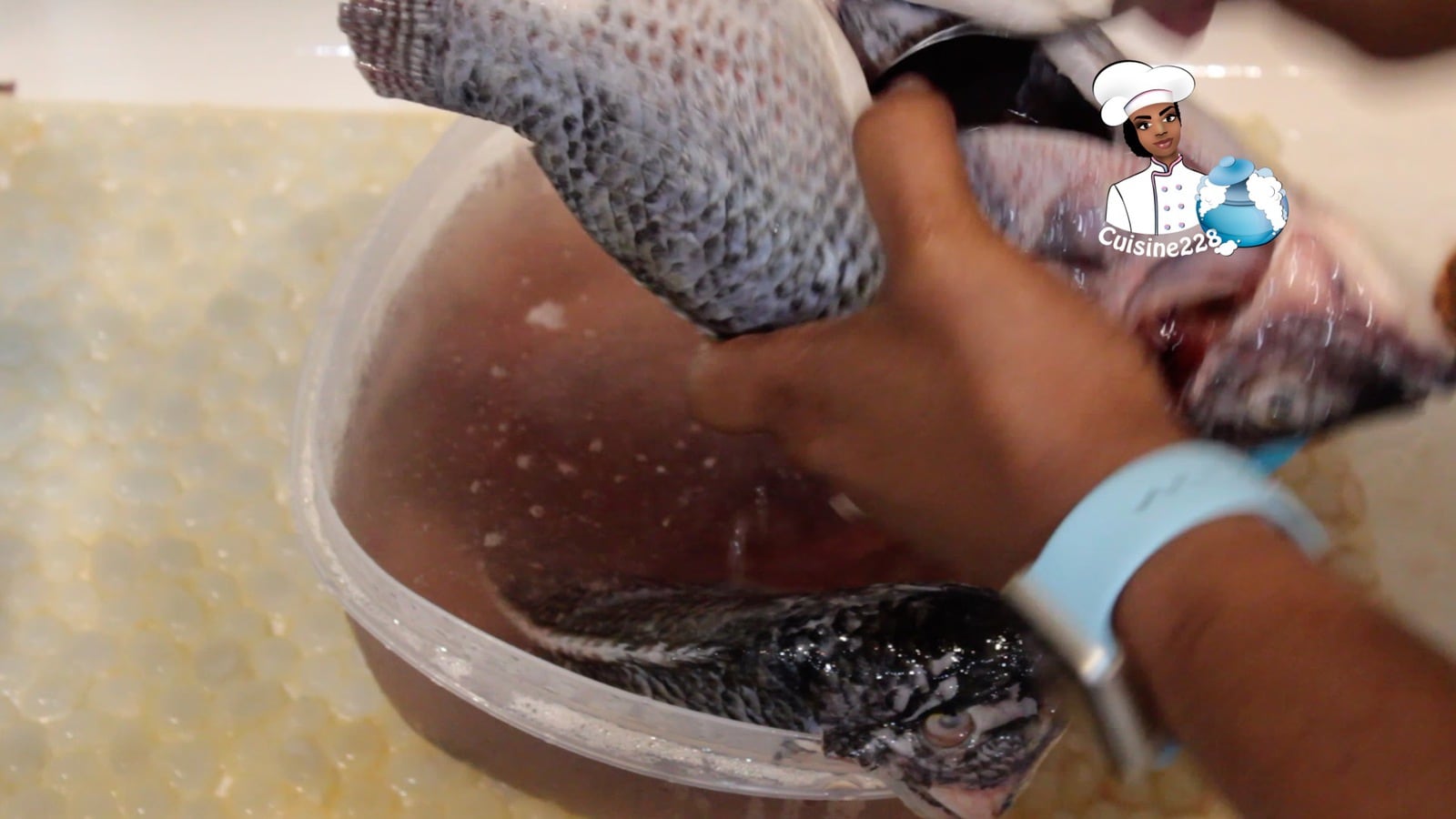
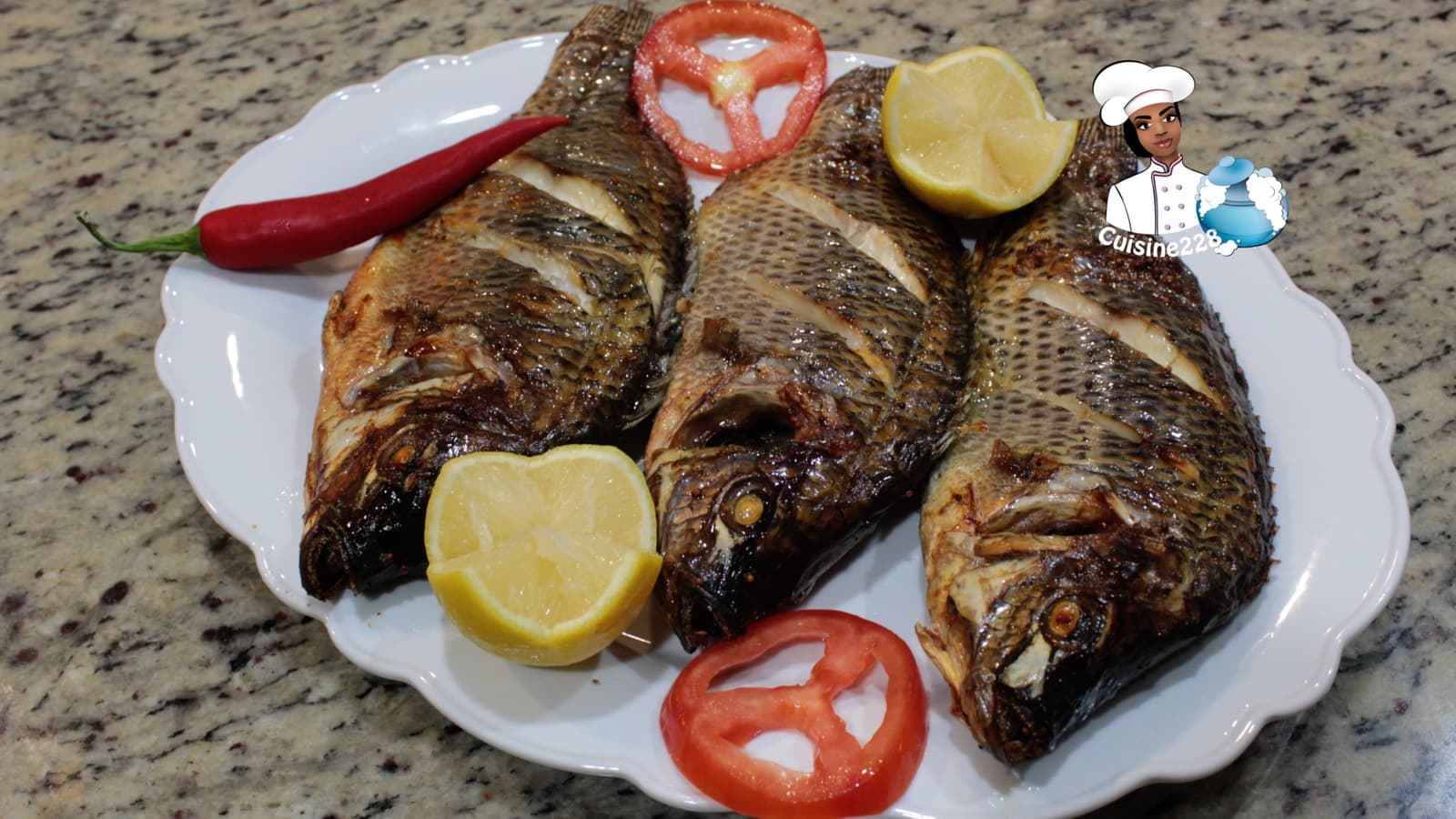
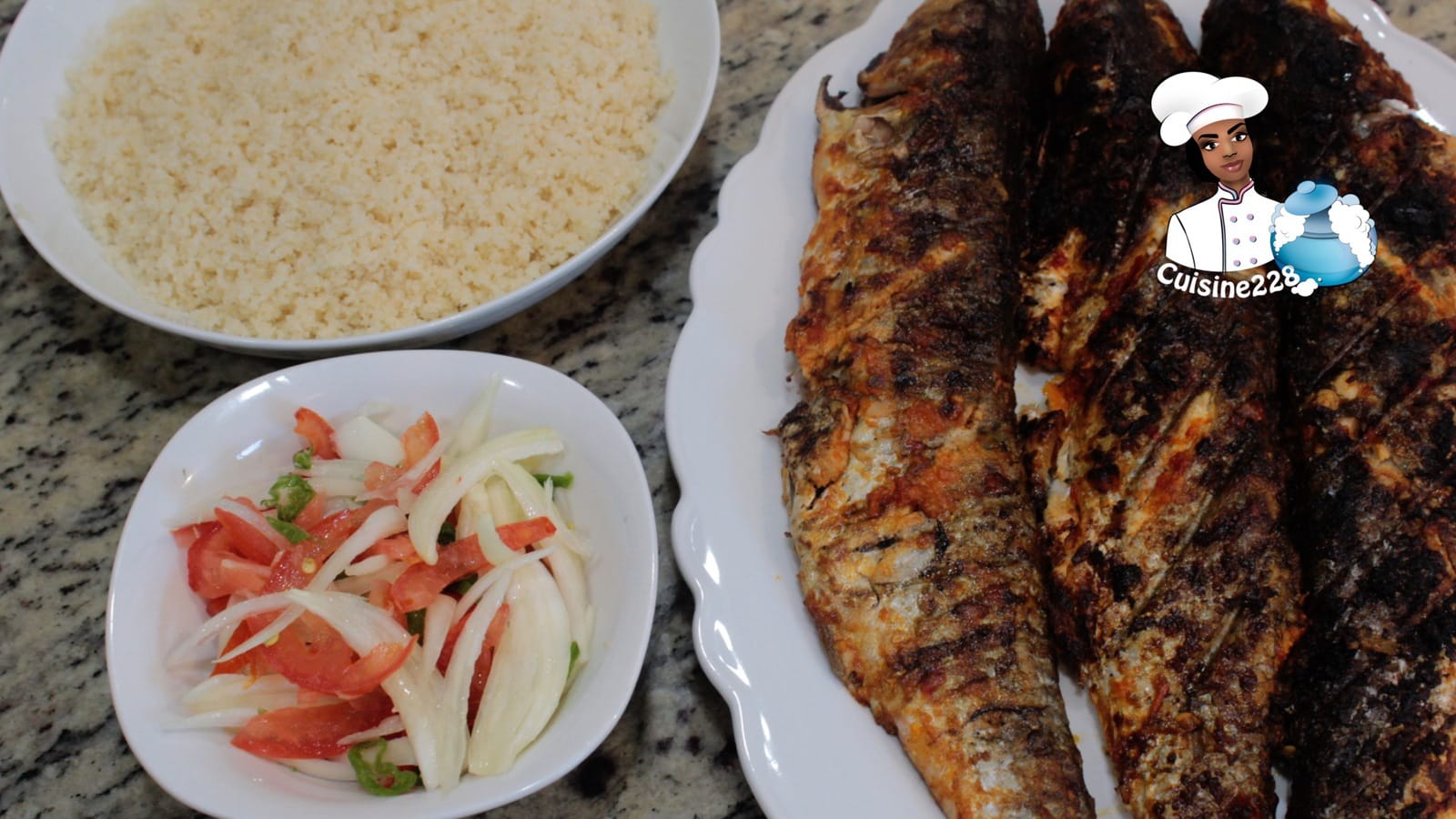
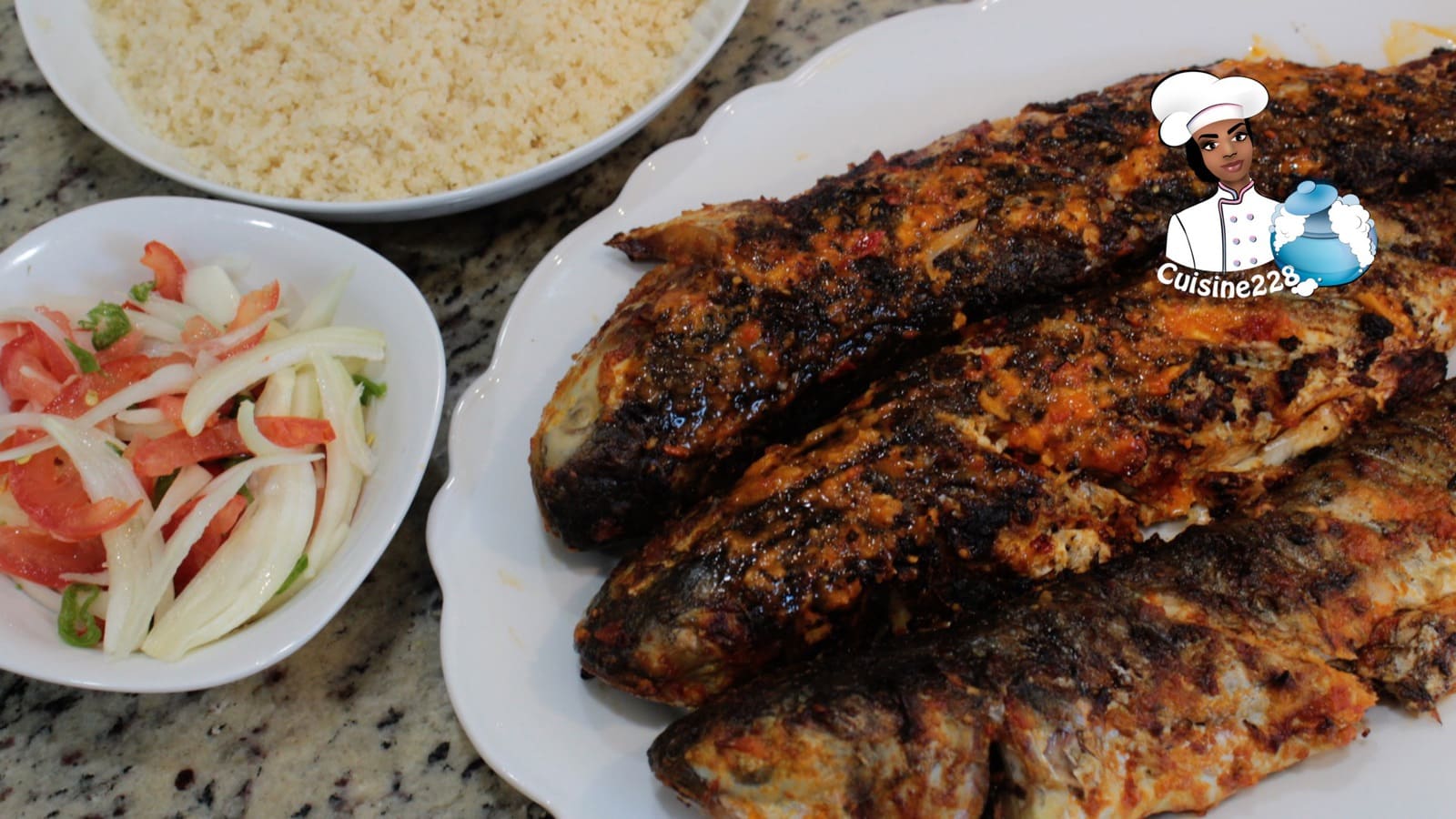
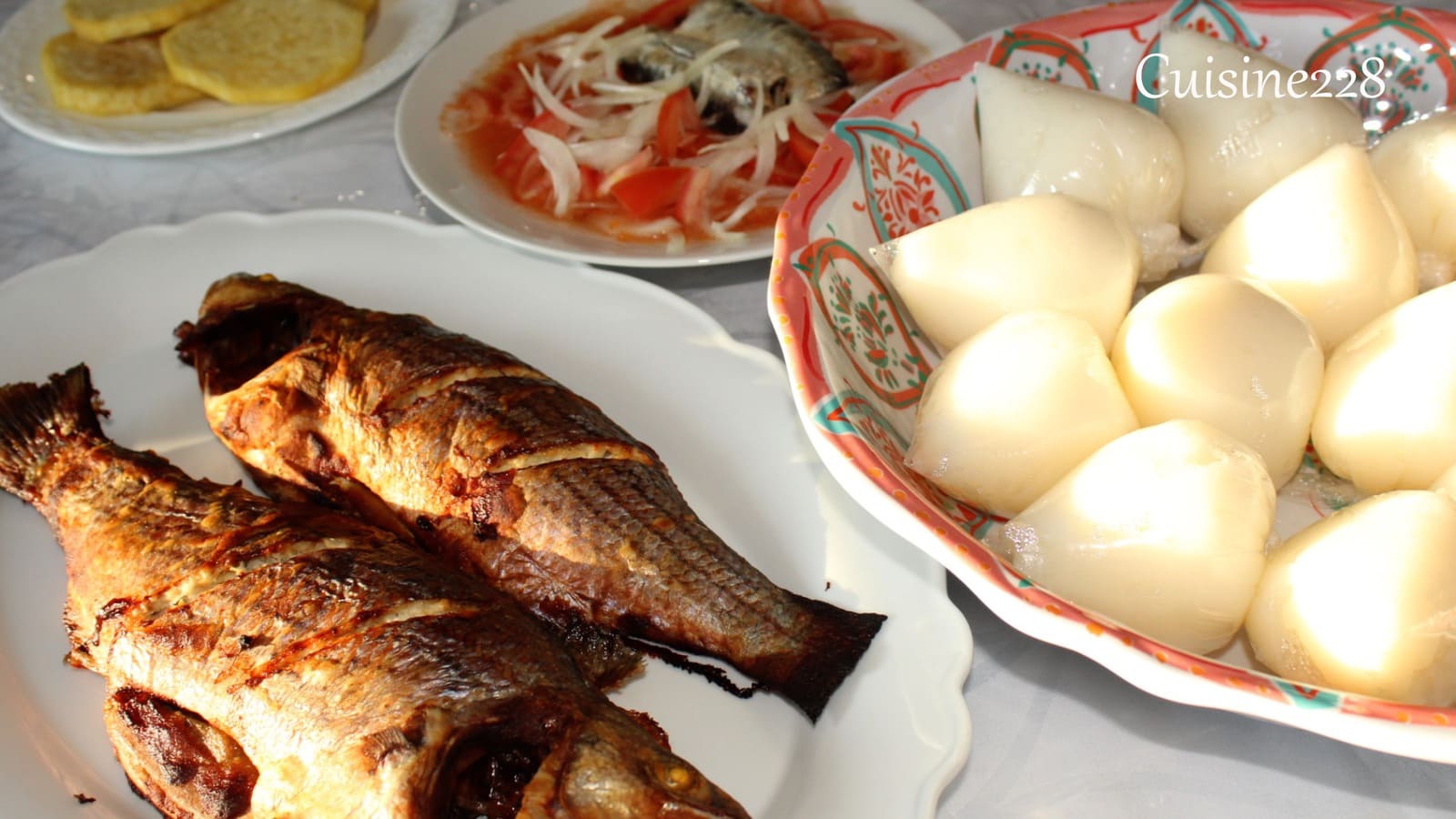
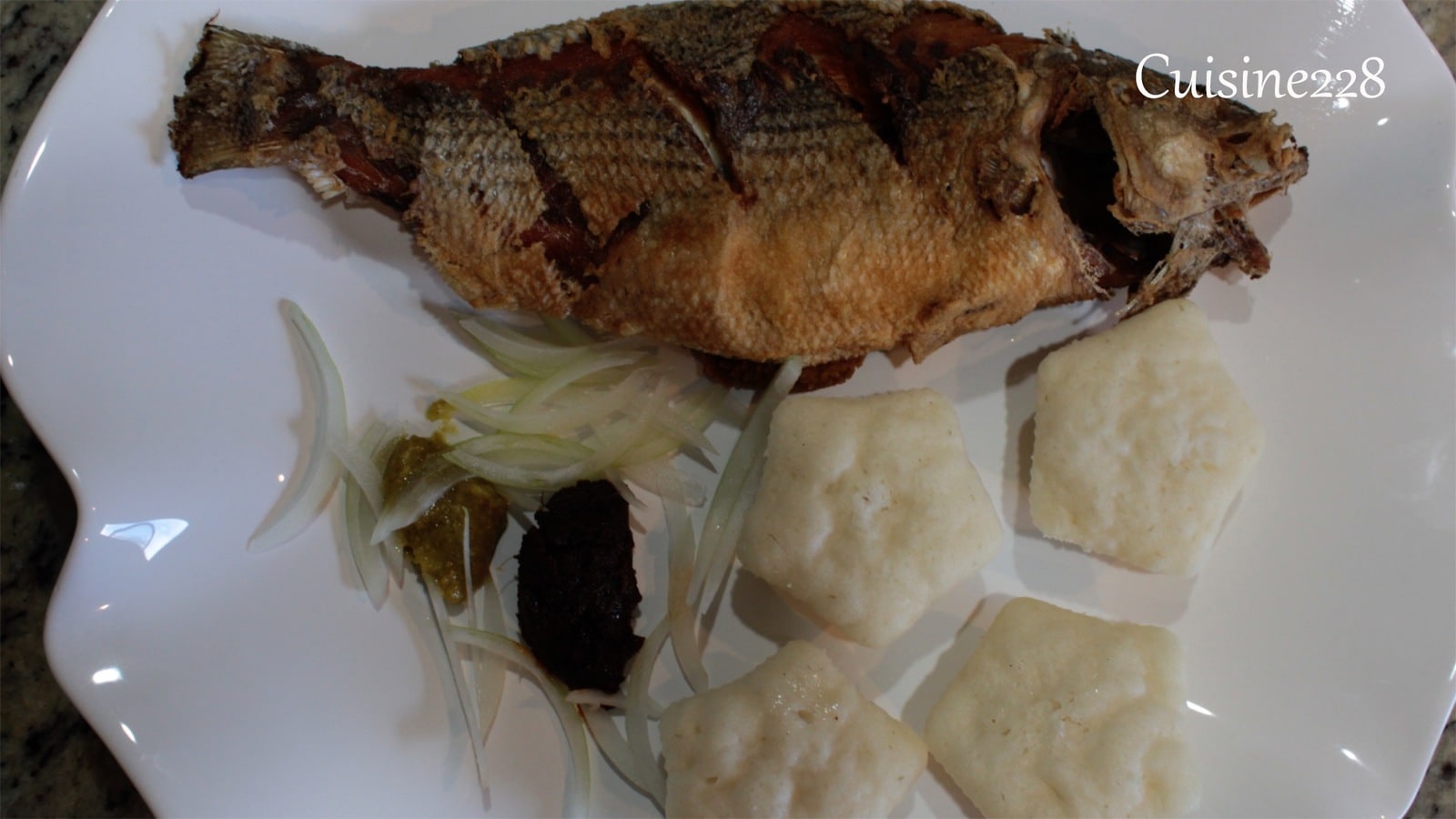
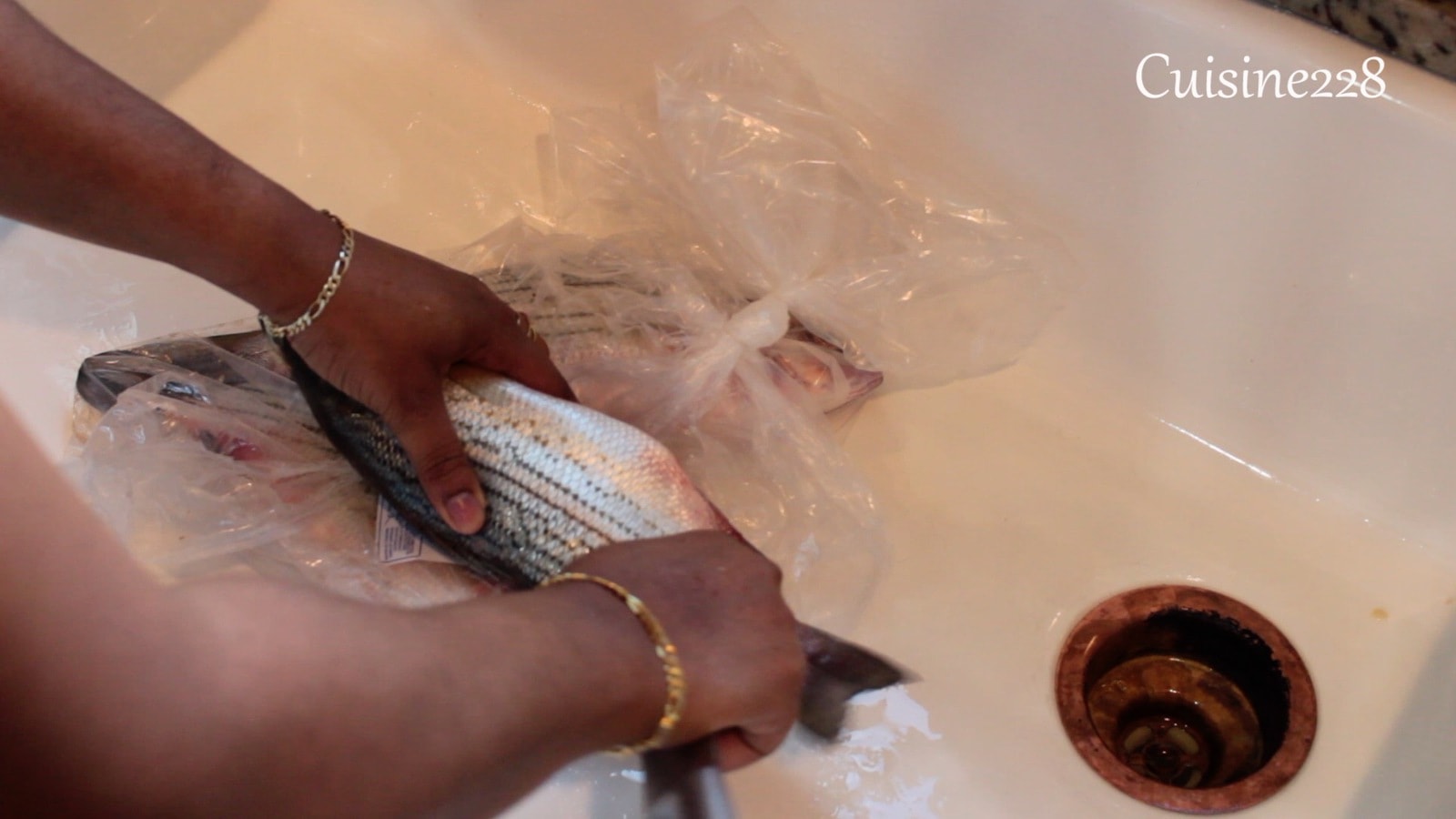
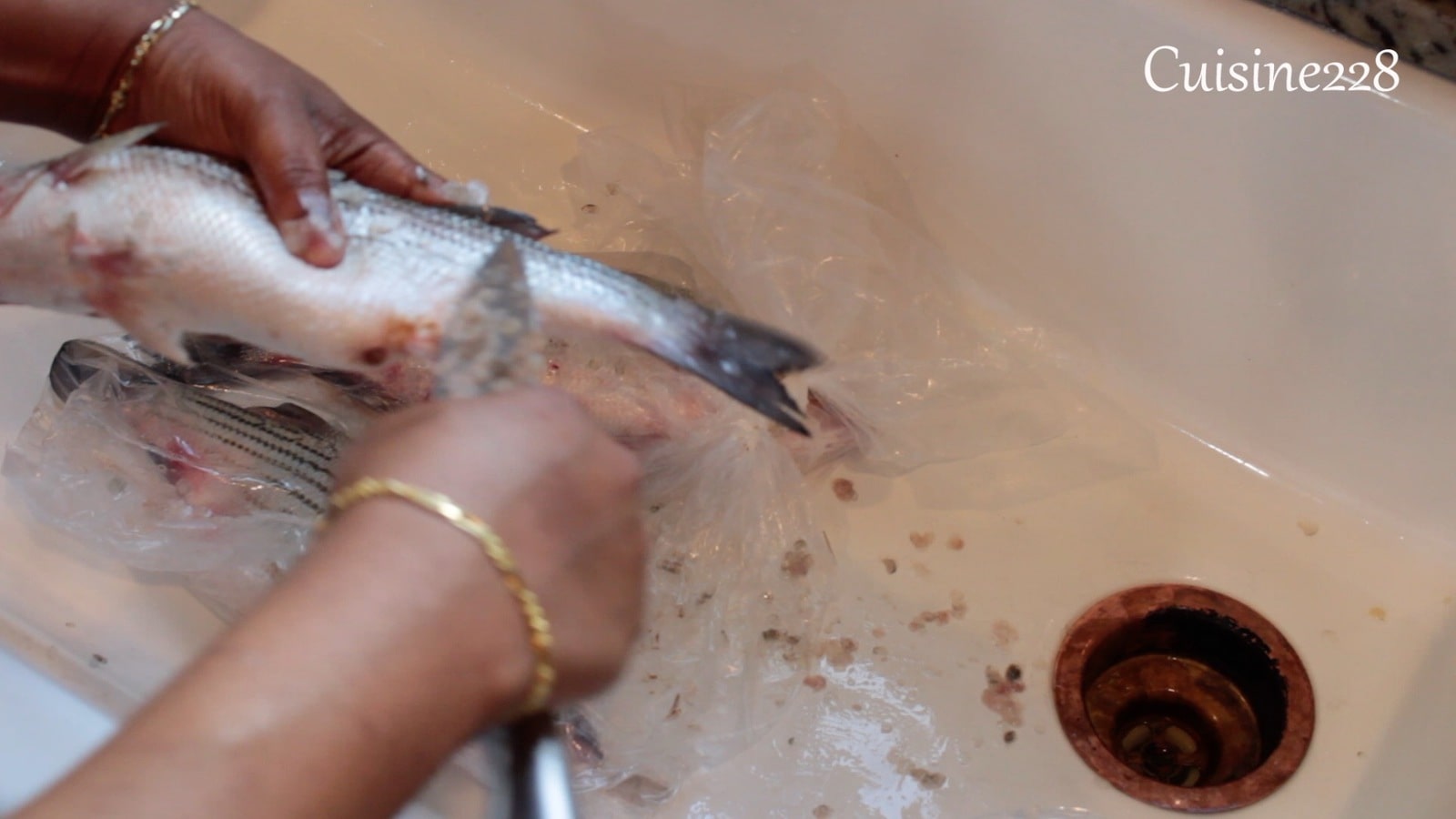
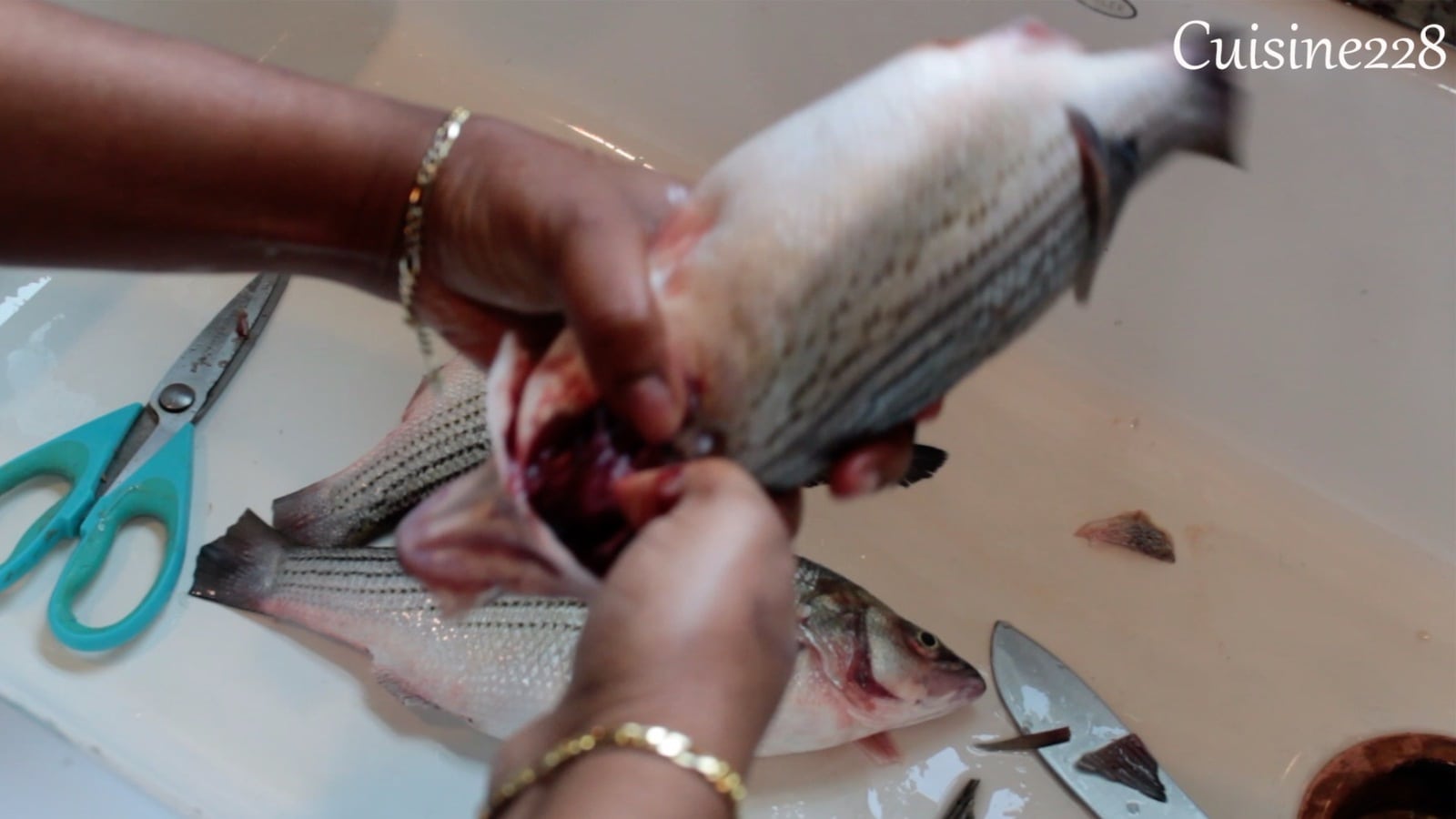
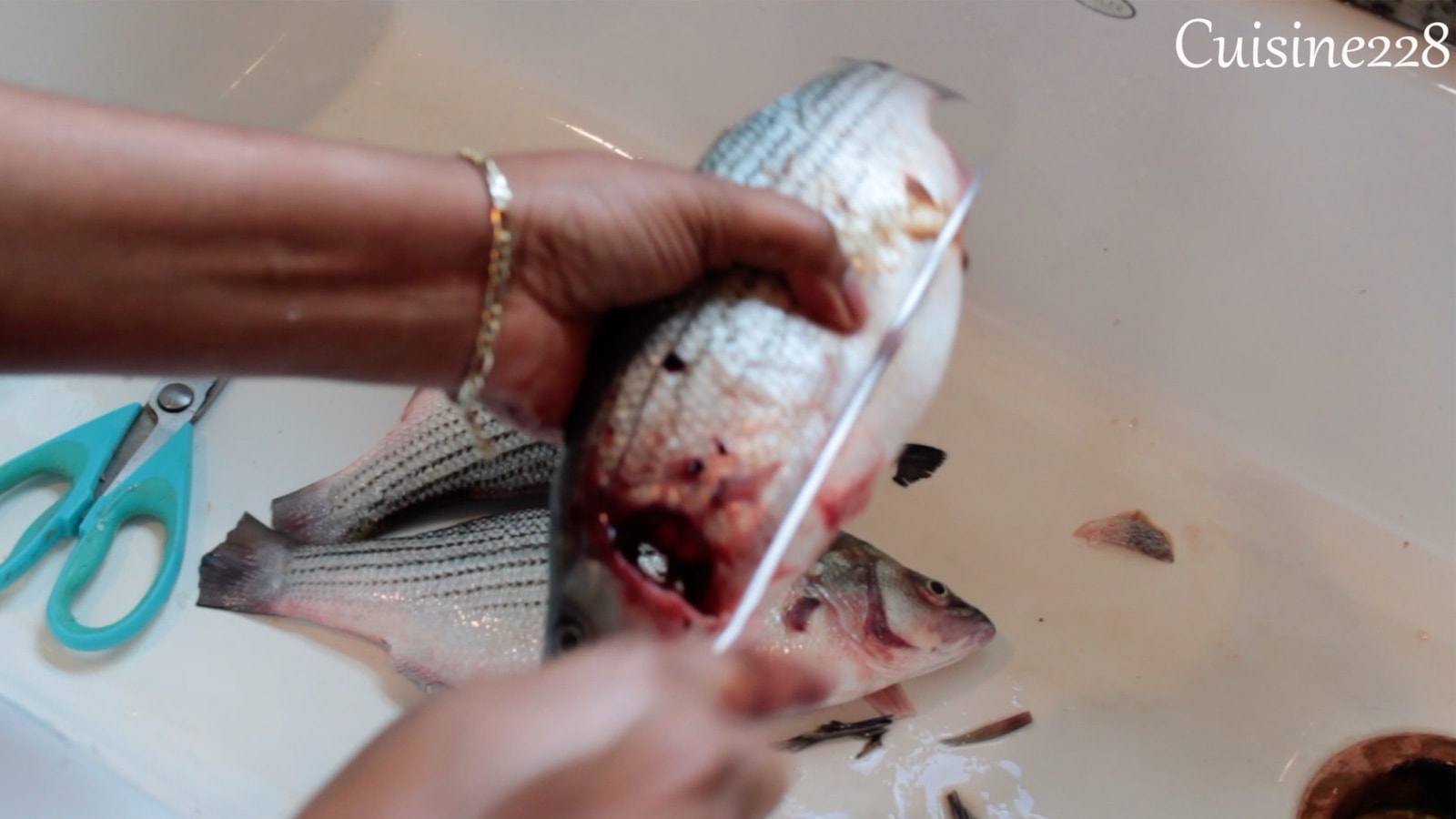
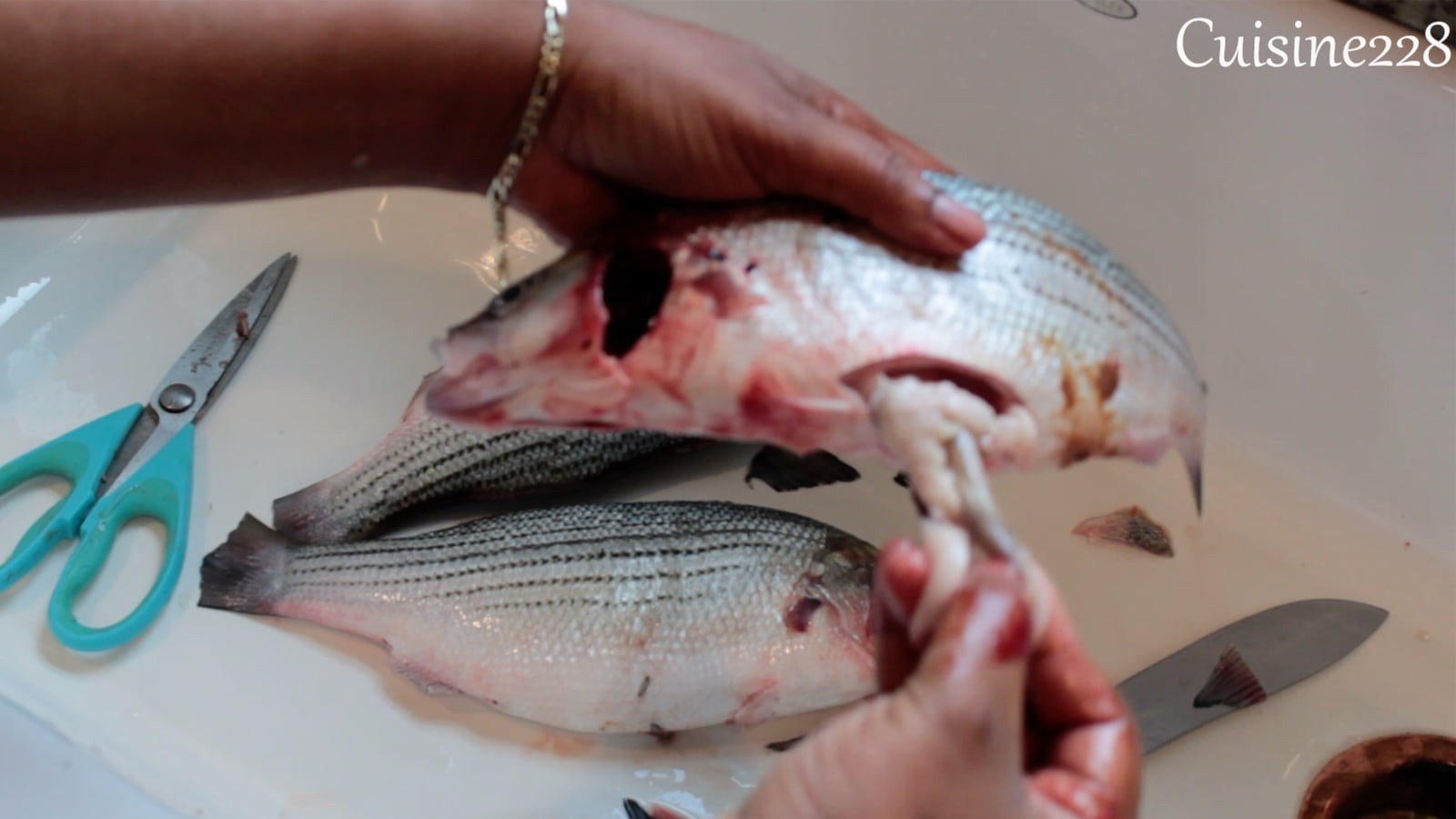
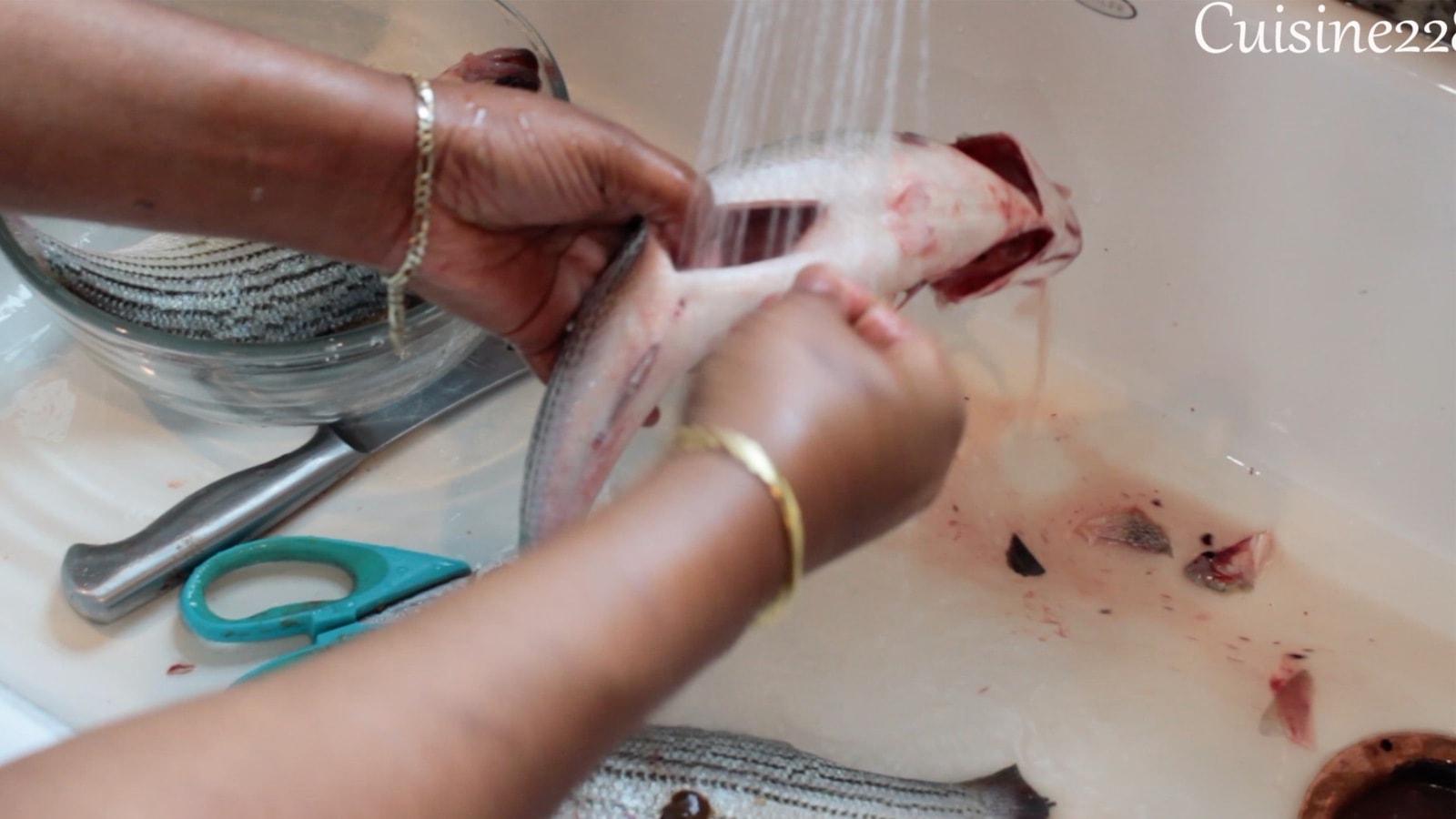
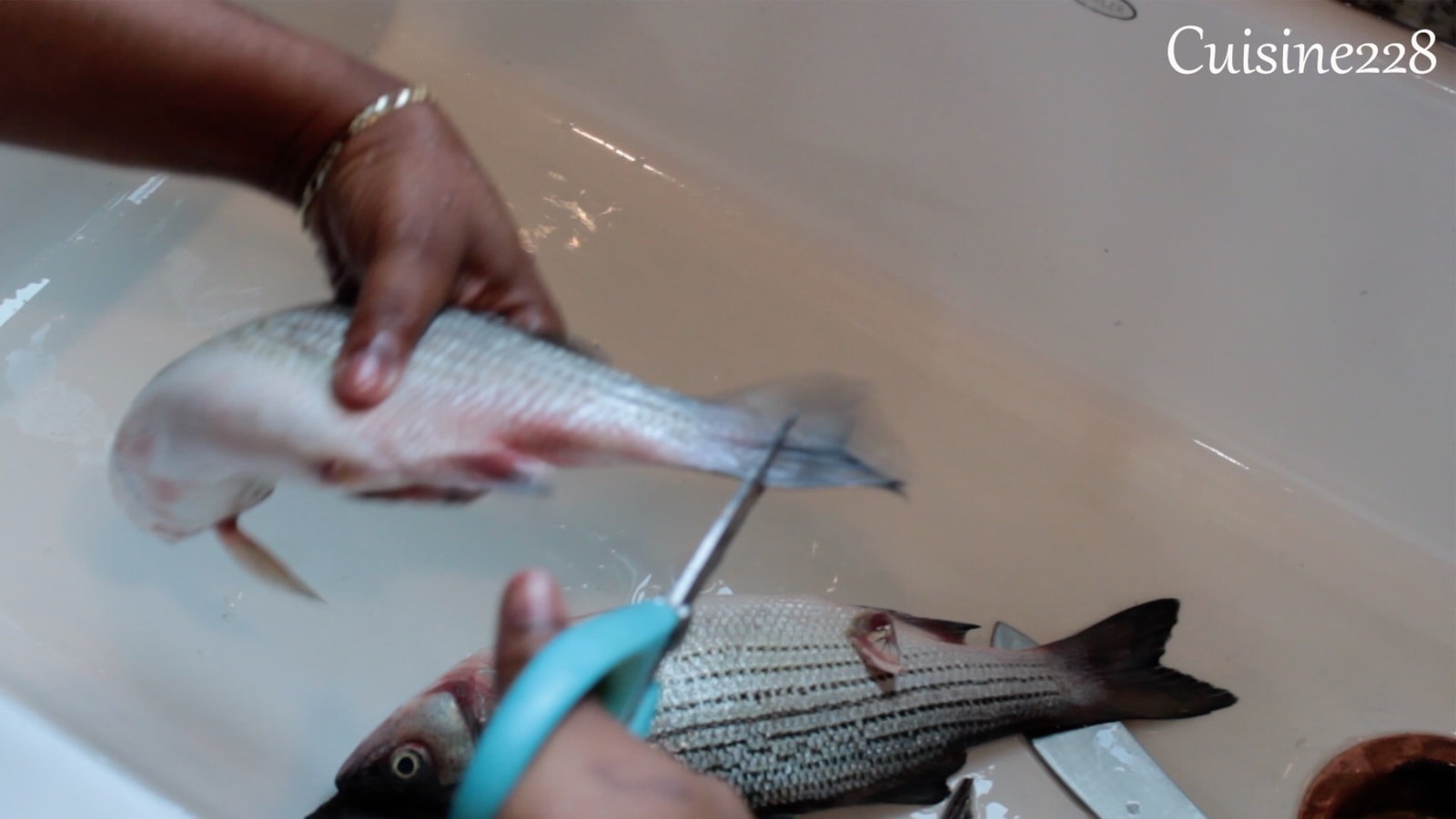
The secrets of a good braised tilapia are the cleaning and seasoning of tilapia. Cleaning the tilapia is quite simple, although it is not always pleasant.
3 tilapia
2 allspice
2 cloves
7-10 cloves of garlic
1 teaspoon mustard
1 teaspoon mustard grain
1 cube
1/4 cup oil
Salt
Clean the fish:
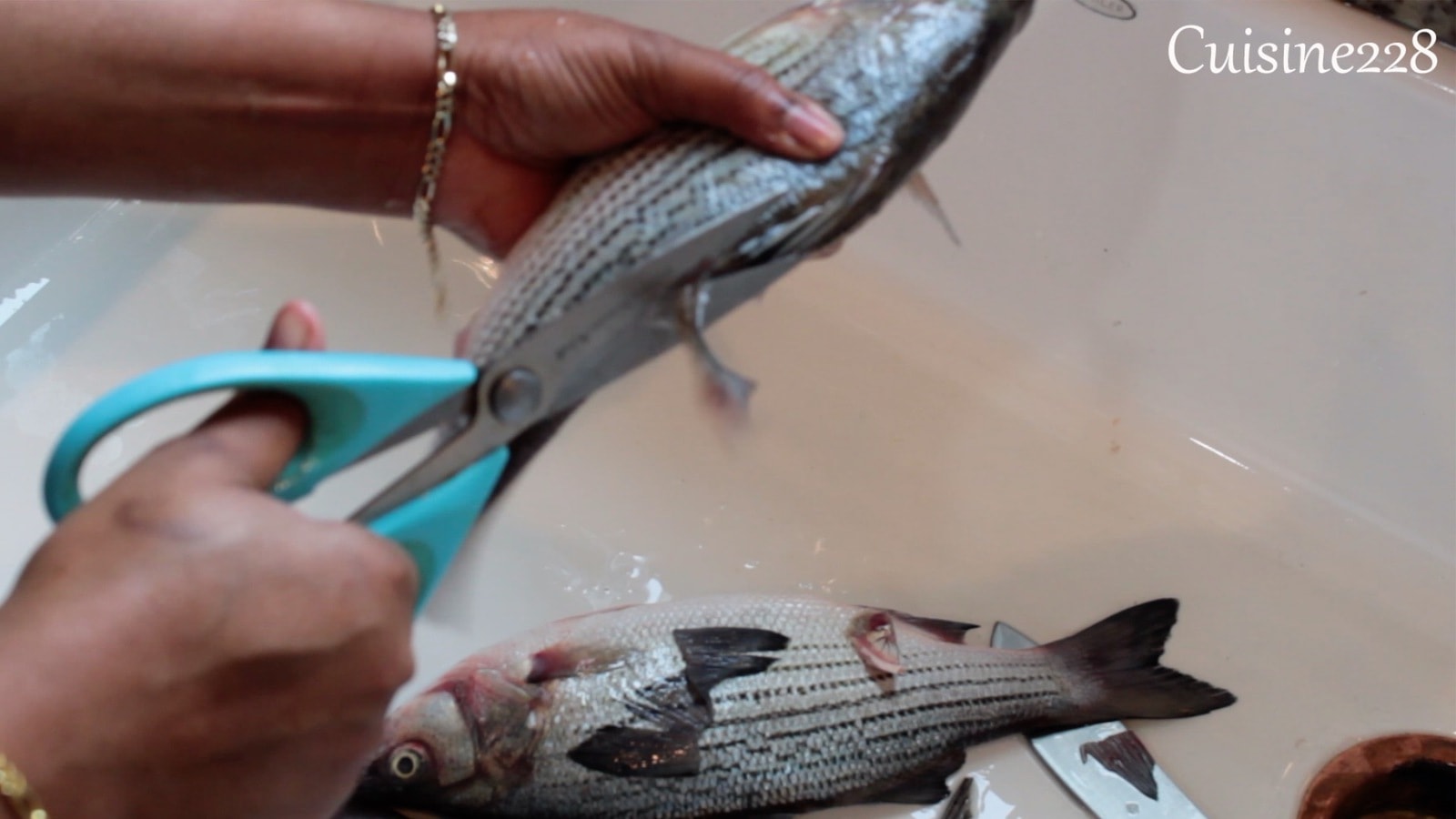
Use a dull knife or spoon to remove the scales on both sides
Make a small hole on the belly of the fish and use your fingers or a dull spoon to scoop out the fish’s innards and don’t miss dark kidney in the back or some strands of innards along the walls
Clean the inside of the head of the fish.
Remove a dorsal fin by pulling firmly from tail to head.
Rinse the fish off, inside and out, in cool water with vinegar (or Lemon Juice) to remove any slim or bad odor of the fish.
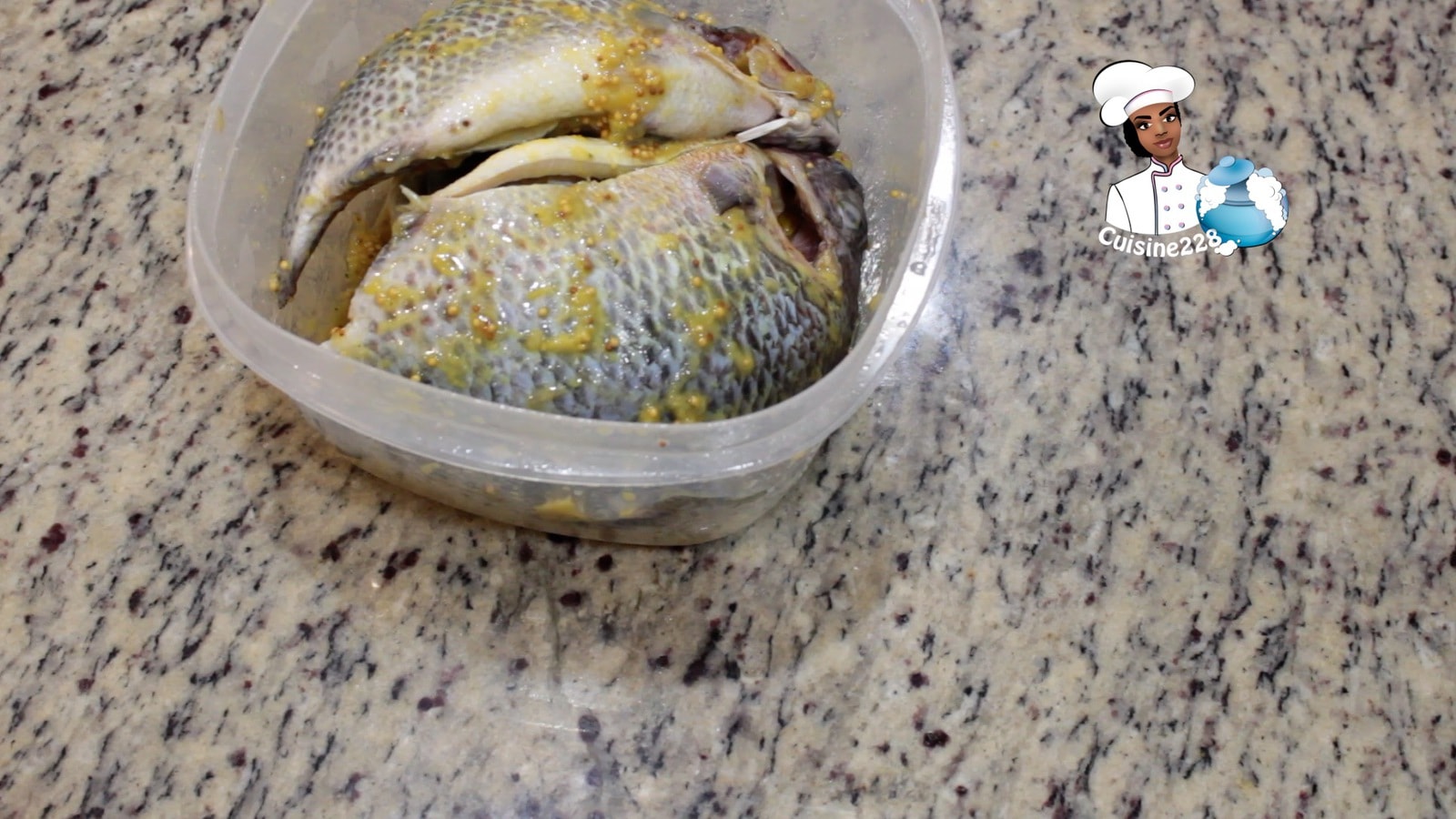
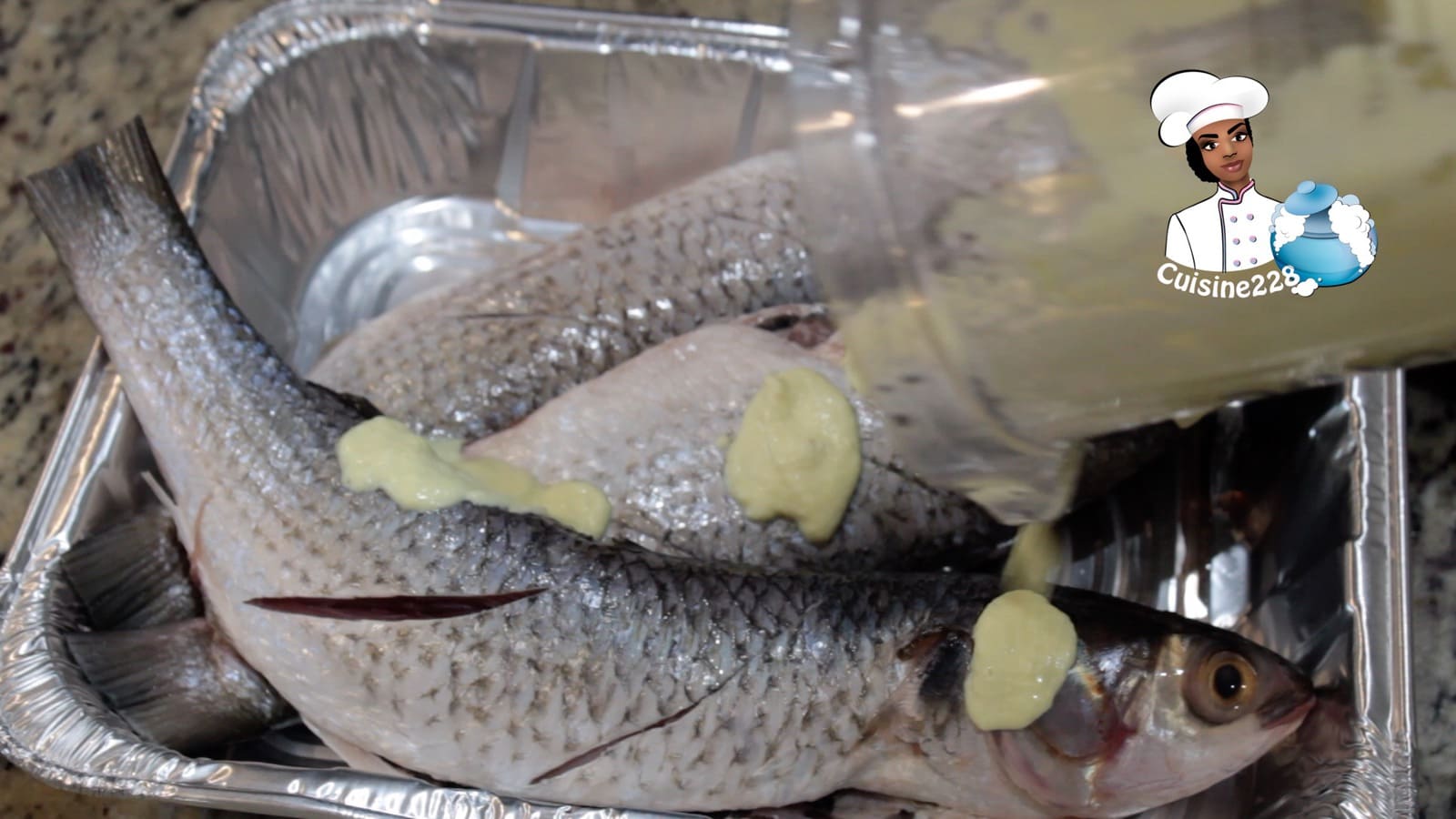
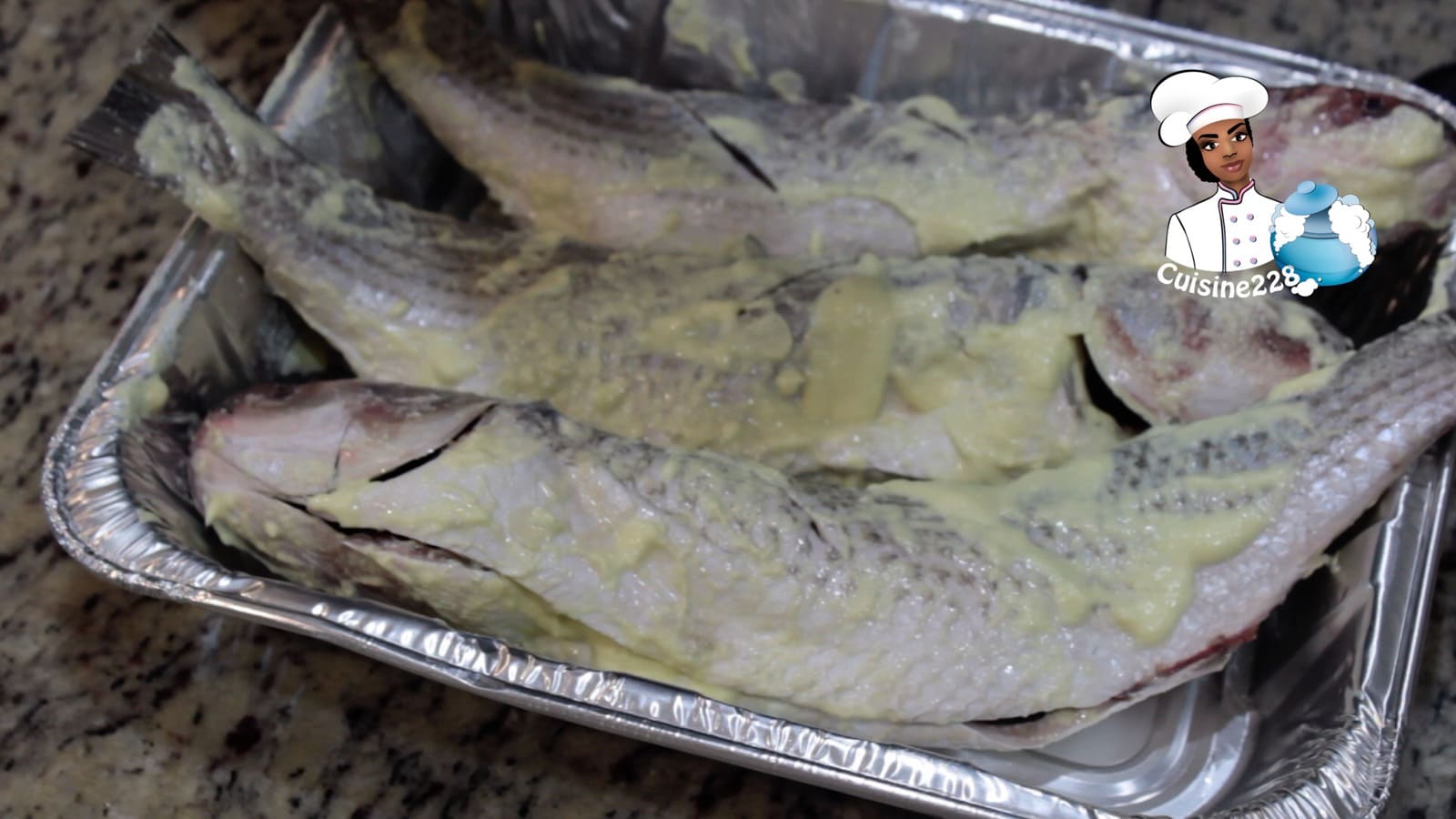
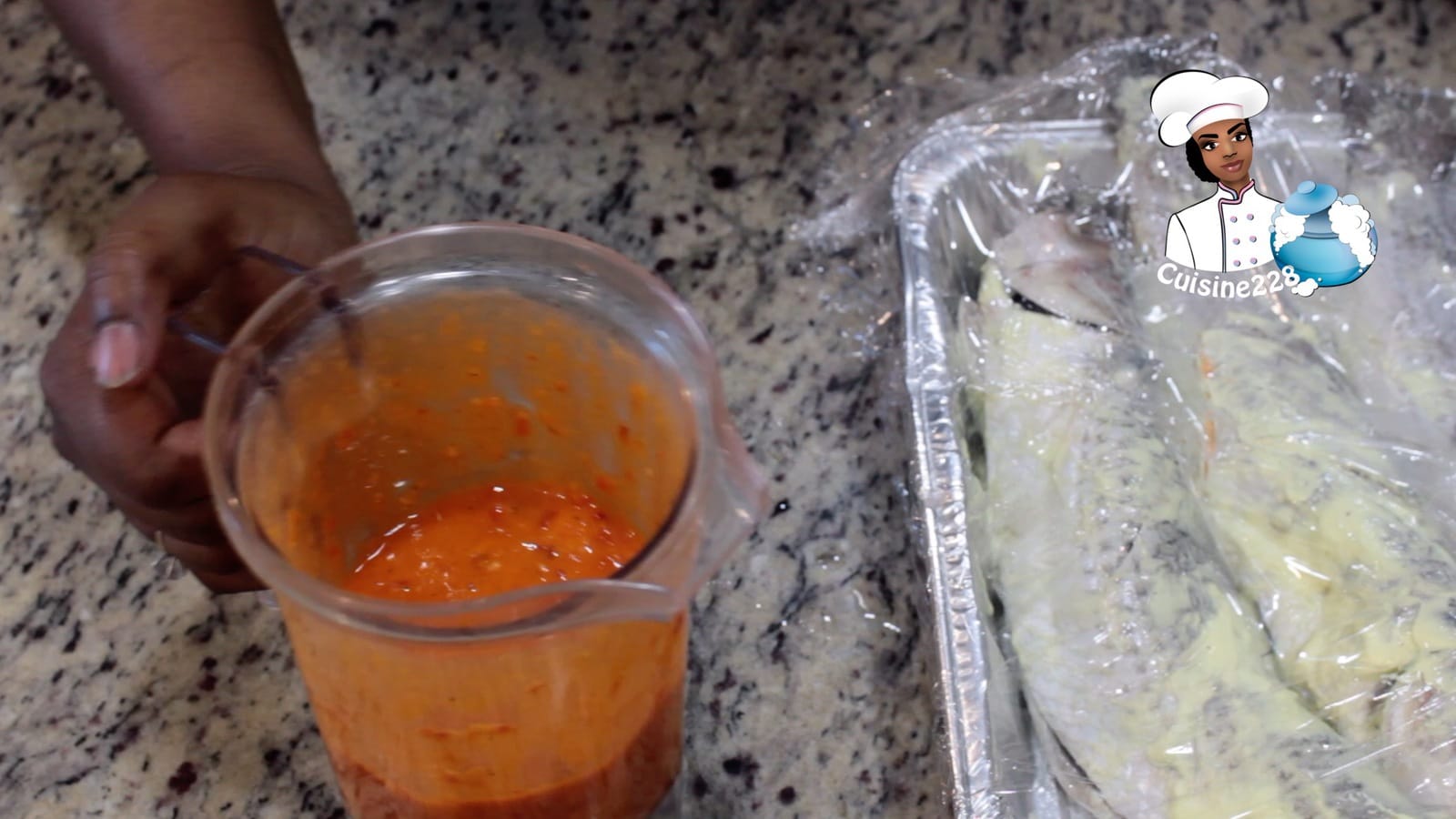
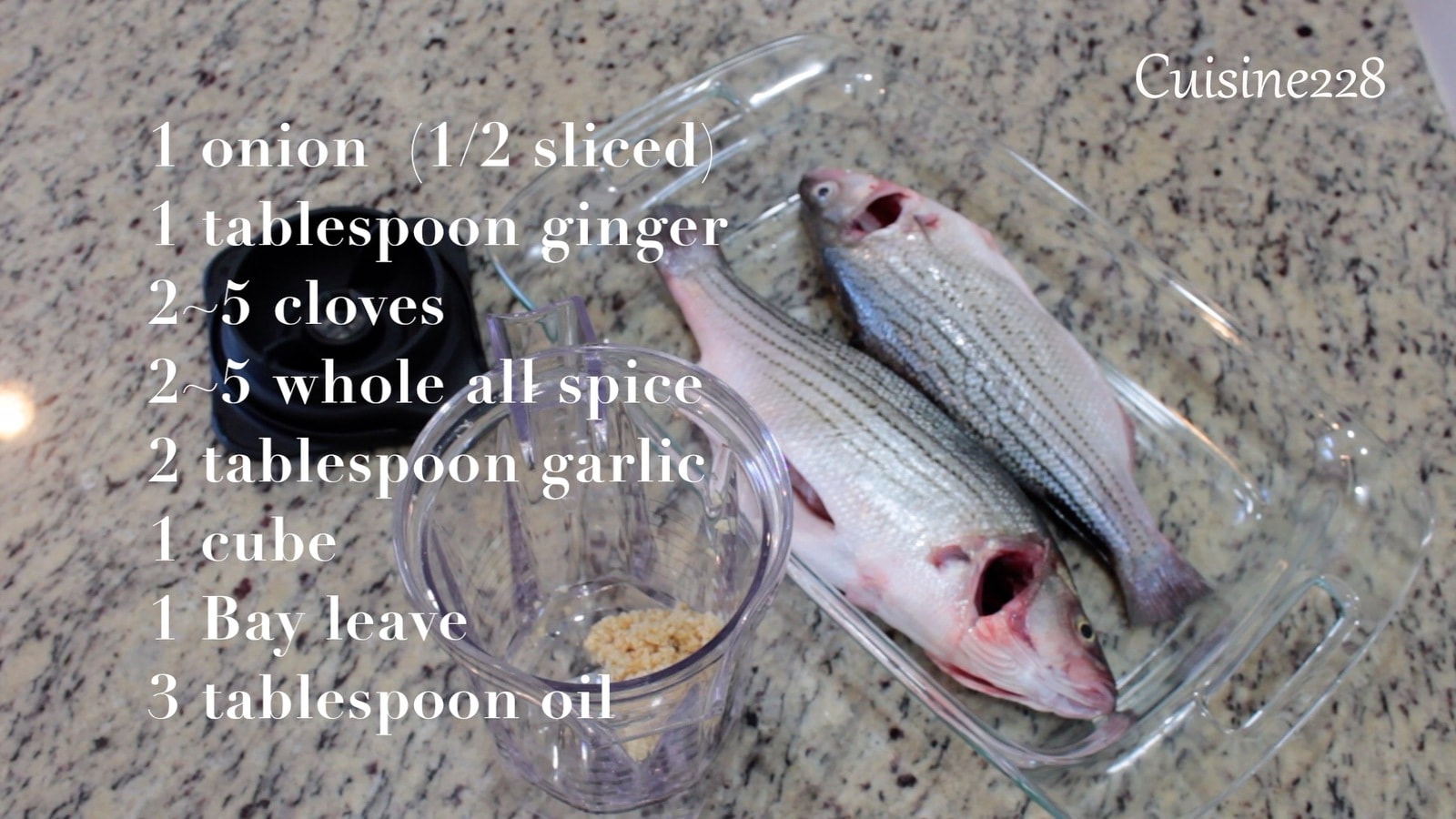
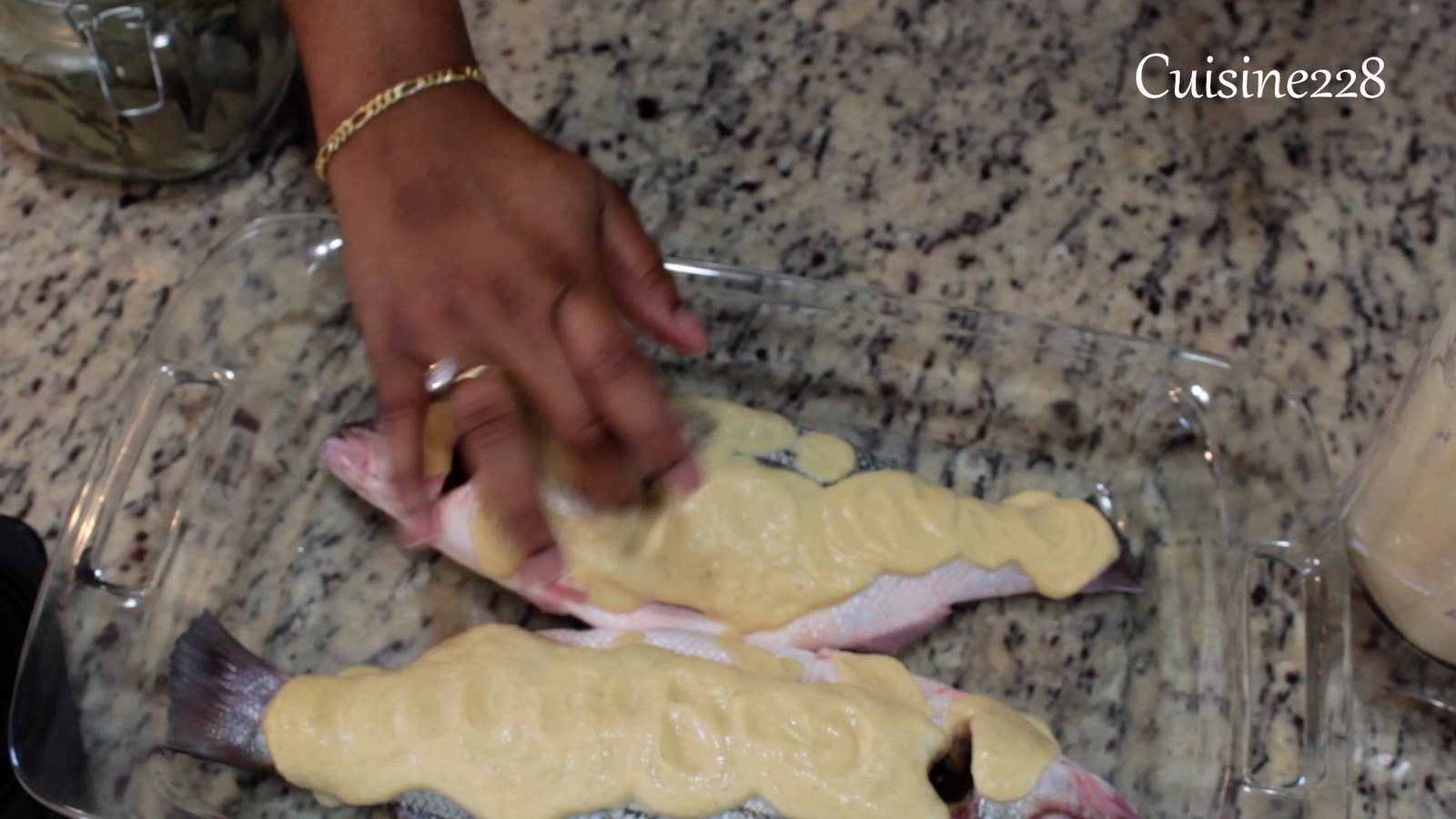
Season the fish with 2 allspice, 2 cloves, 7-10 cloves of garlic, 1 teaspoon mustard, 1 teaspoon mustard grain, 1 cube, 1/4 cup oil and Salt. Marinate in refrigerator for up to 24 hours
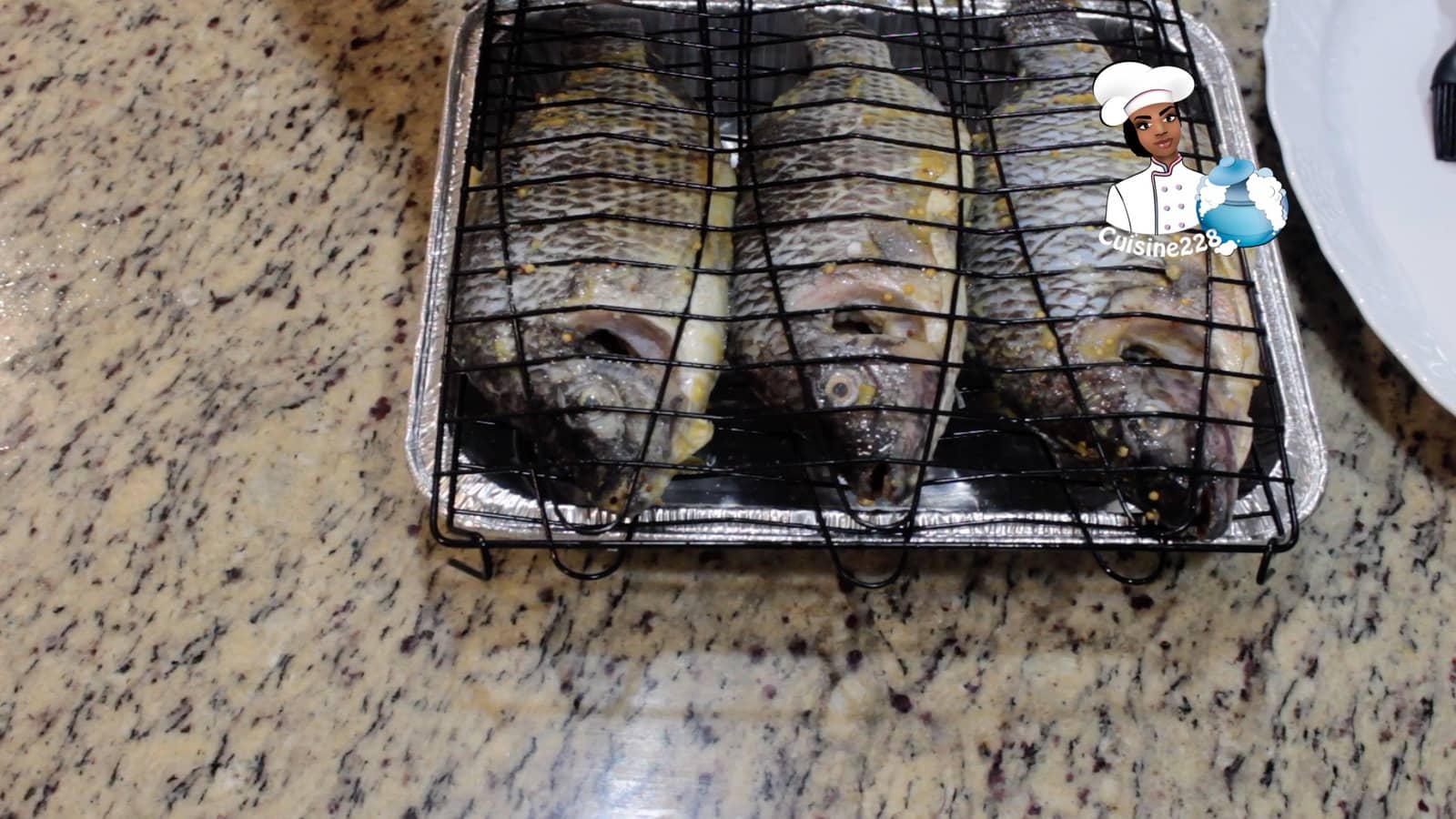
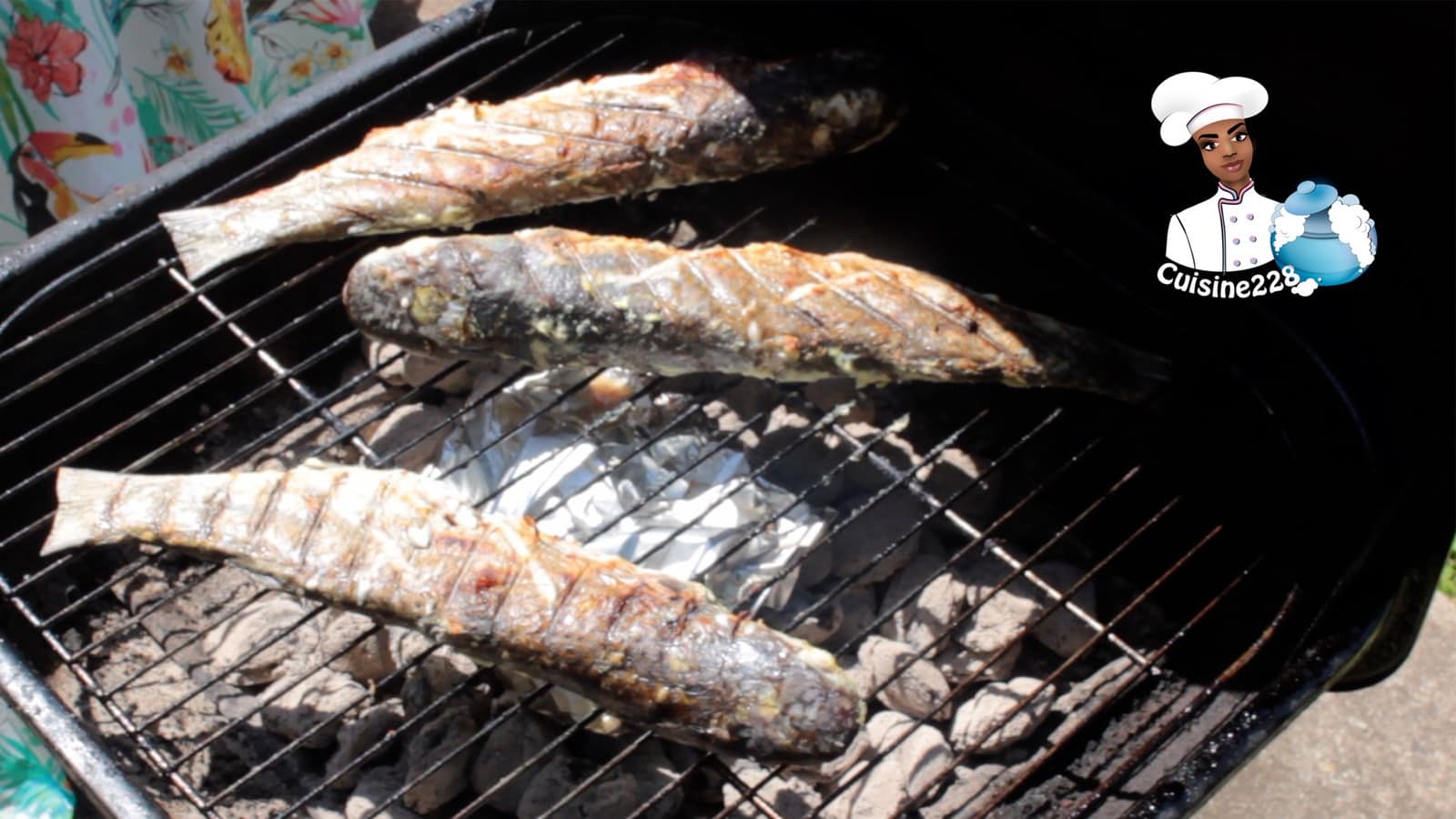
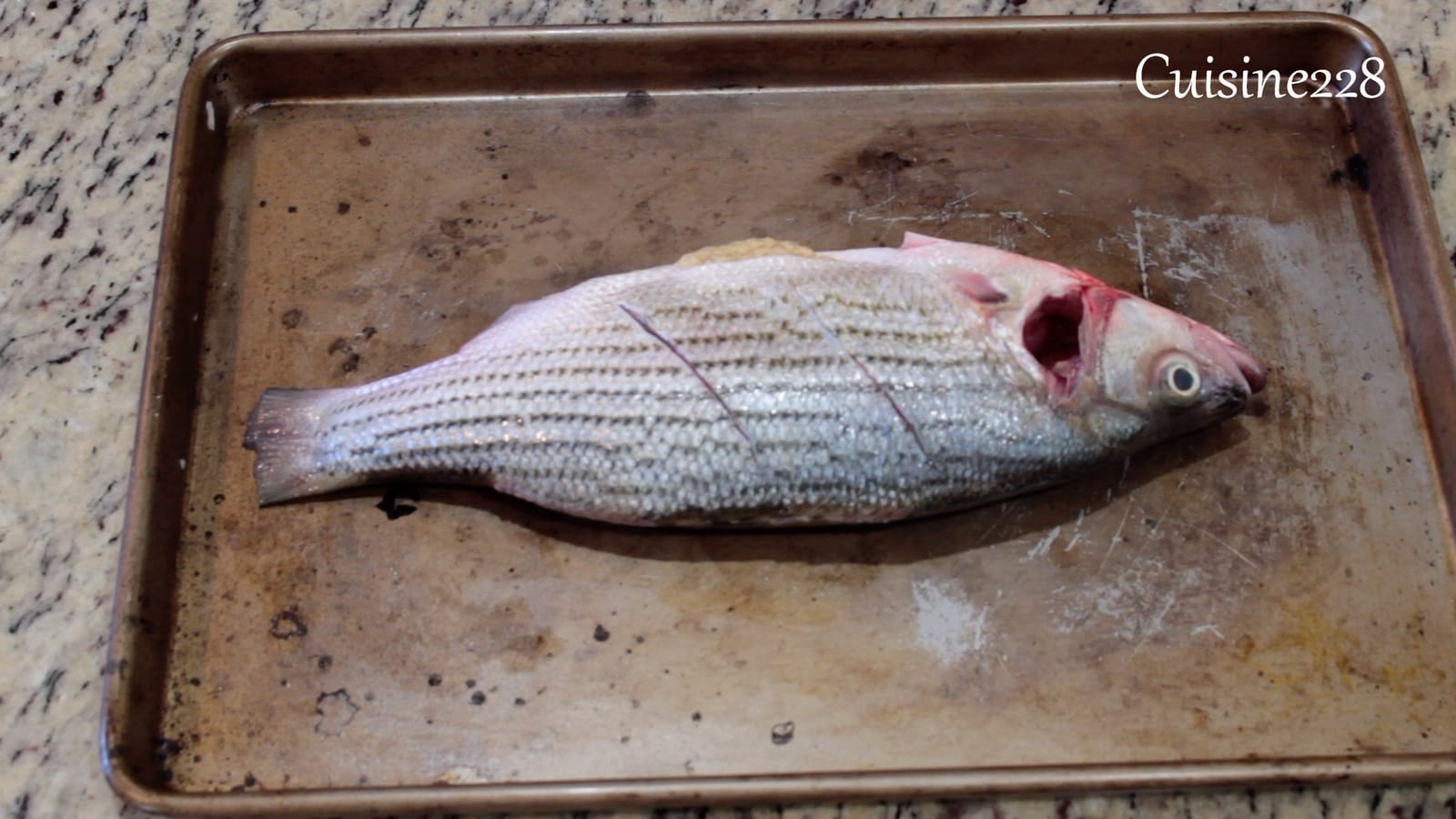
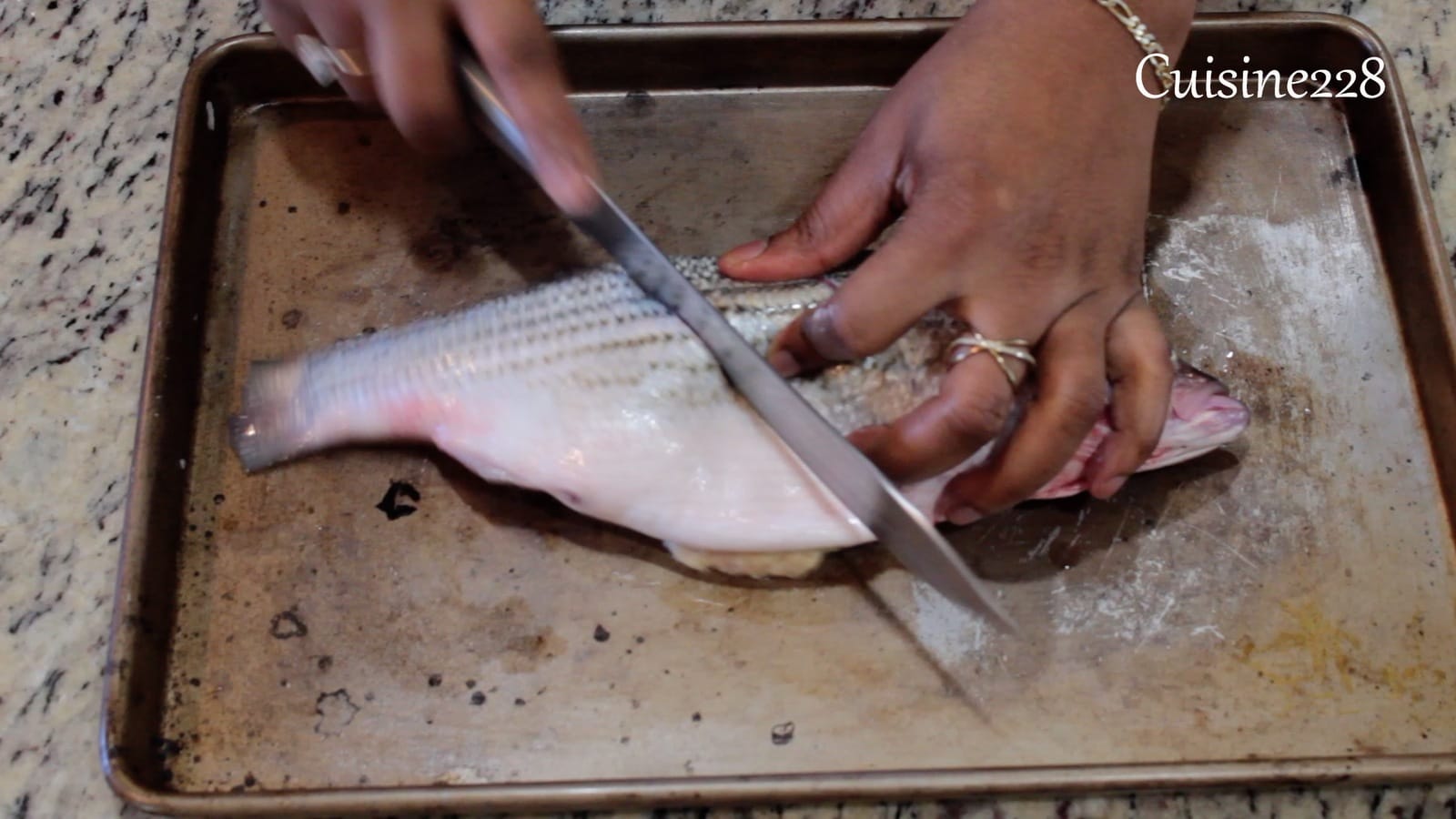
Make three-four diagonal cuts on each side of the fish, all the way to the right across the bone.
Preheat the oven to 200°C (fan 180°C/400°F/gas 6).
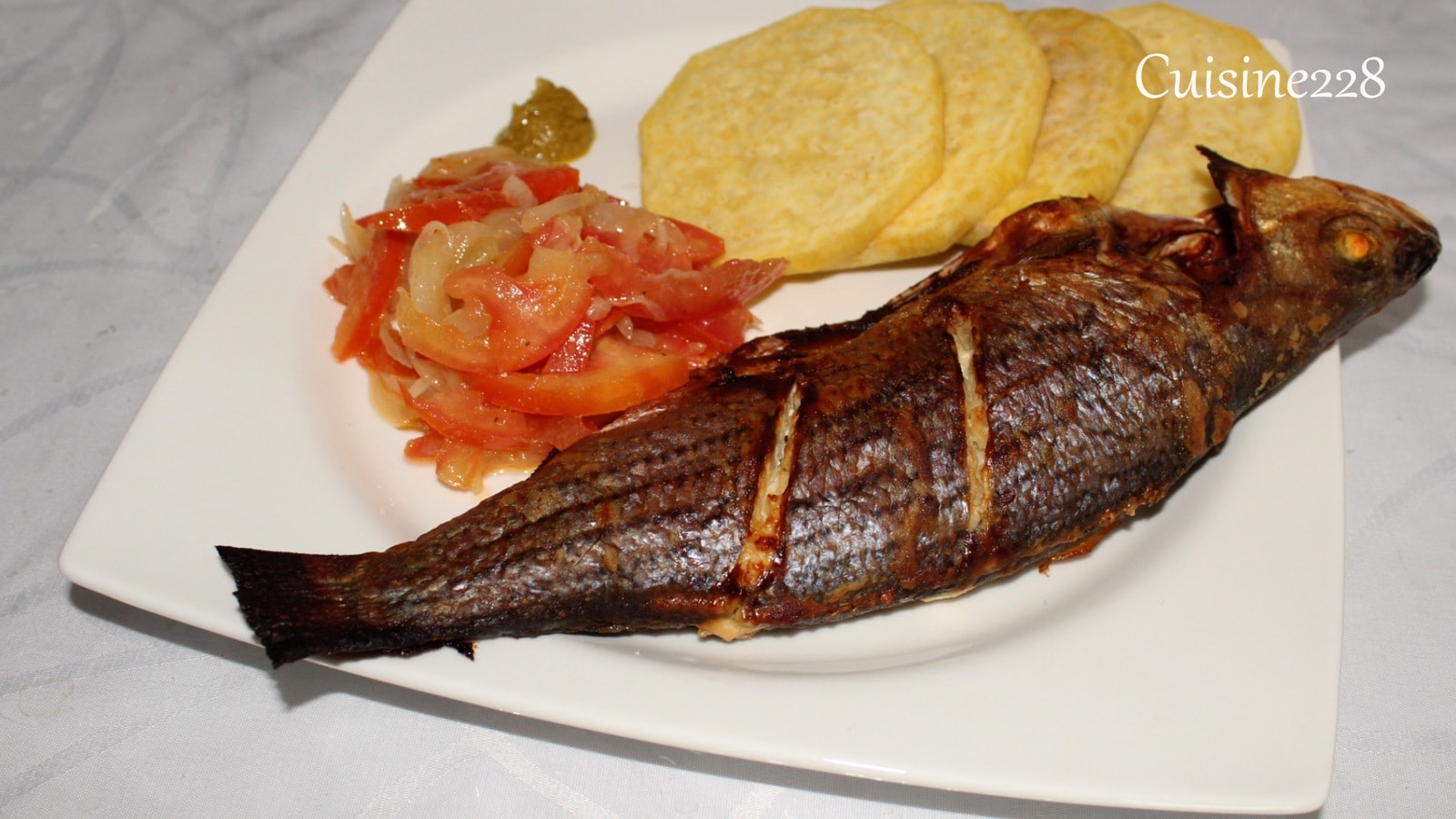
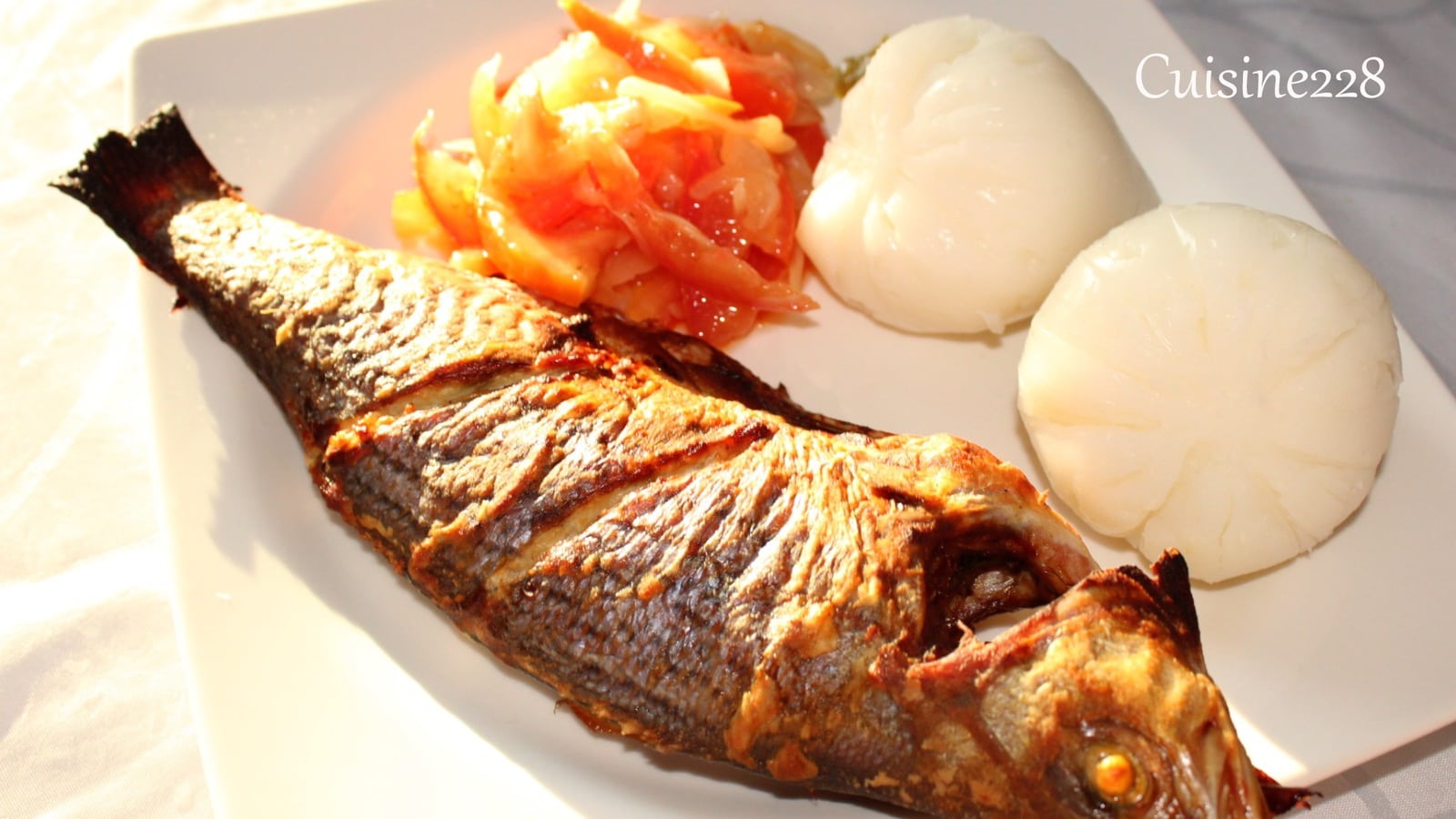
Bake for 20-30 minutes on each side or until the thickest part flakes easily when tested with a knife.
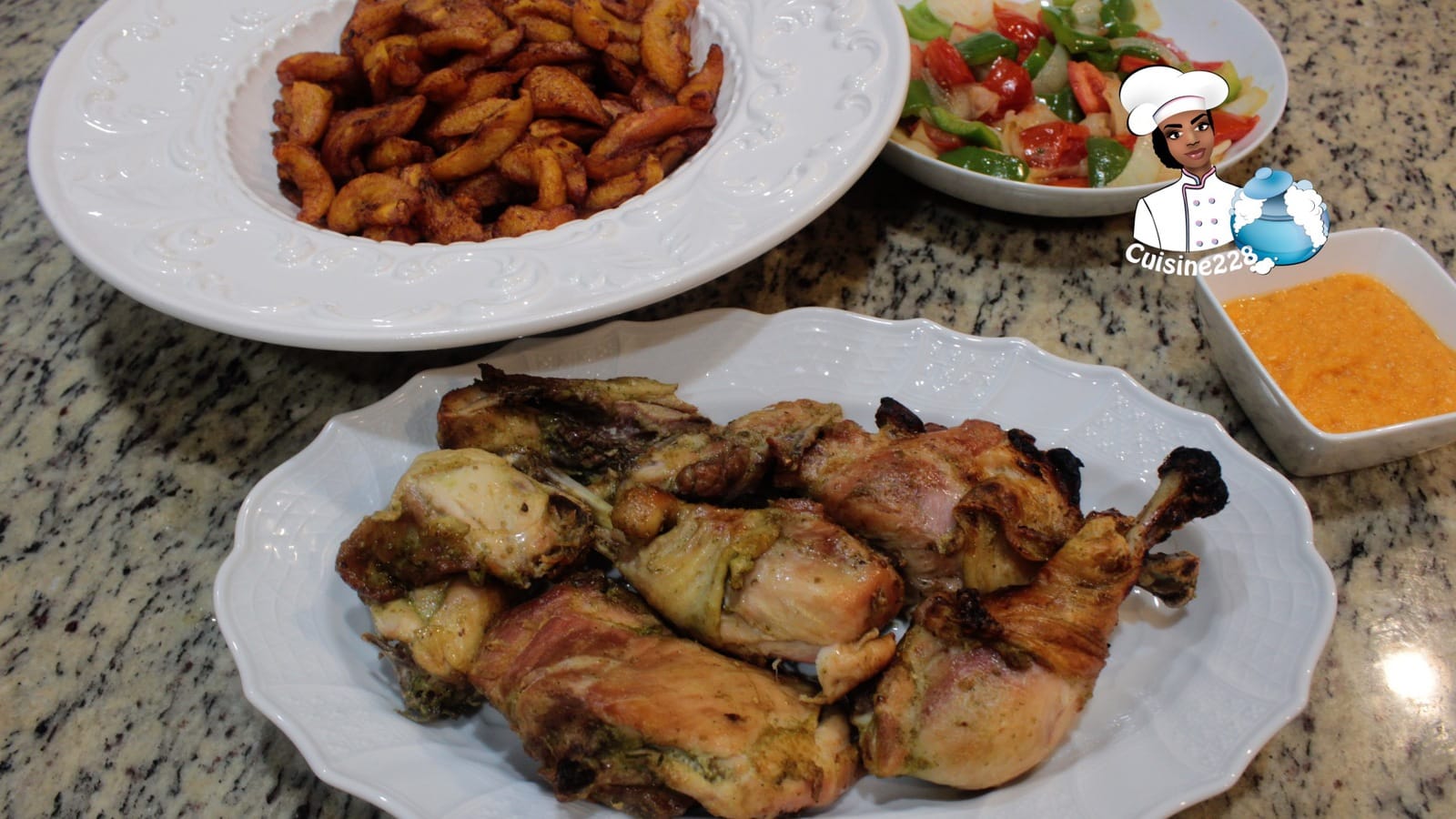
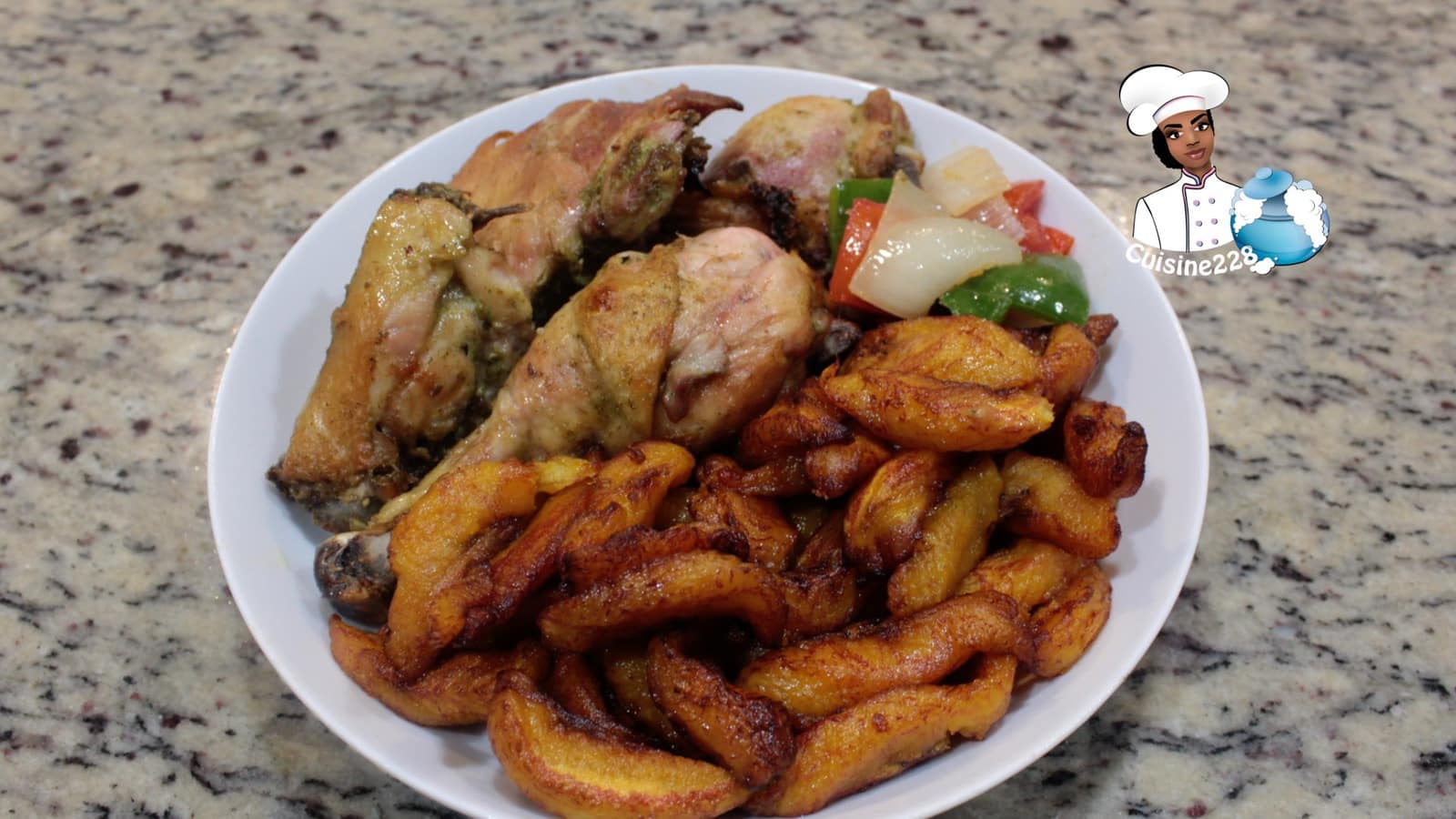
Alloco (Aloco or Alloko) are Ivorian fried plantains. Alloco is also consumed in Benin, Nigeria (Dodo), Democratic Republic of Congo (Makemba), Togo (Amanda) and Ghana (Kelewele). The Alloco is served with crushed chilli, braised chicken, braised fish and boiled eggs. In Ivorian capital, the Alloco is sold in the Allocodrome.
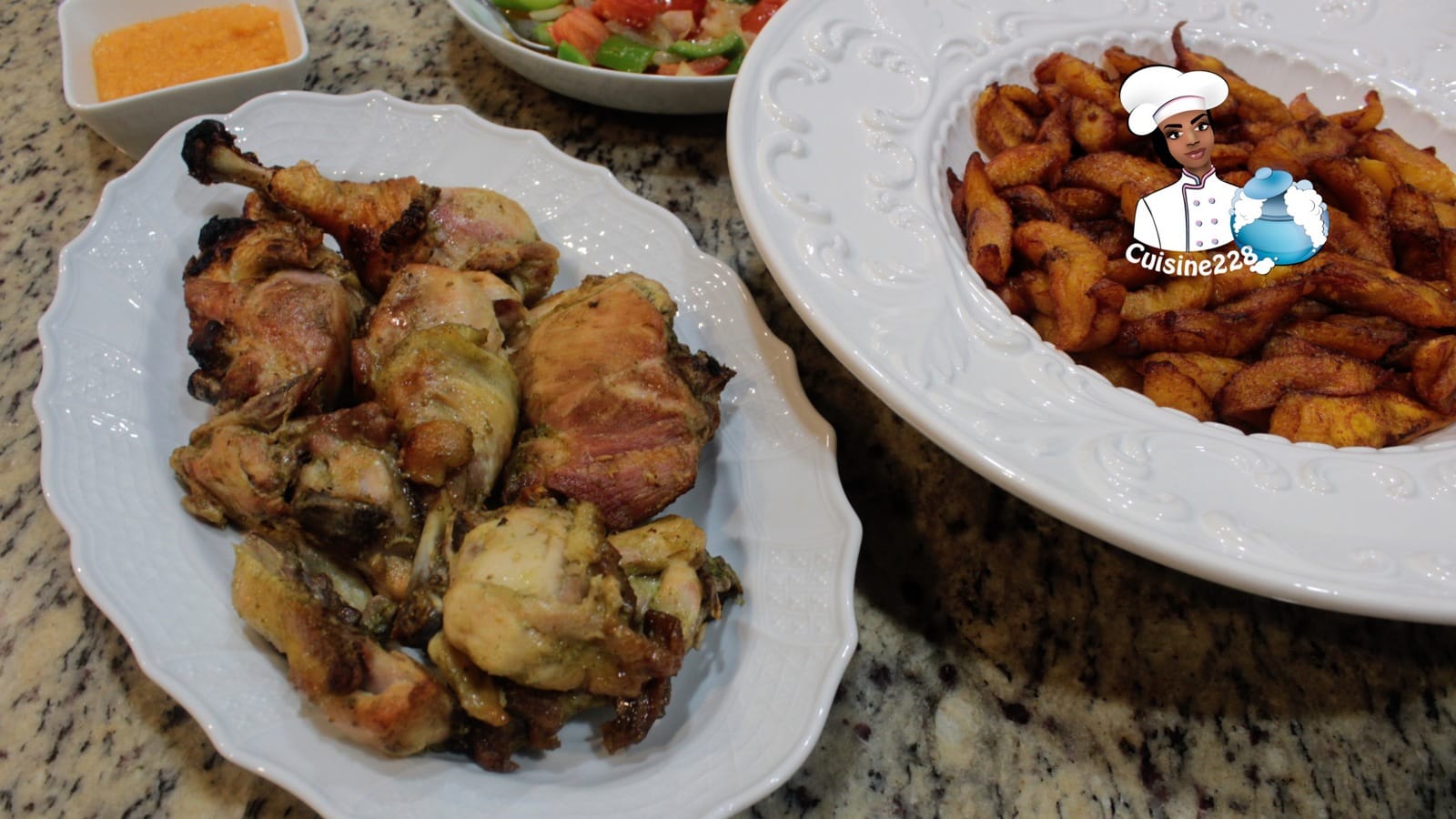
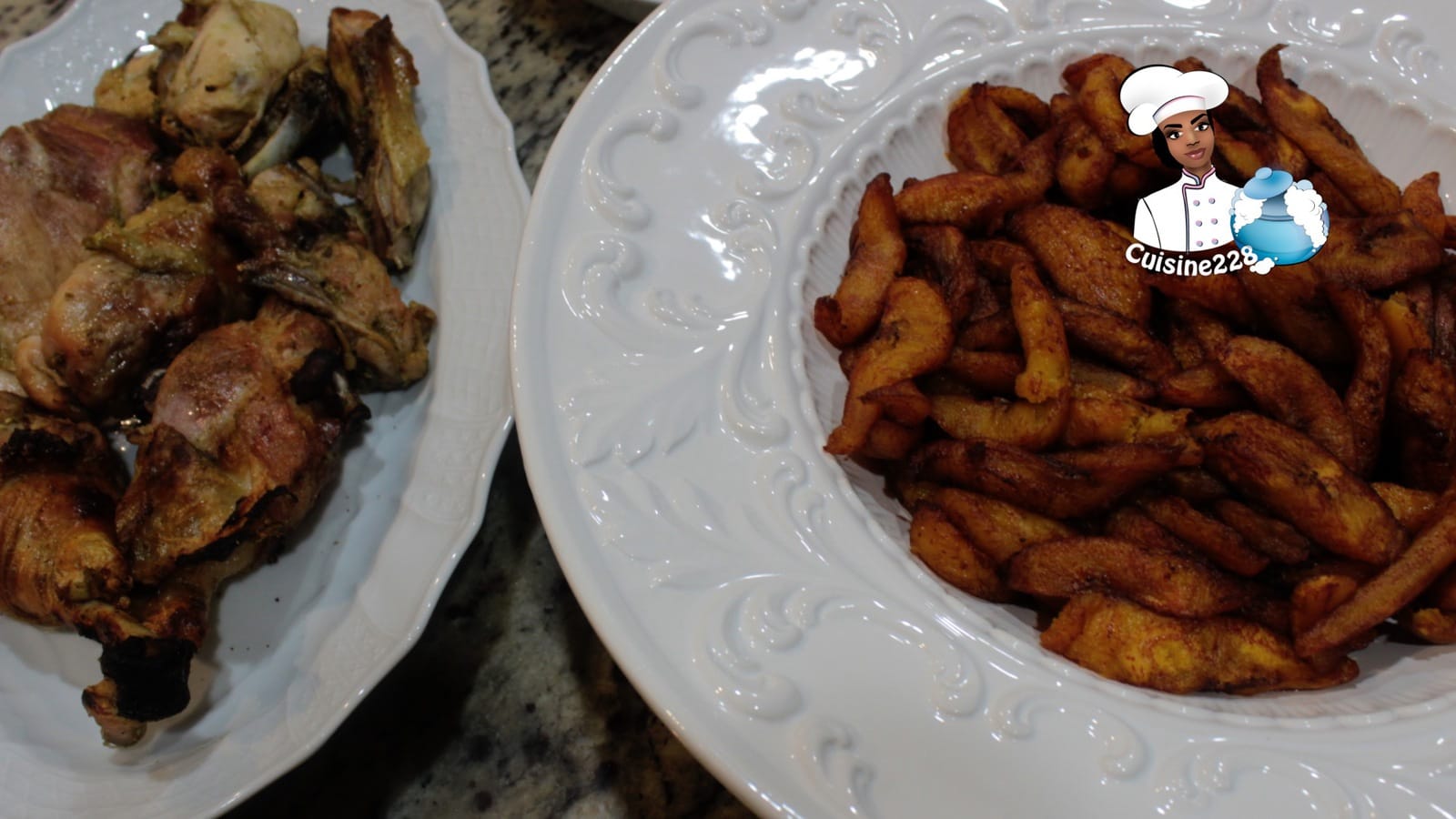
Alloco (Aloco or Alloko) is a popular Ivorian dish made from fried plantains. Sliced plantains are sliced and fried in peanut oil. Some recipes include ginger, cayenne pepper, salt, onion, anise, clove or cinnamon. I used peanut oil but other uses palm oil. I served my alloco with braised chicken.
Some ripe plantains
A little salt
Oil for frying
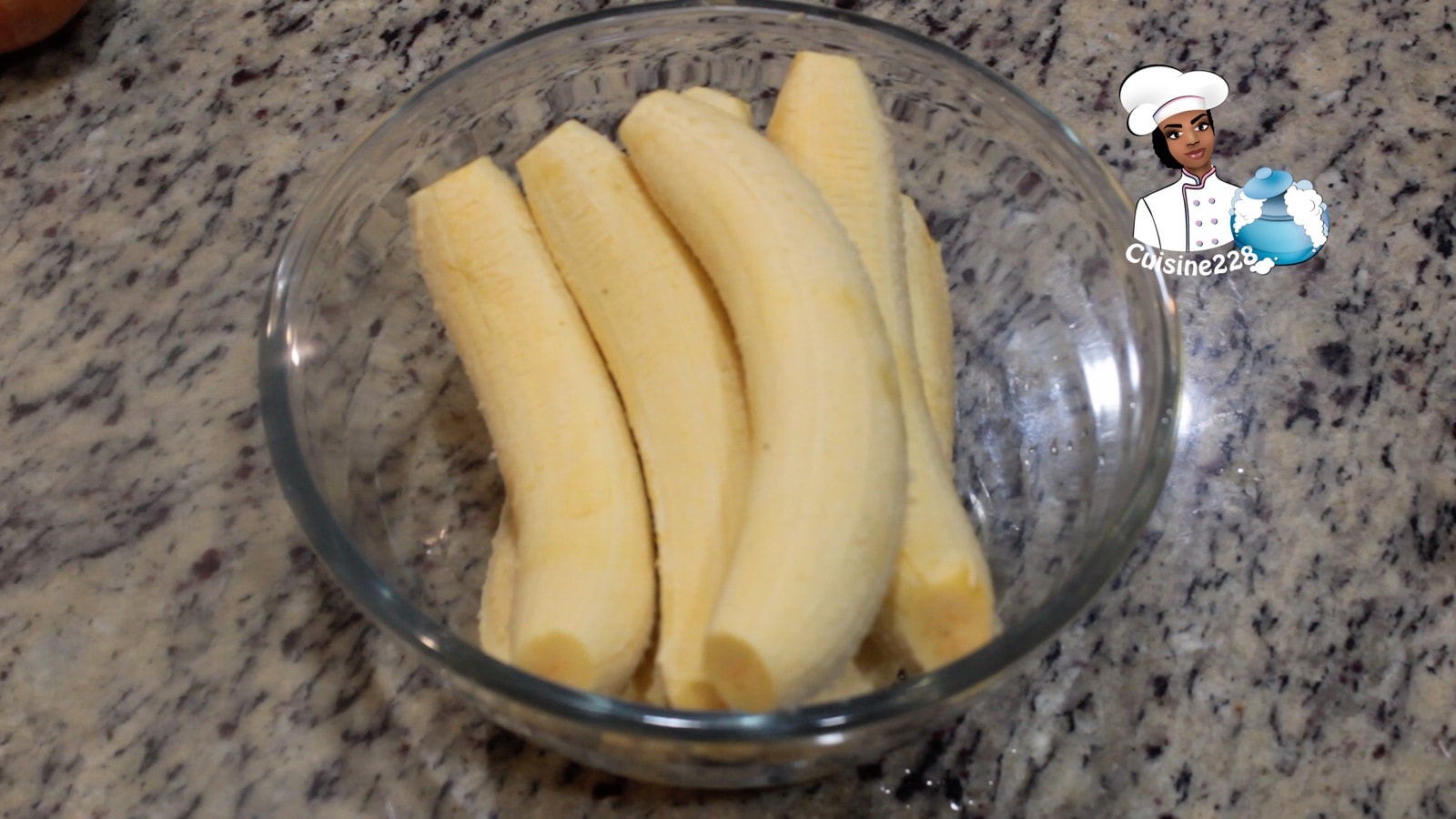
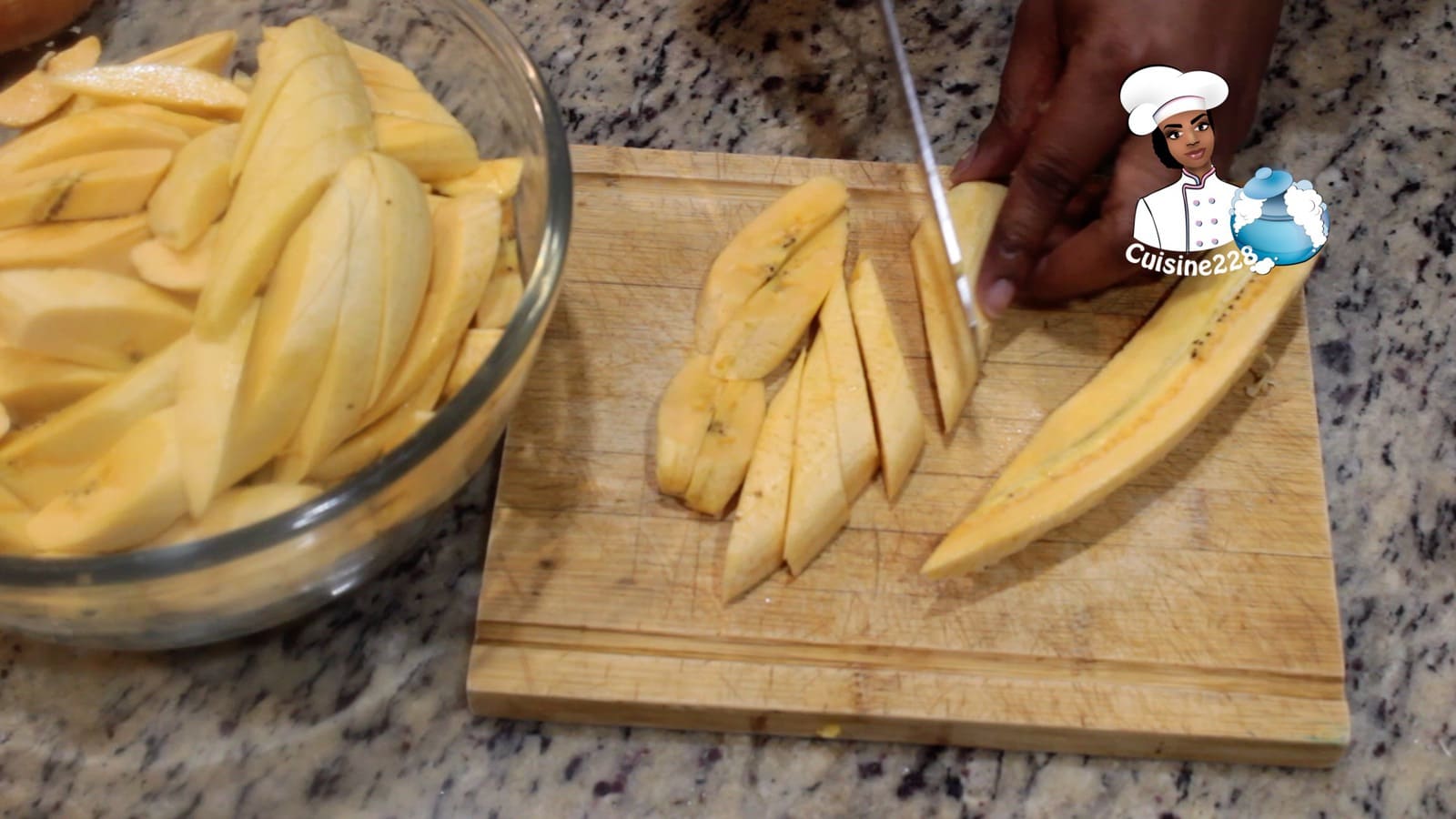
Peel and cut the plantains into cubes.
Then salt the bananas.
Heat the oil in a large skillet and fry the plantain until each side is golden brown.
Remove and place them in a paper towel to absorb the excess oil.
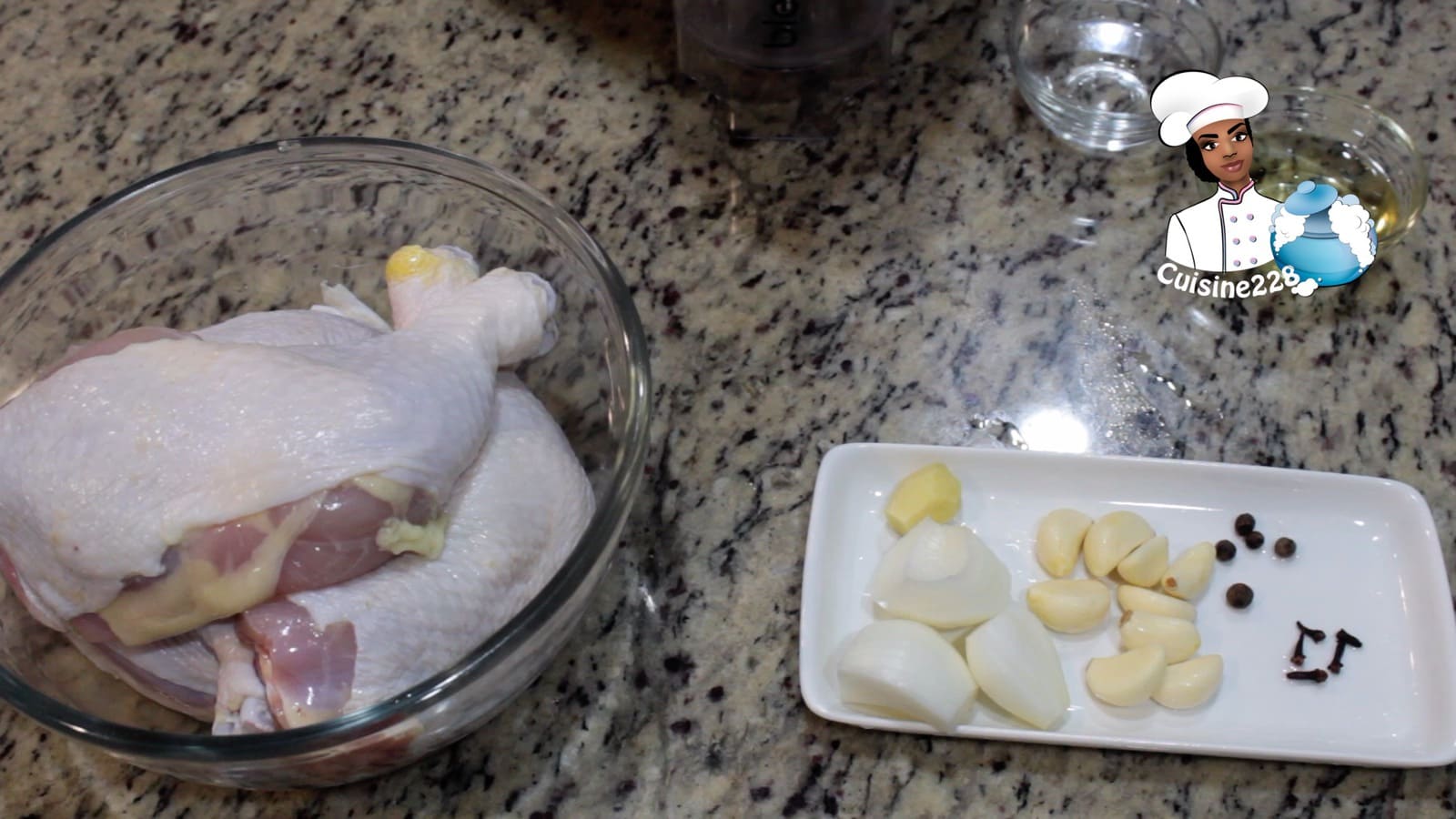
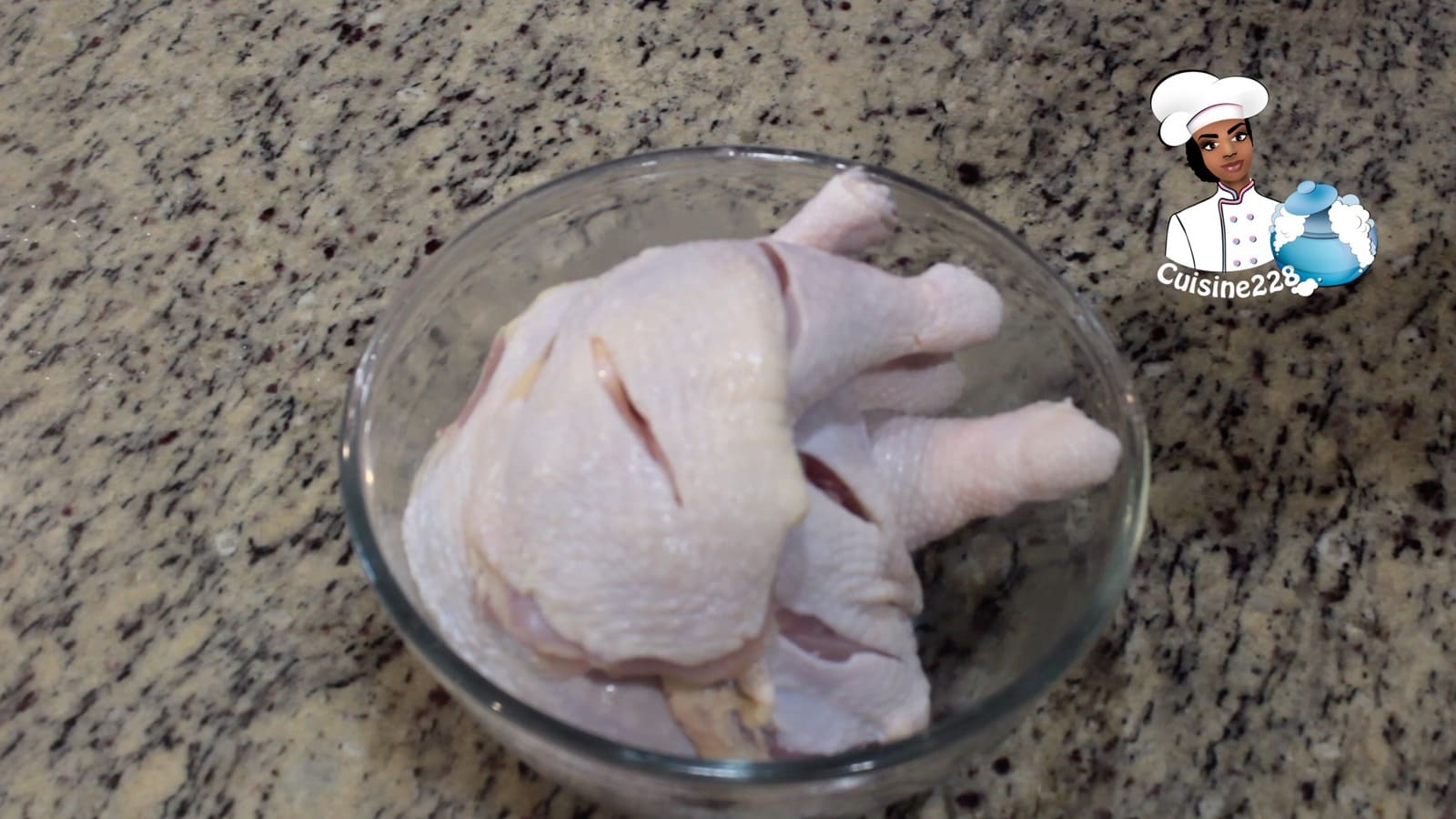
6 chicken legs
1/3 cup cilantro
1/3 cup fresh oregano
1/3 cup onions
4 garlic cloves
2 red hot chili pepper (or substitute with 1/2 a teaspoon of red pepper flakes)
3/4 cup oil
2 Tbsp fresh lemon juice
1 tsp kosher salt (or to taste)
1/2 tsp black pepper (or to taste)
1 cube
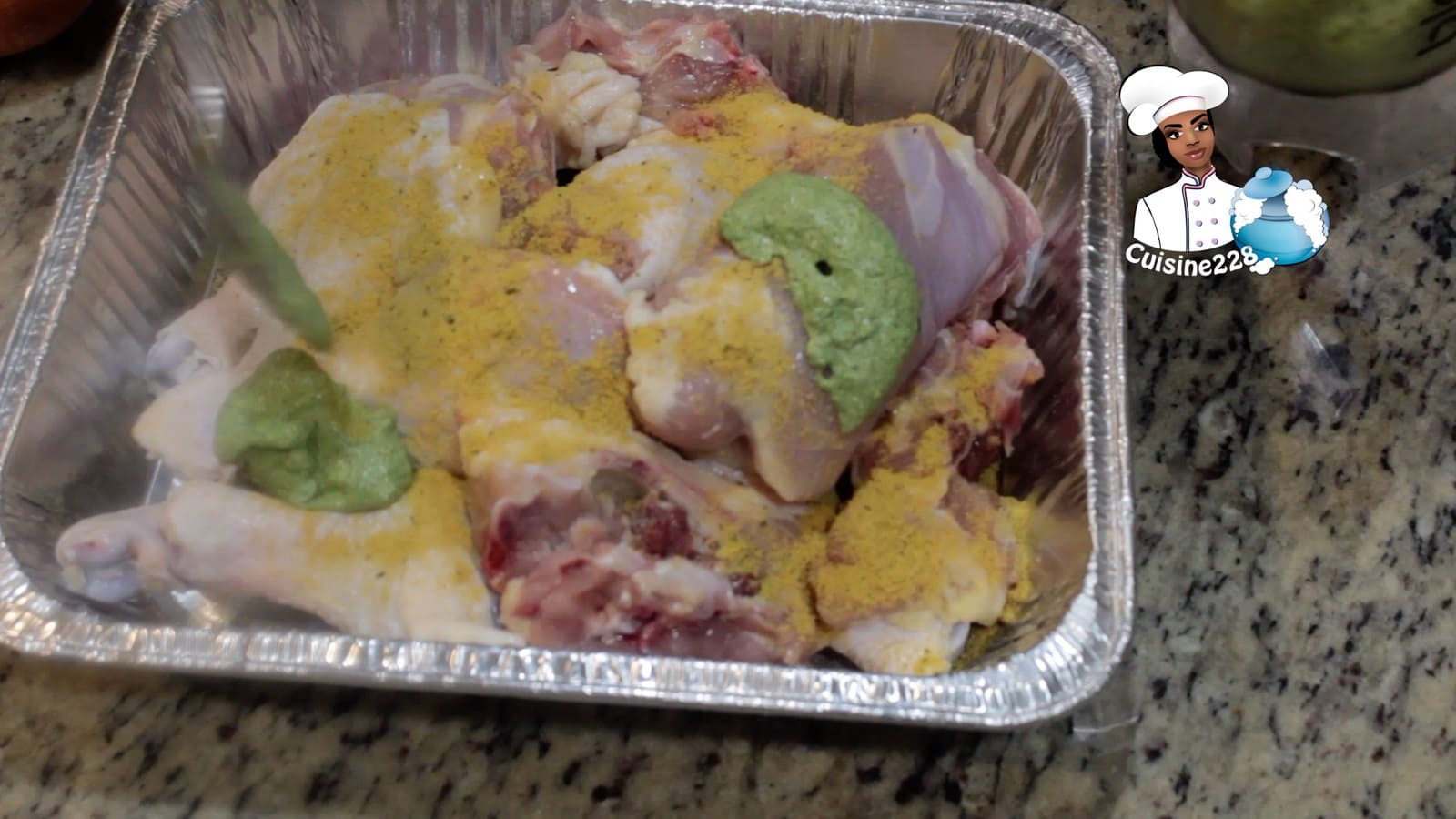
Bend all the spices together all of the ingredients and set aside.
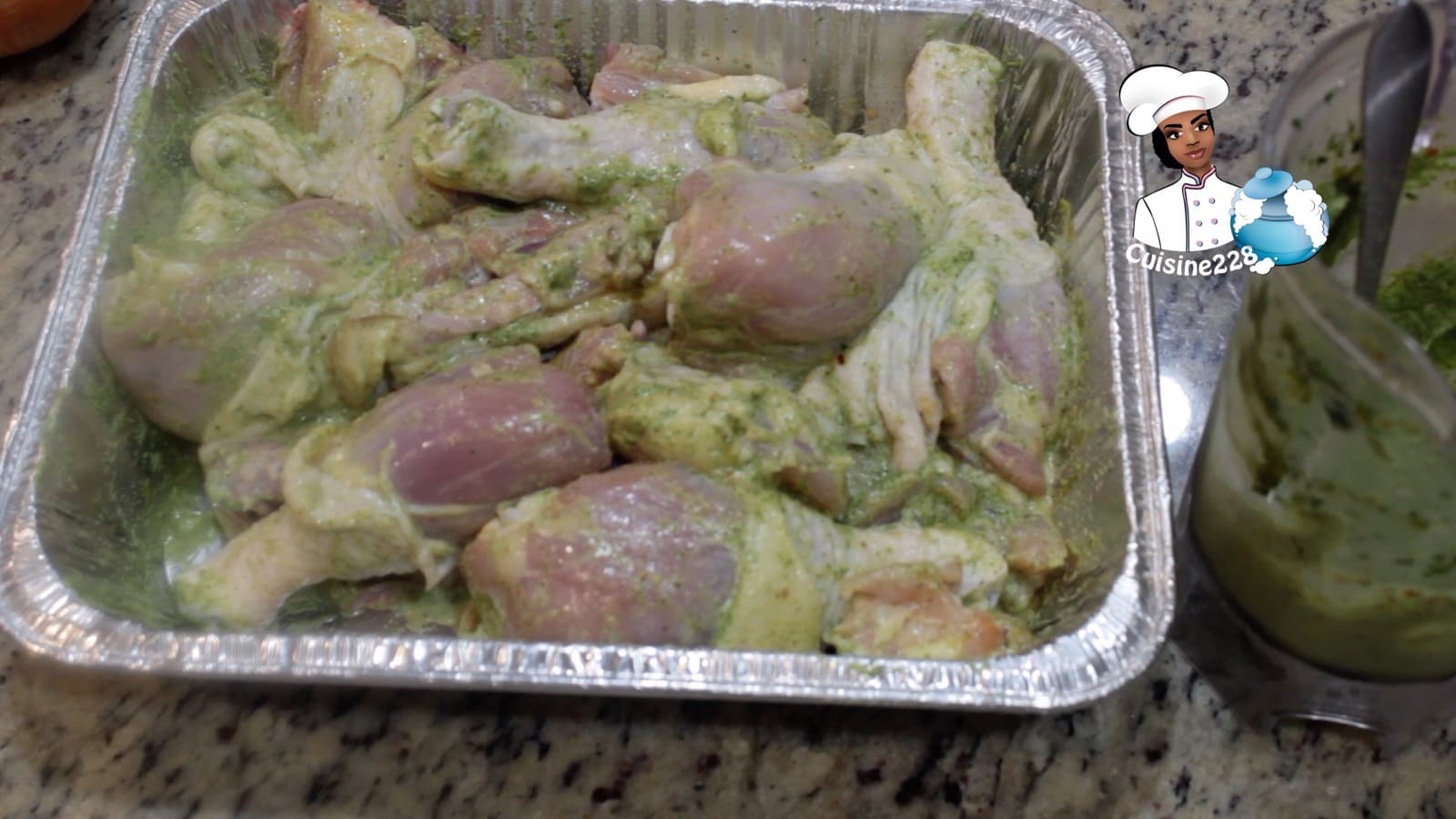
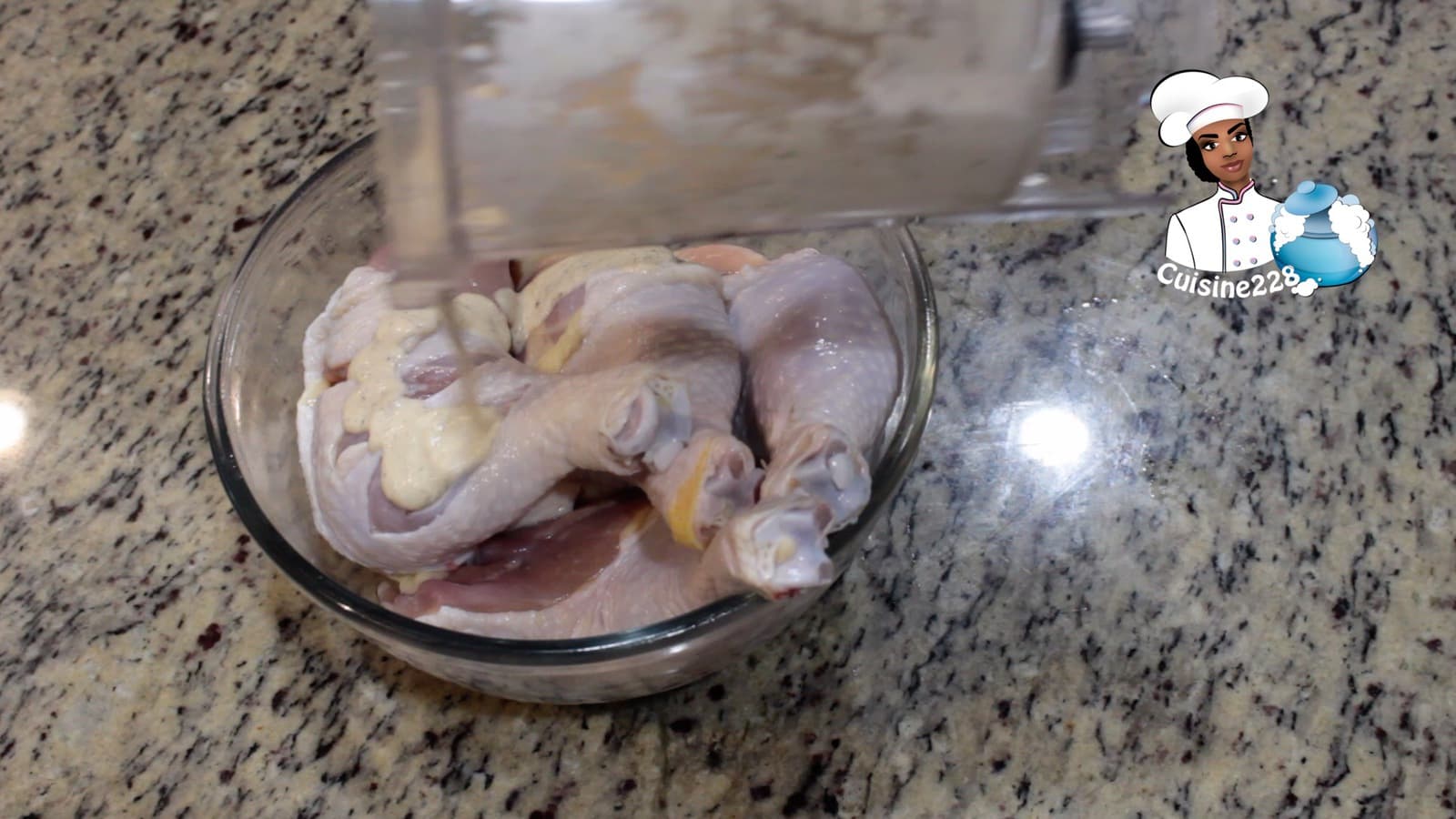
Place the chicken legs in a medium bowl, add the marinade. Cover the bowl and refrigerate for at least several hours, or better yet, overnight and up to 24 hours.
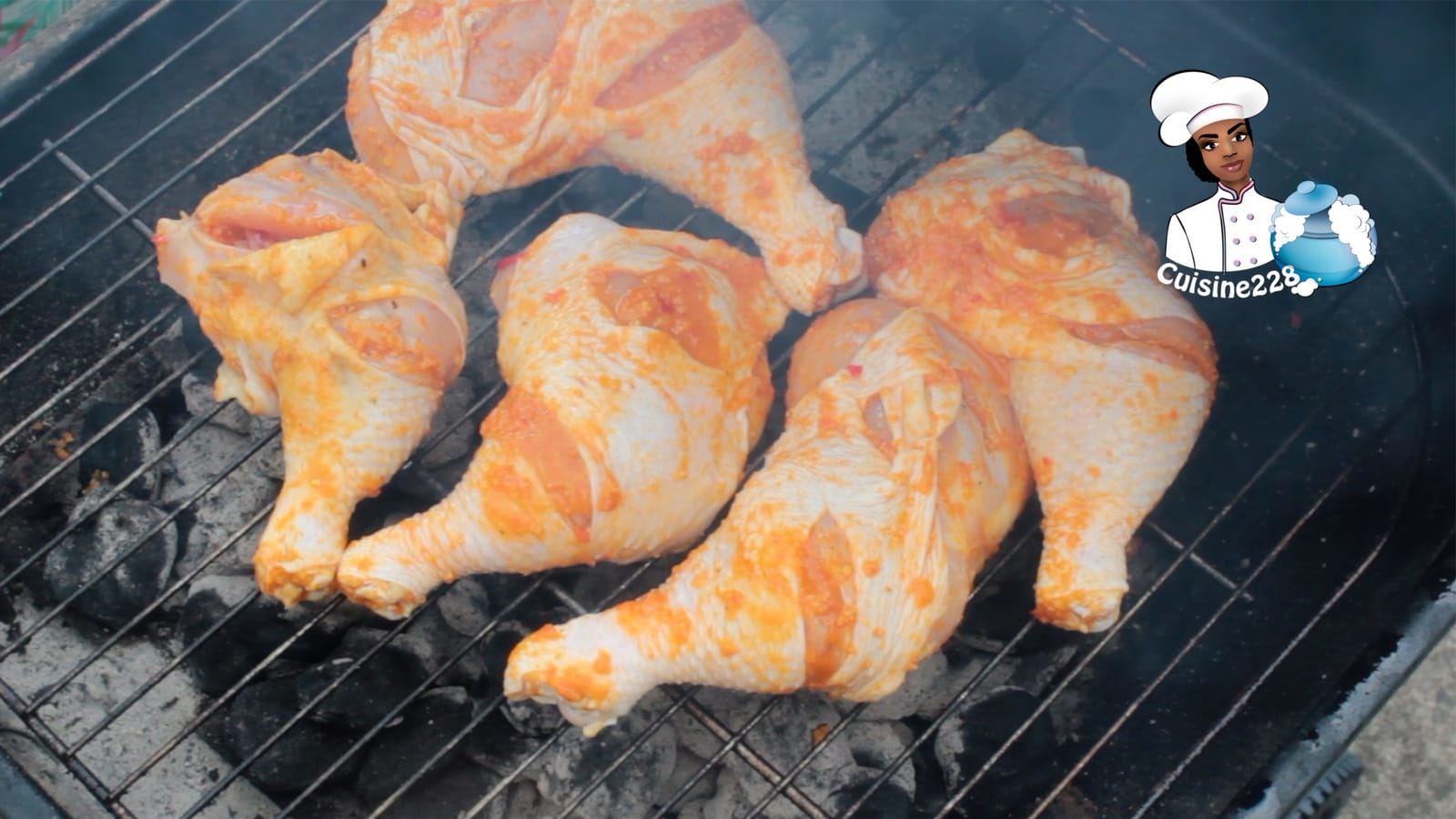
Preheat the grill to 300F at the grate level. Basically, the grill should not be very hot.
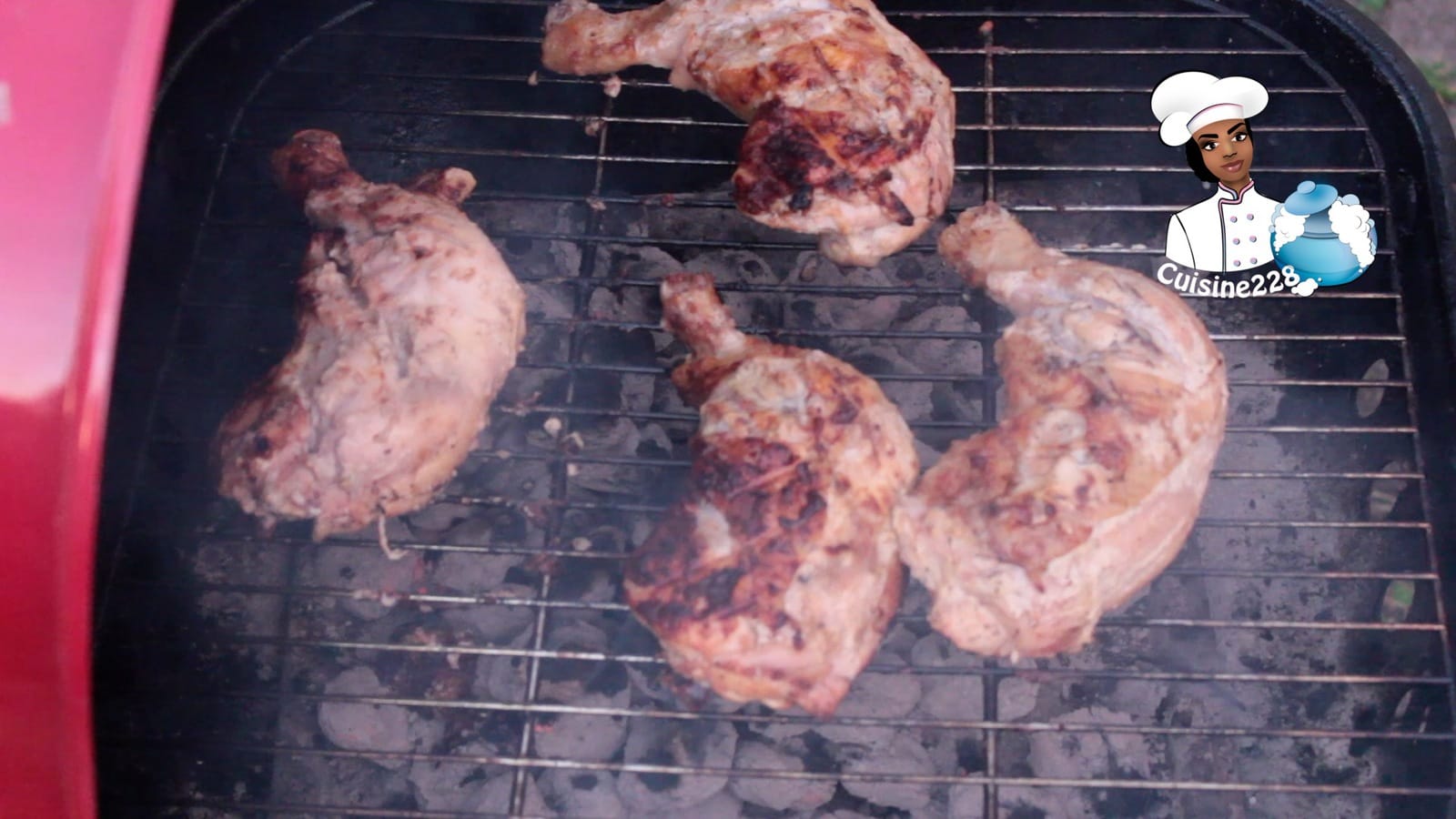
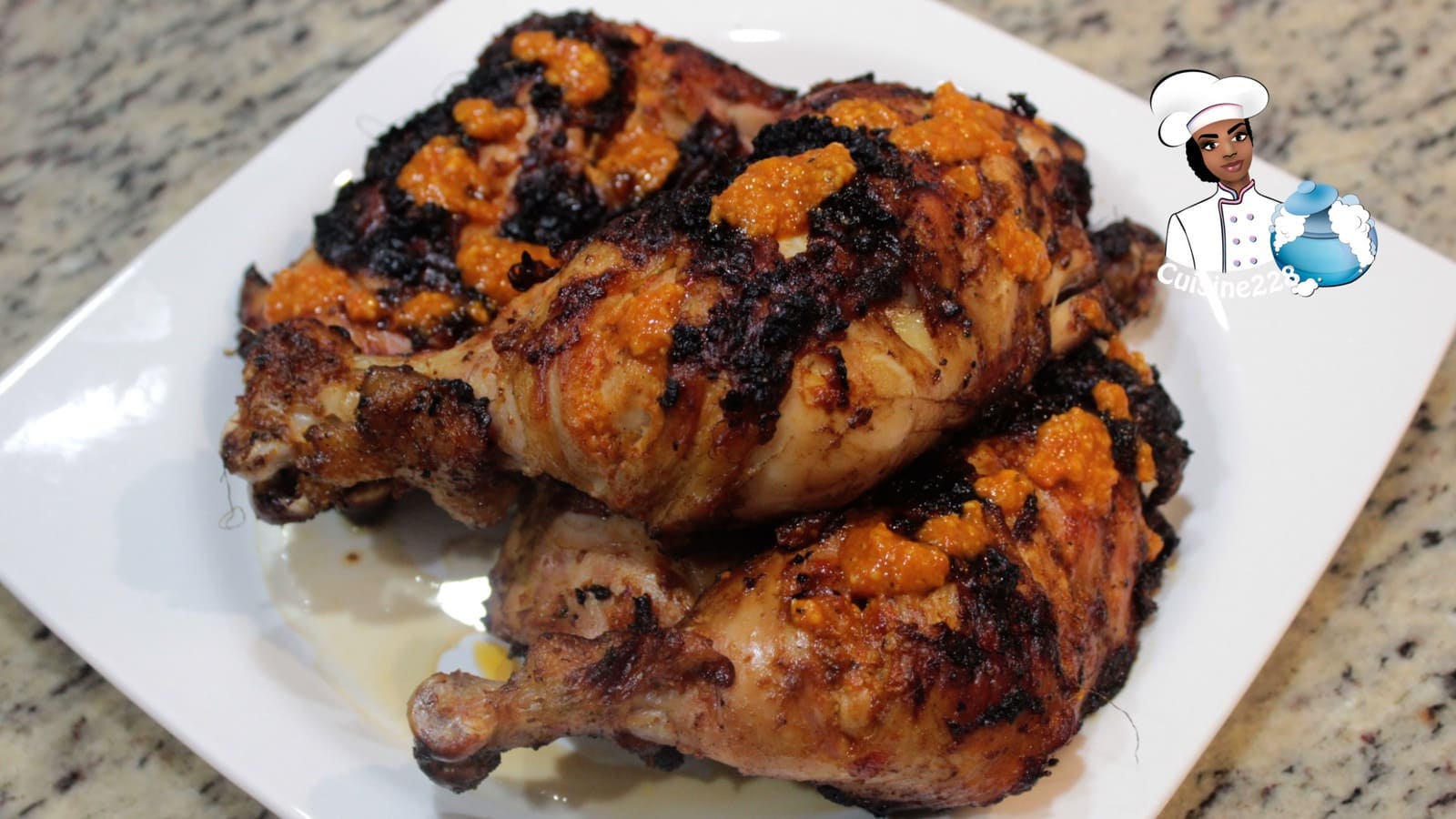
Grill chicken legs over direct heat, flipping frequently, about every 3 minutes until the chicken is cooked through and internal temperature has reached a minim of 165F.
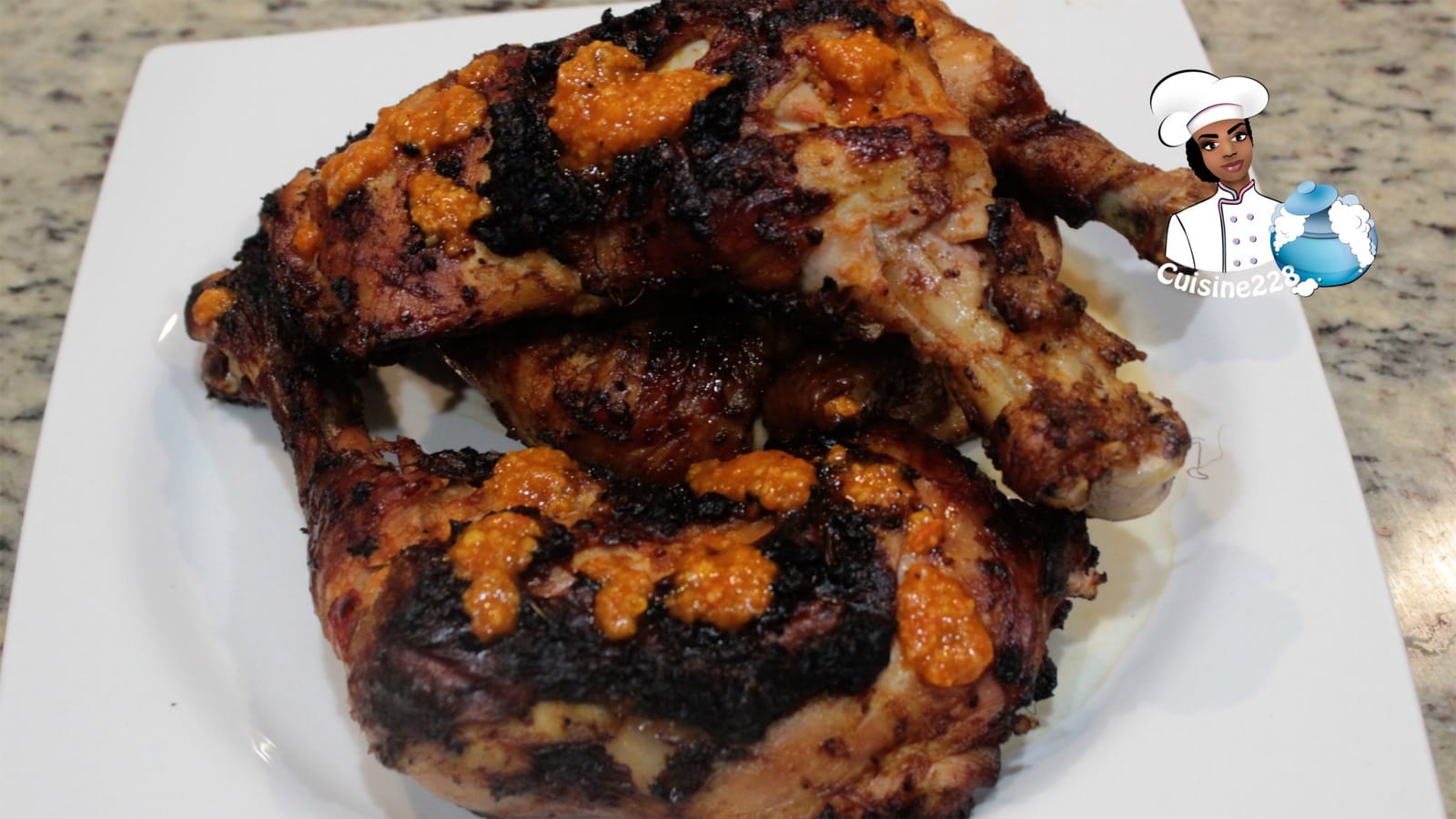
Let the chicken rest for 3 minutes and serve with the alloco
Mix the chicken pieces and half the marinade and leave to marinate for at least an hour but overnight will give you a great flavor.
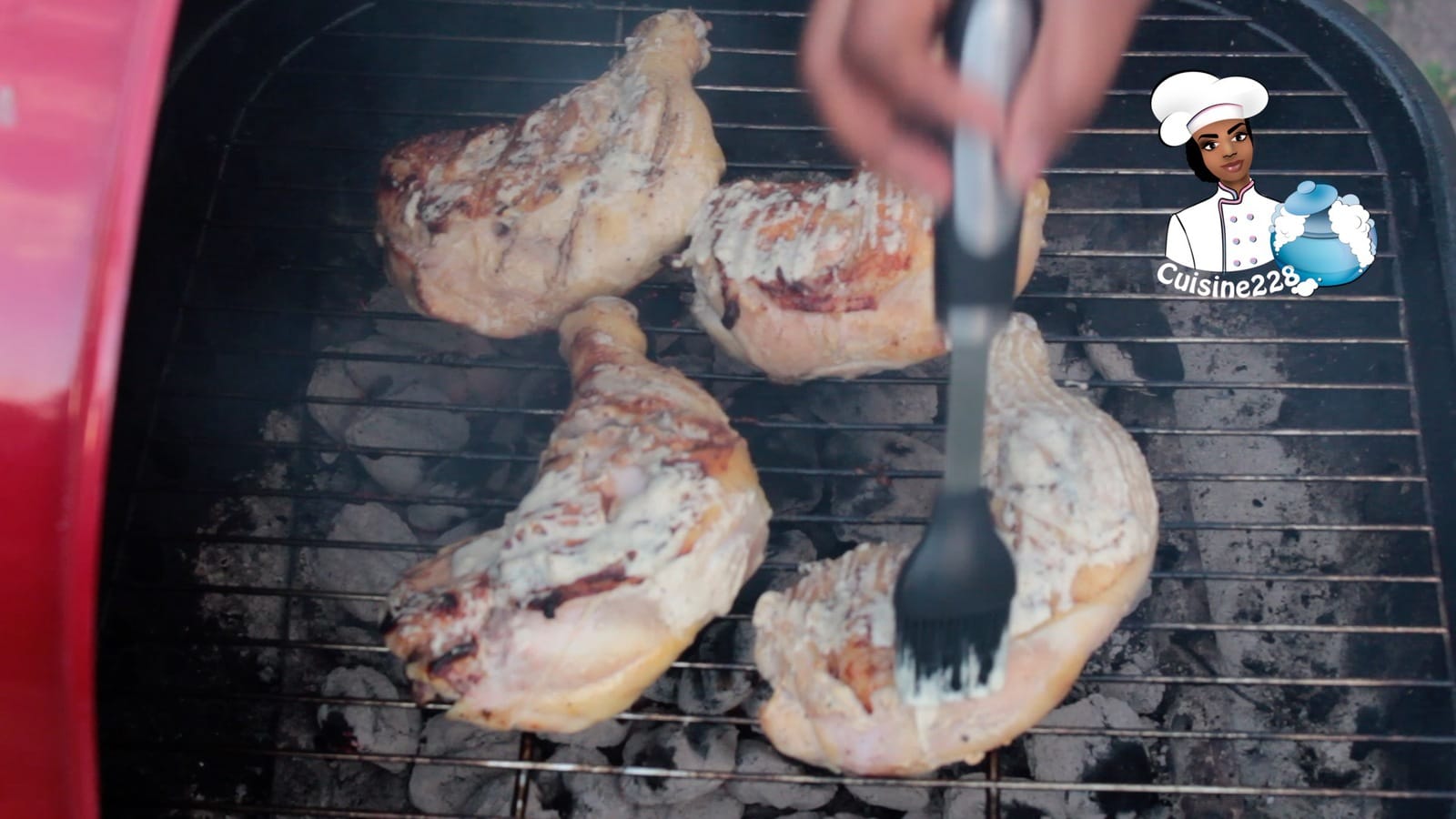
Place chicken on the grill and grill for about 10-15 minutes an each side you may need to turn the chicken occasionally on each side until it is cooked all the way. Remember to brush the chicken with the marinade
1 ball of Attiéké
1 or 2 large tomatoes
1 big onion
Salt to taste
1 cube Maggi (optional)
African pepper (optional)
Oil
Some water
Place Attiéké in a microwave-safe dish.
Add 1/2 cup of water and salt to Attiéké.
Allow the semolina to absorb all the water.
Microwave for 5 minutes (repeat by adding 1/4 of water until desired consistency)
Cut the fresh tomato, the African pepper, the fresh onion into thin cubes.
On a medium heat , in a saucepan, heat the oil and add the onion.Cook for 10 mins
Add tomatoes, cube taste and add salt if necessary.
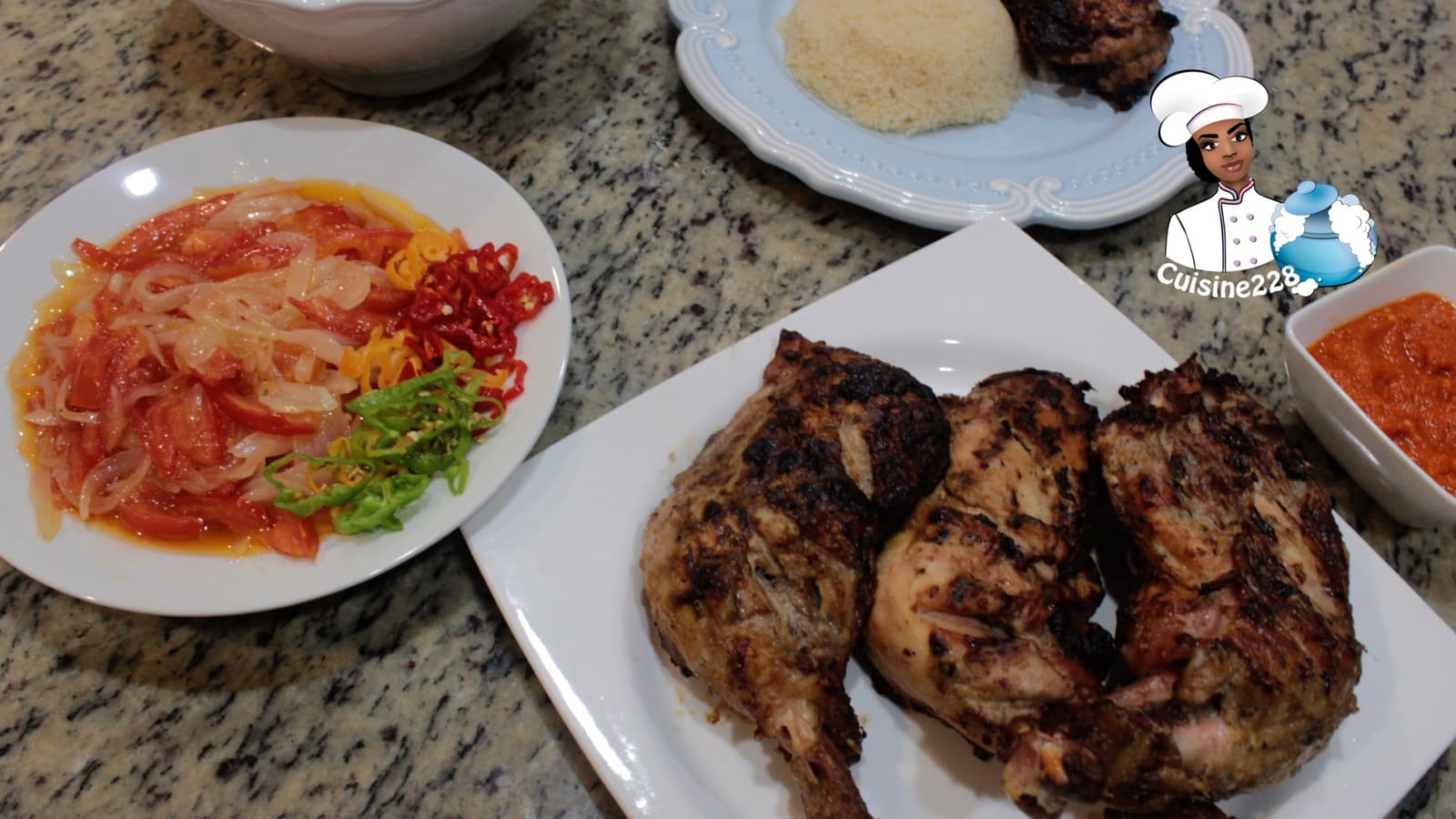
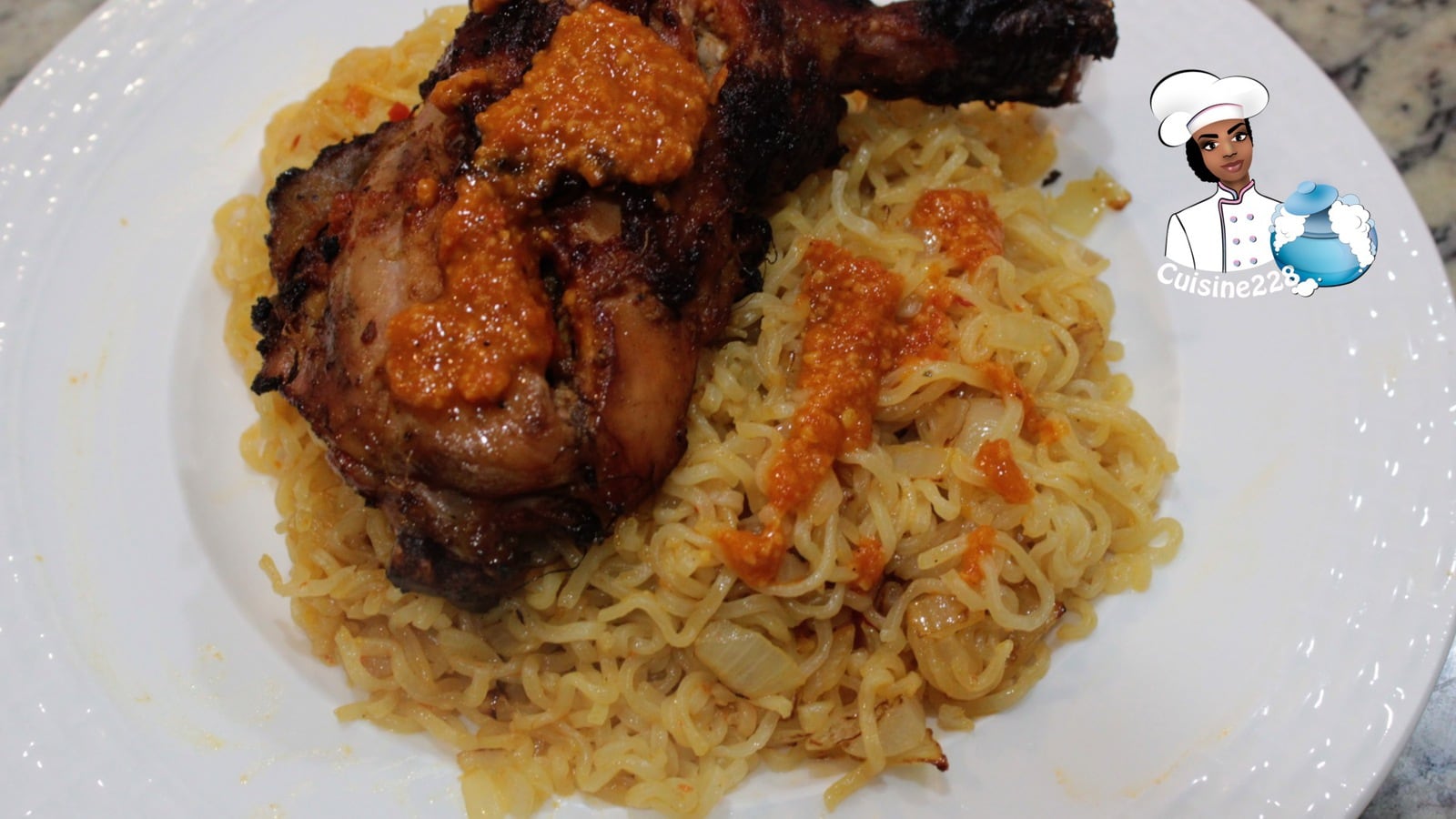
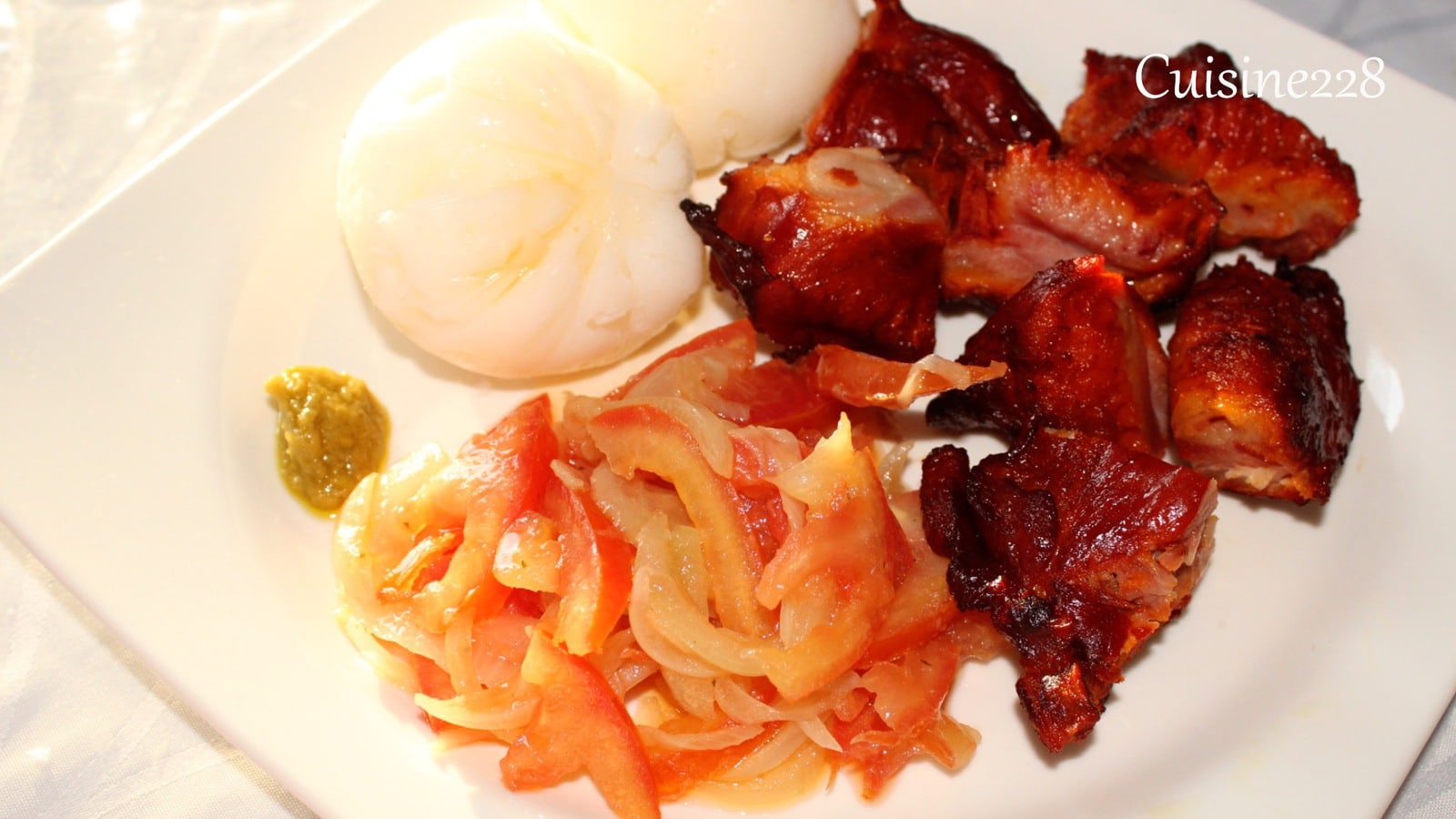
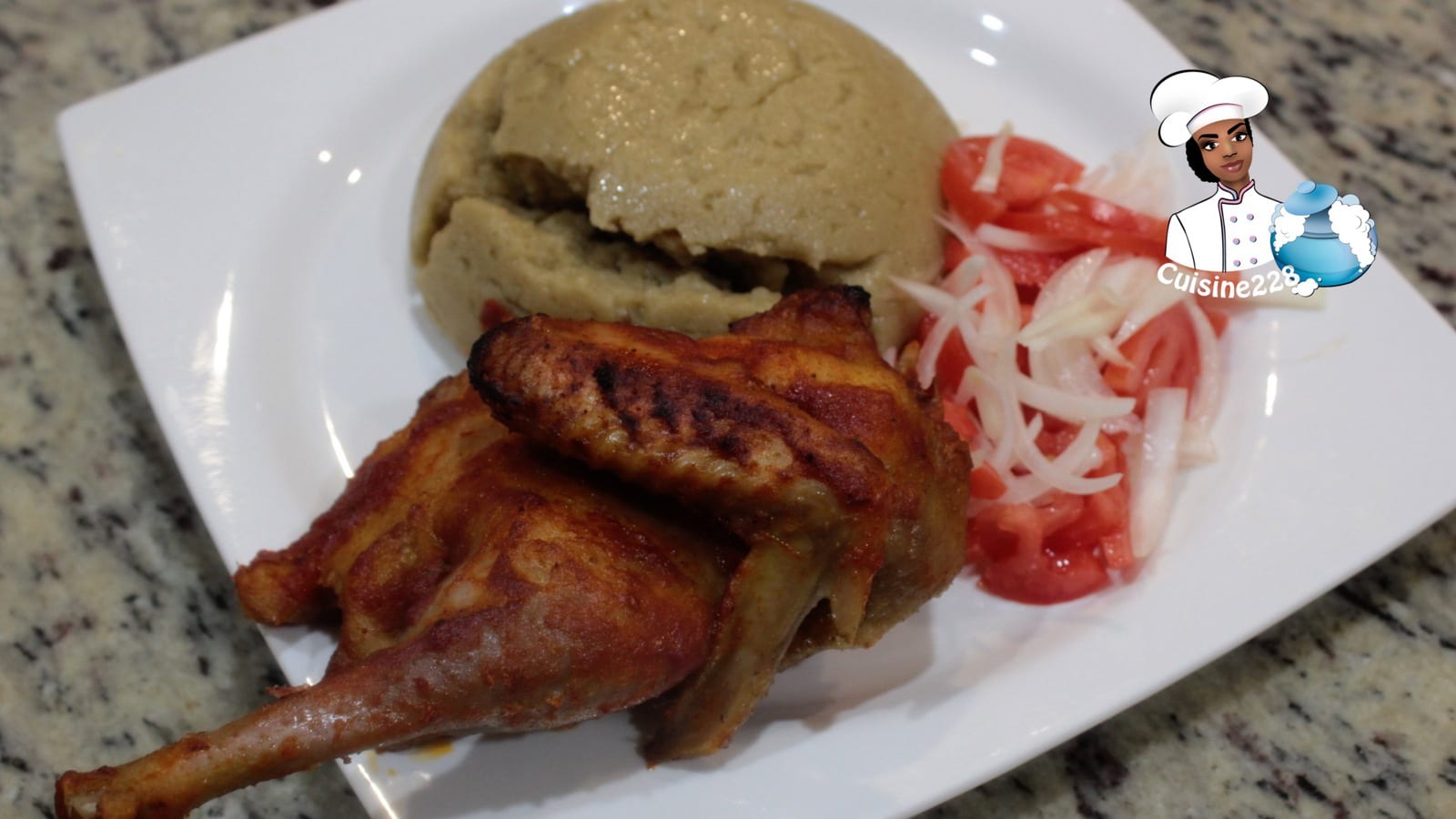
Serve Attieke with the tomato mixture and the chicken
6 red birds eye chillis adjust to suite your preferred heat level
8 cloves garlic
1/2 cup extra virgin olive oil
3 tbsp red wine vinegar
1/2 tsp smoked paprika
2 tsp salt
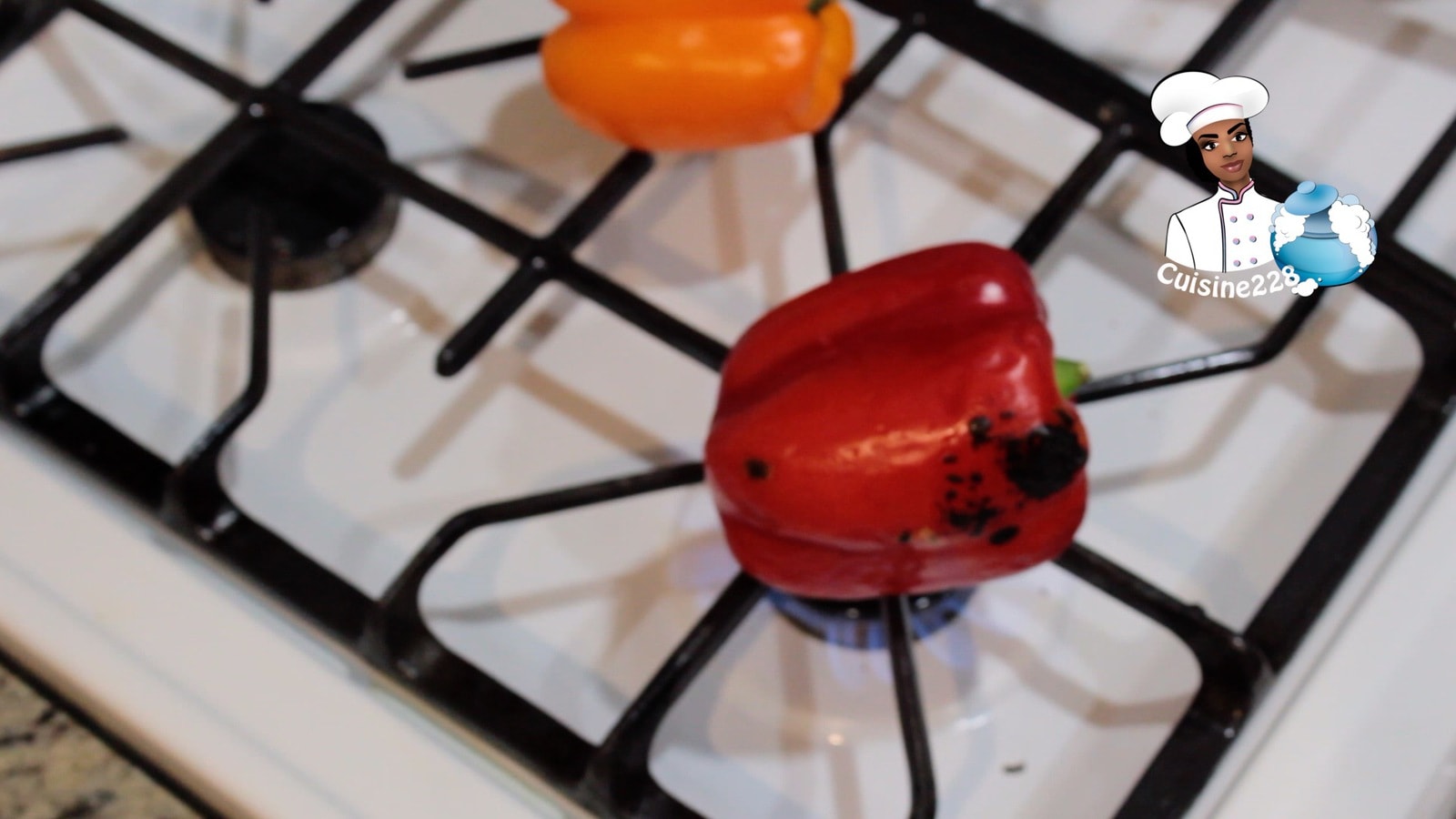
Lightly char the red bell pepper on an open flame, or under a broiler
Remove the charred skin
Blend red bell peppers, chili, garlic, olive oil, red wine vinegar, smoked paprika, and salt. I like my peri peri sauce slightly chunky, but you may blend until its smooth.
Transfer the sauce to a medium saucepanand simmer slowly for 20-30 minutes.
Mix the chicken pieces and half the marinade and leave to marinate for at least an hour but overnight will give you a great flavor.
Place chicken on the grill and grill for about 10-15 minutes an each side you may need to turn the chicken occasionally on each side until it is cooked all the way. Remember to brush the chicken with the marinade
Or Pre-heat the oven to 200°C/390ºF
Lay the chicken out in a baking dish, sprinkle over the salt and cook in the oven for 45 minutes.
Carefully baste the chicken with the pan juices and served sprinkled with fresh parsley.
Ha – it depends on your fish. If you ever go on a fishing trip and you get on hand on son fresh fish, please add some salt and fry it. You don’t need anything extra. I grow up at Kpeme (on a Togolese coast), my dad is a boat pilot so he used to bring fresh fish at home all the time. I miss it so badly!!!
Well, if you can only get your hands on a frozen fish, you need to work a little more. You need to season before you fry it. I usually use garlic, ginger, Salt, Red sweet pepper, Cayenne pepper, and pepper. The All-purpose flour is to help the fish not stick to the pan. The fried fish with flour is beautiful golden crust and juicy flesh inside.
Clean one fish at a time. Keep the remaining fishes cold (in a cooler or a cold environment) if you are frying more than 1 fish.
Hold the fish firmly by the head and scrape the scales off the tail towards the gills with a butter knife or scaling tool.
Keep the blows of your knife short and fast. Avoid pressing too hard and slashing the fish, remember we are trying to remove the scales not cut into the fish.
Be careful and work around the fins because they can sting or pierce the skin.
Be sure to remove all scales from both sides, around the pectoral and dorsal fins, and up to the throat of the fish.
Rinse fish with high-pressure water to remove loose scales
You start the evisceration process by forcing the knife through the body part between the pelvic fins and to the base of the lower jaw and remove the guts. Clean the inside of the head of the fish.
Cut off the fins of the fish
Once the attachments are cut, you can remove the gills easily. Now wash the fish and rinse off all the blood and scale with cold water.
1 whole fish, white-fleshed, approx. 2–3 lbs.
⅓ Cup All-purpose flour
1 Tsp garlic
½ Tsp ginger
¼ teaspoon Salt
½ Red sweet pepper
½ tsp Cayenne pepper
Salt and pepper to taste
Oil for deep frying
Mix All-purpose flour, garlic, ginger, Salt, Red sweet pepper, Cayenne pepper, and pepper. Set aside.
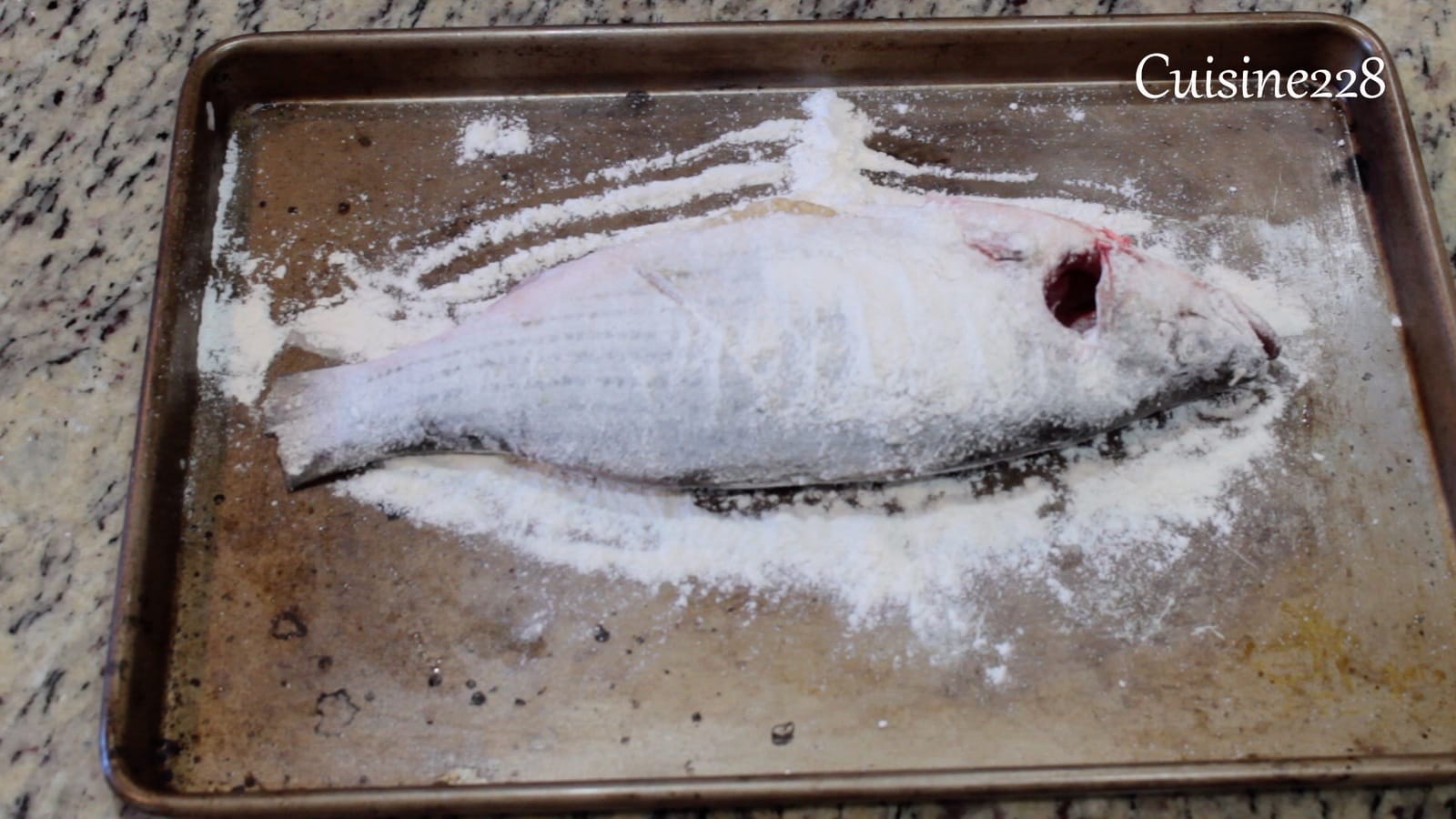
Pat the fish dry with paper towels – If the fish is big, make a few slits on both sides – season the fish with the mixture. Shaking off excess flour is important for crispy skin because otherwise, the excess flour crisps but then falls off when flipped. Also, excess flour burns in the pan and you get black bits on the fish.
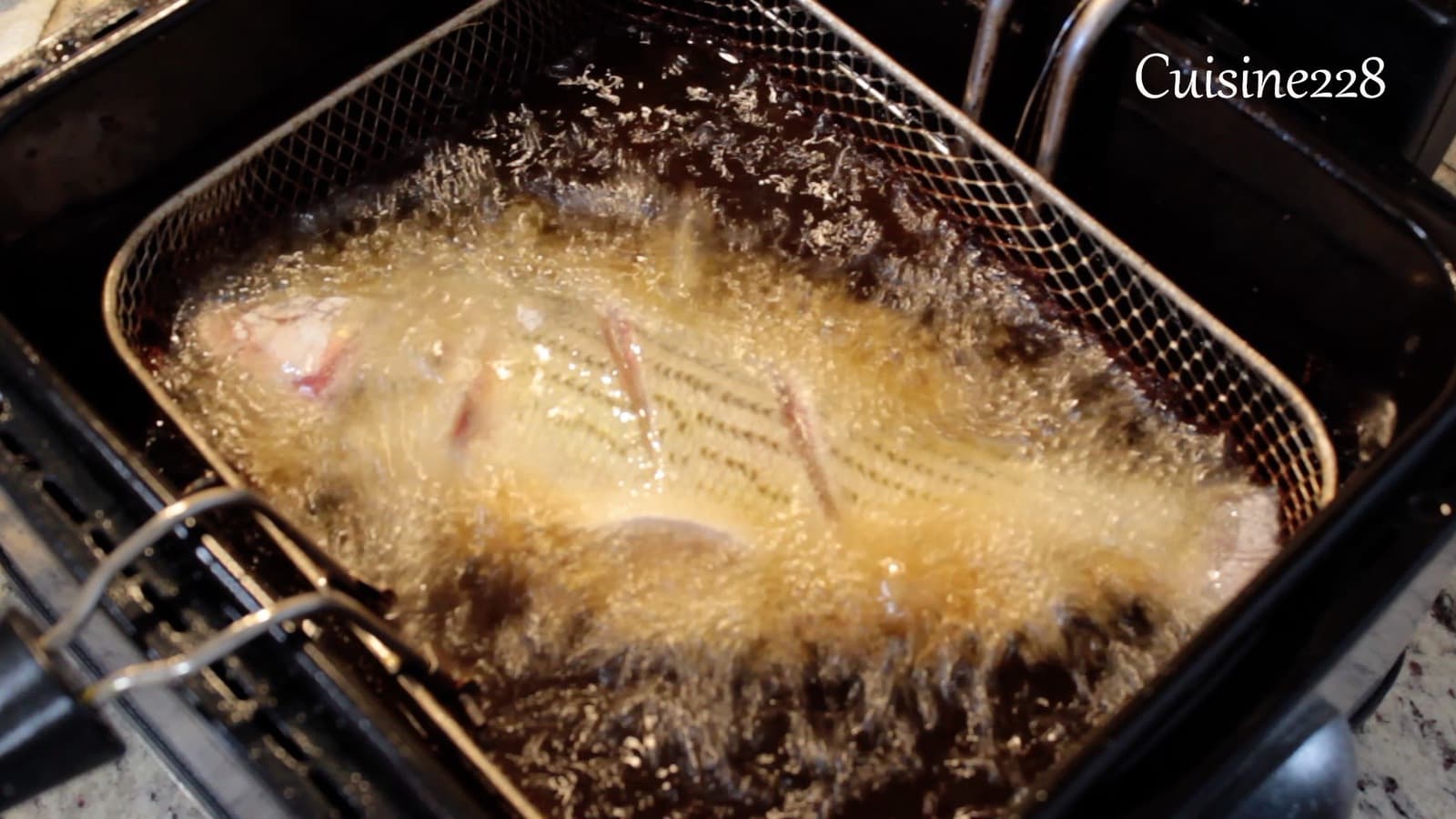
Set a deep-fry thermometer in a large, heavy pot. Add the oil and heat to 350°F. Add one or both fish (as many as you can fit without crowding), and fry, turning once, until golden brown on both sides, 4–6 minutes total. Do not move the fish until the underside is golden brown or the skin will stick to the pot.
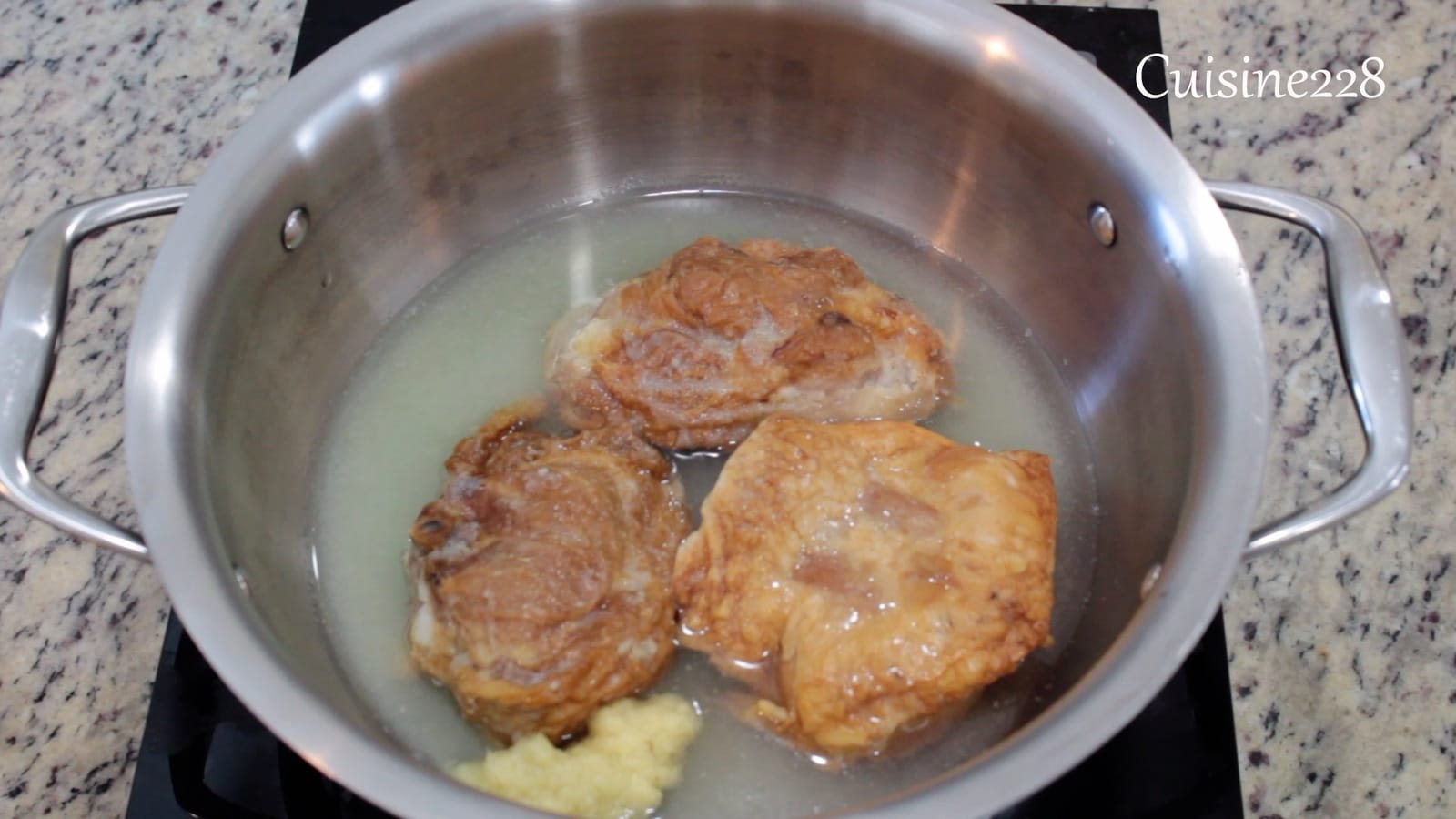
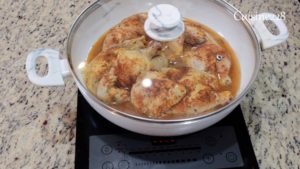
Clean and cut the chicken in half, marinate with the spices, cube and salted to taste. Cook for 1 hour (30 minutes on each side) – Add enough water to cover the chicken at all time.
Once chicken is cooked, remove fromthe broth and set aside
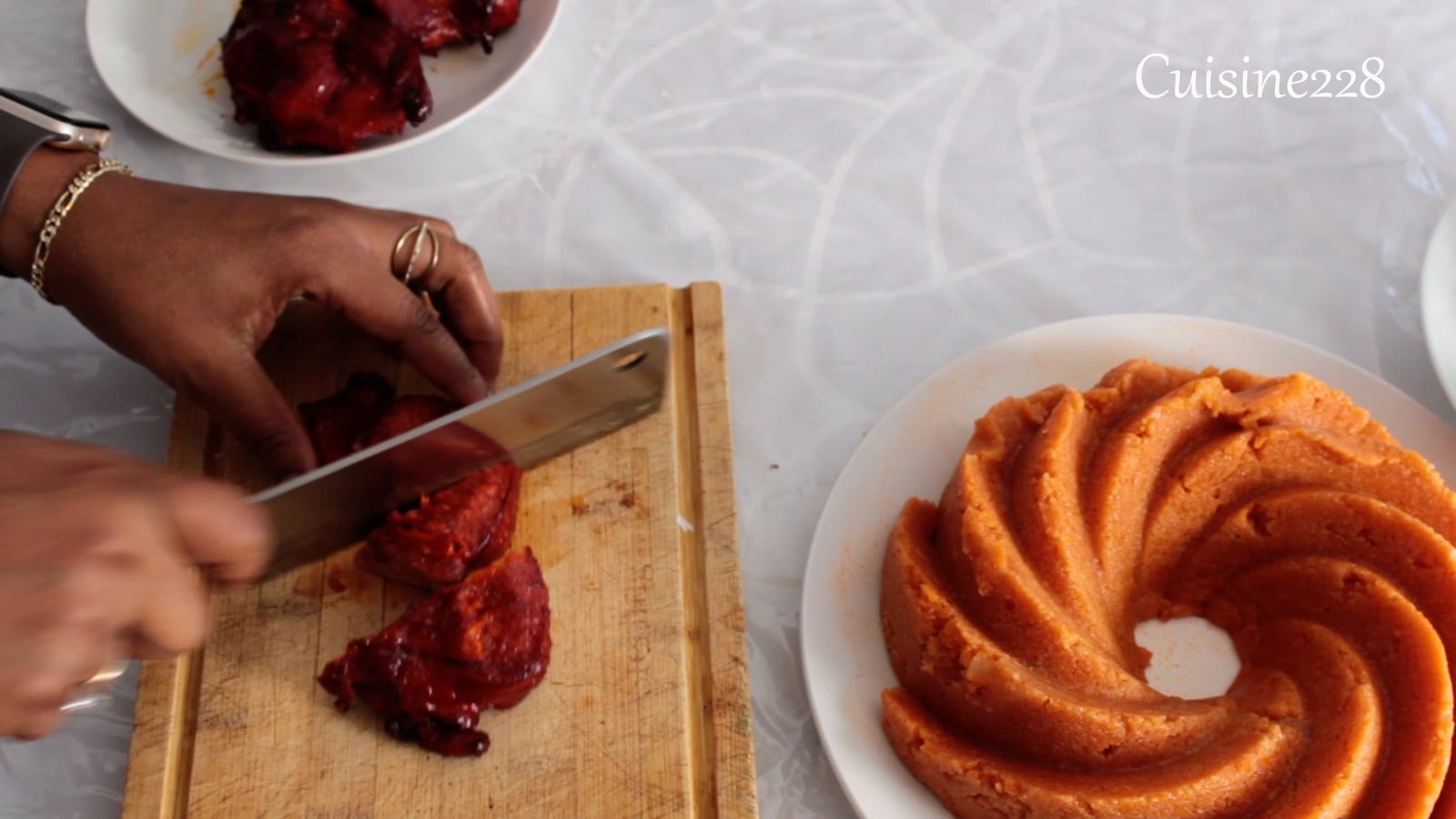
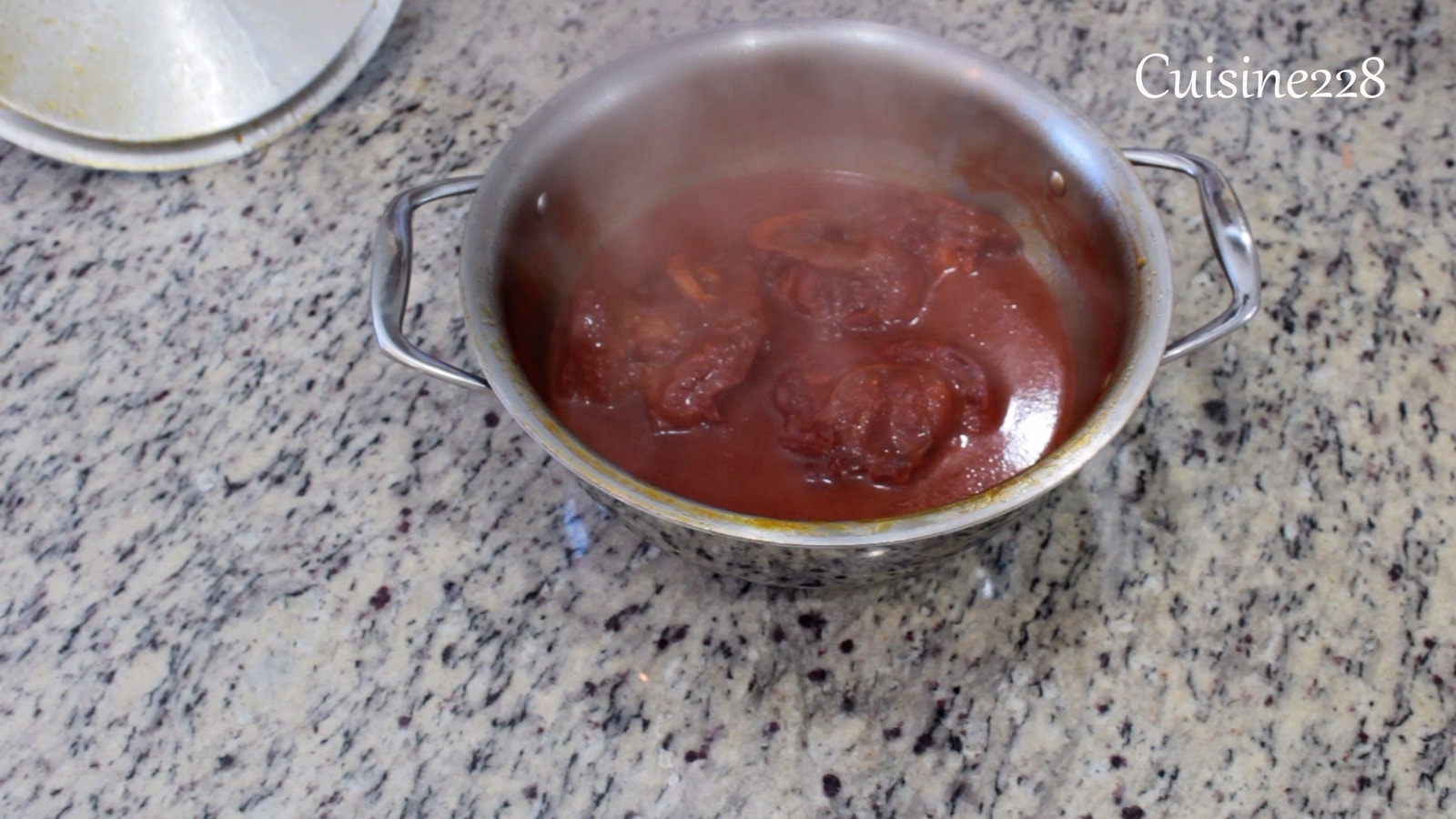
Mix the tomato paste, 1 tomato and 1/2 onion , 2 tablespoons chili puree, 1 cup chicken broth and salt.
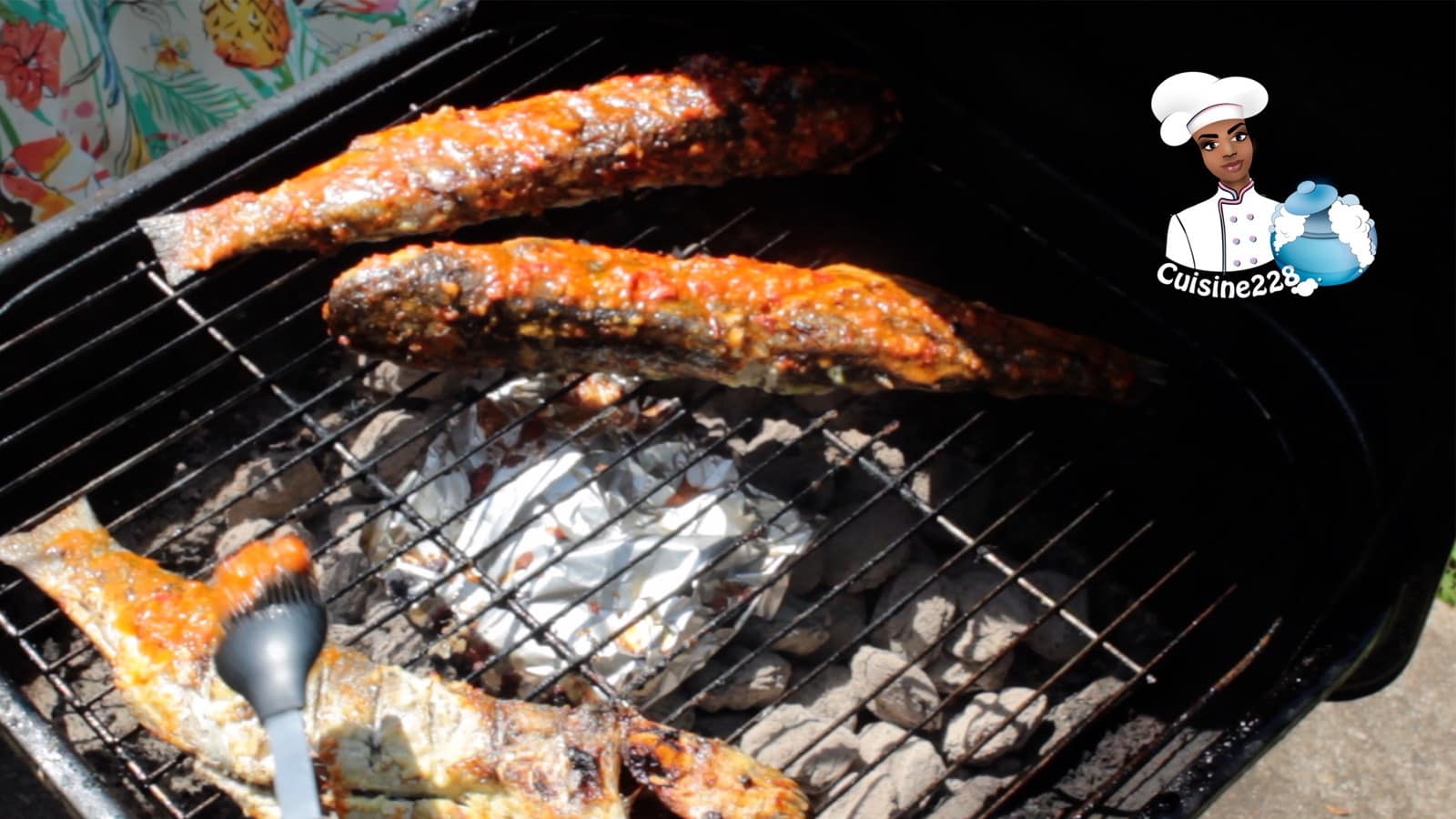
Brush the chicken with the tomato mixture.
Faites-le braiser sur le barbecue en prenant soin de retourner les morceaux de temps en temps pour ne pas les brûler.
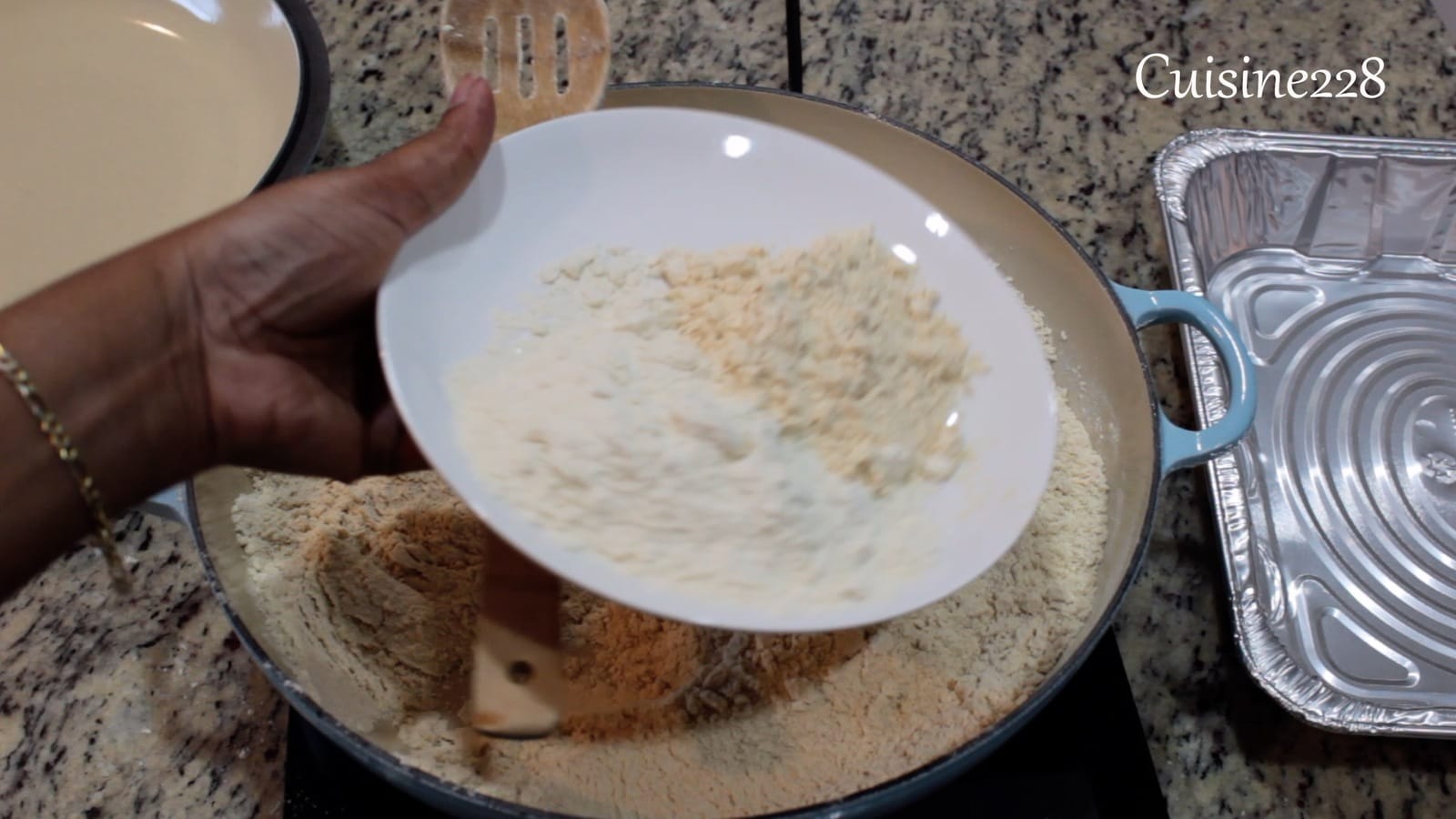
While the chicken is cooking,add you flour to a dry pot .
Grill it by turning regularly on a medium heat while turning with a spatula for 20 minutes, then reserve.
When the flour takes a “café au lait” color, remove it from the heat and reserve it.
-If you are roasting too much flour, it does not matter because you can keep it in an airtight container.-
Remove excess oil
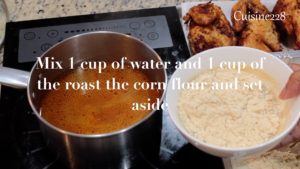
Mix 1 cup of water and 1 cup of the roast the corn flour and set aside.
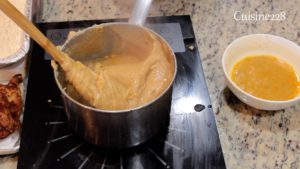
A soon as the water start boiling add the corn and water mixture. Add the salt.
When the liquid start to boil reserve the third.
Add 2 cups of the roast the corn flour and mix thoroughly
If it is not soft enough for you add the broth on the side.
Mix and cover for a 7 min
Cut the fresh tomato, the African pepper, the fresh onion into thin cubes.
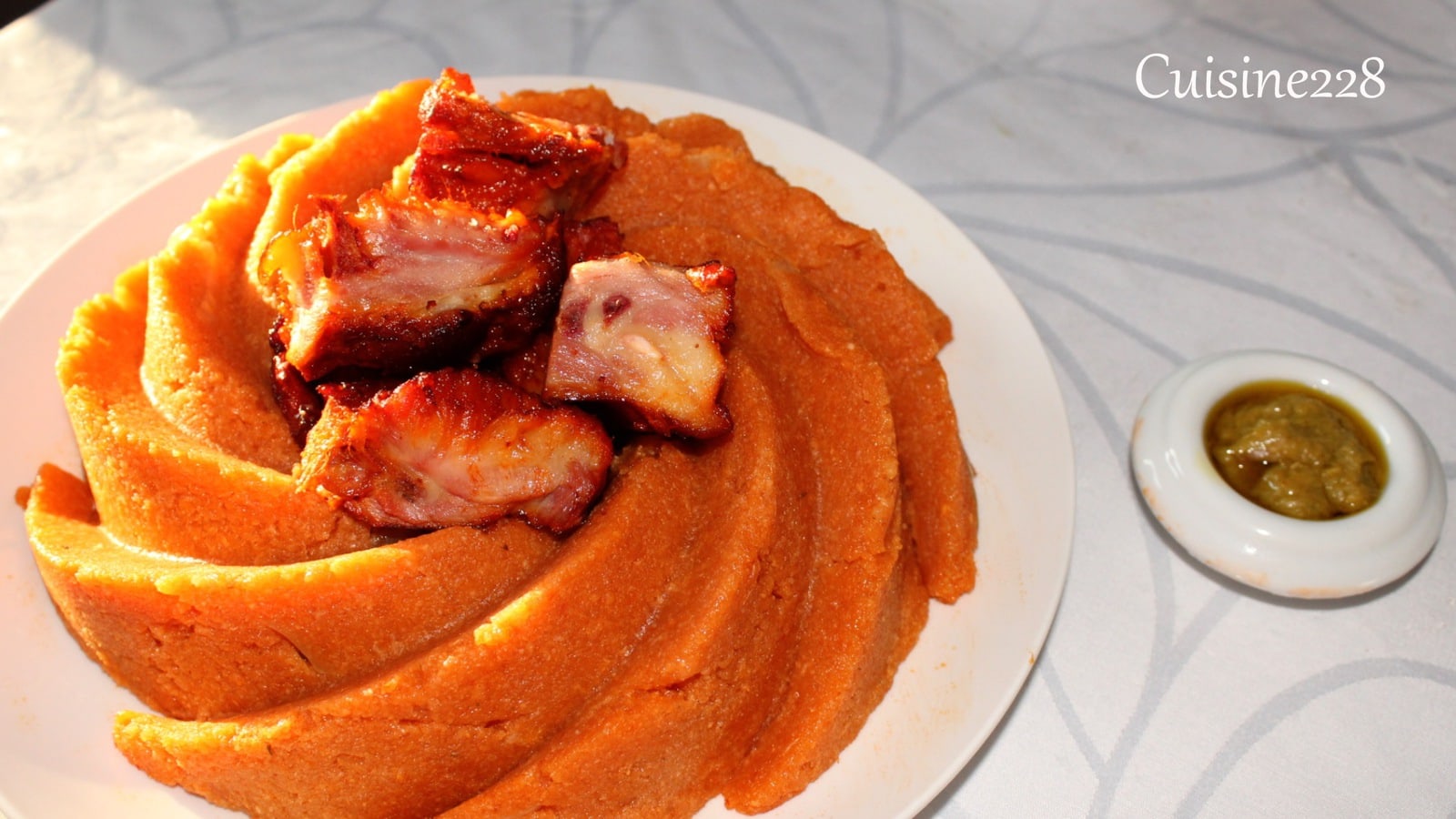
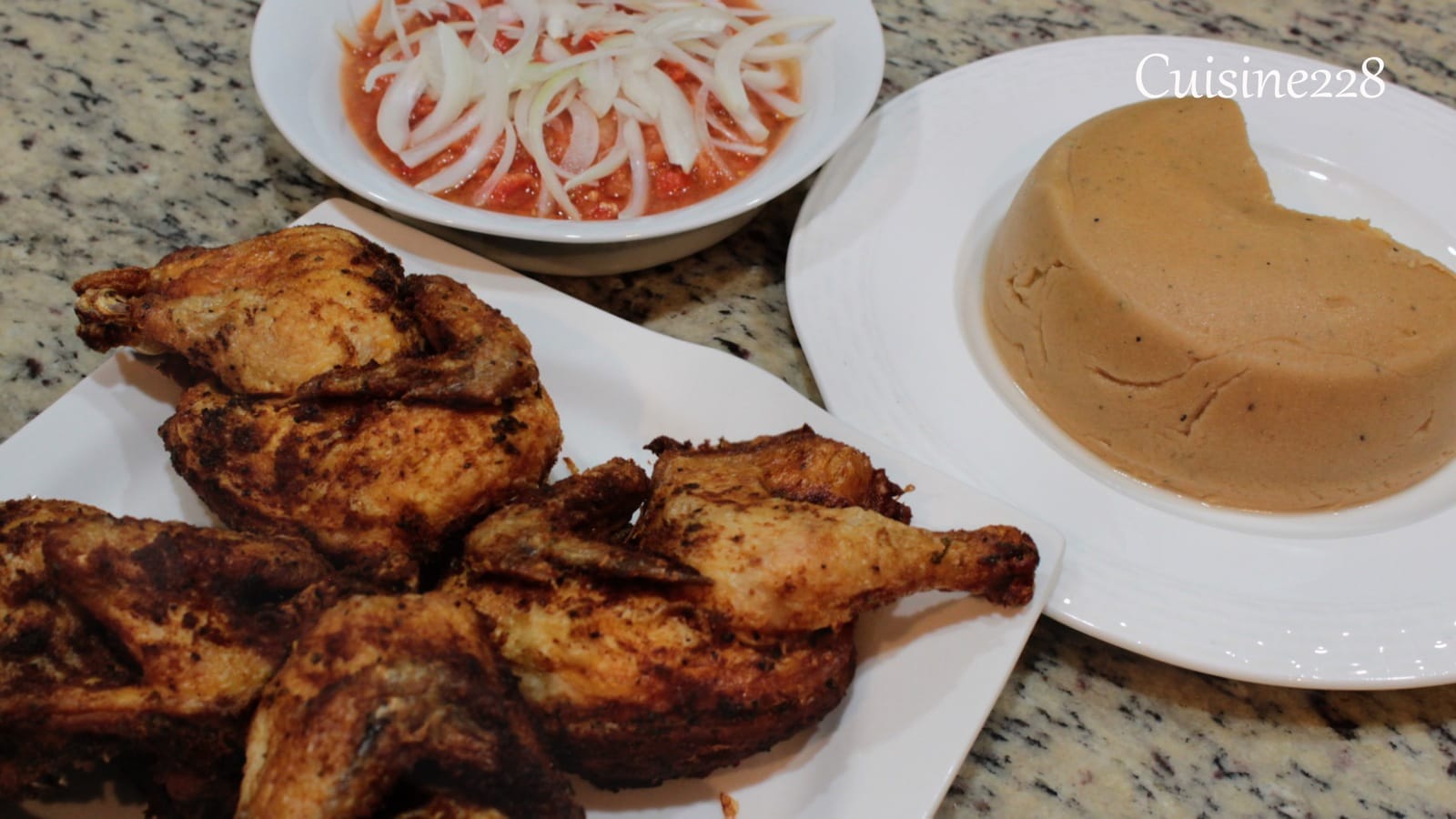
Serve the Djinkoumè with the tomato mixture and fried chicken.
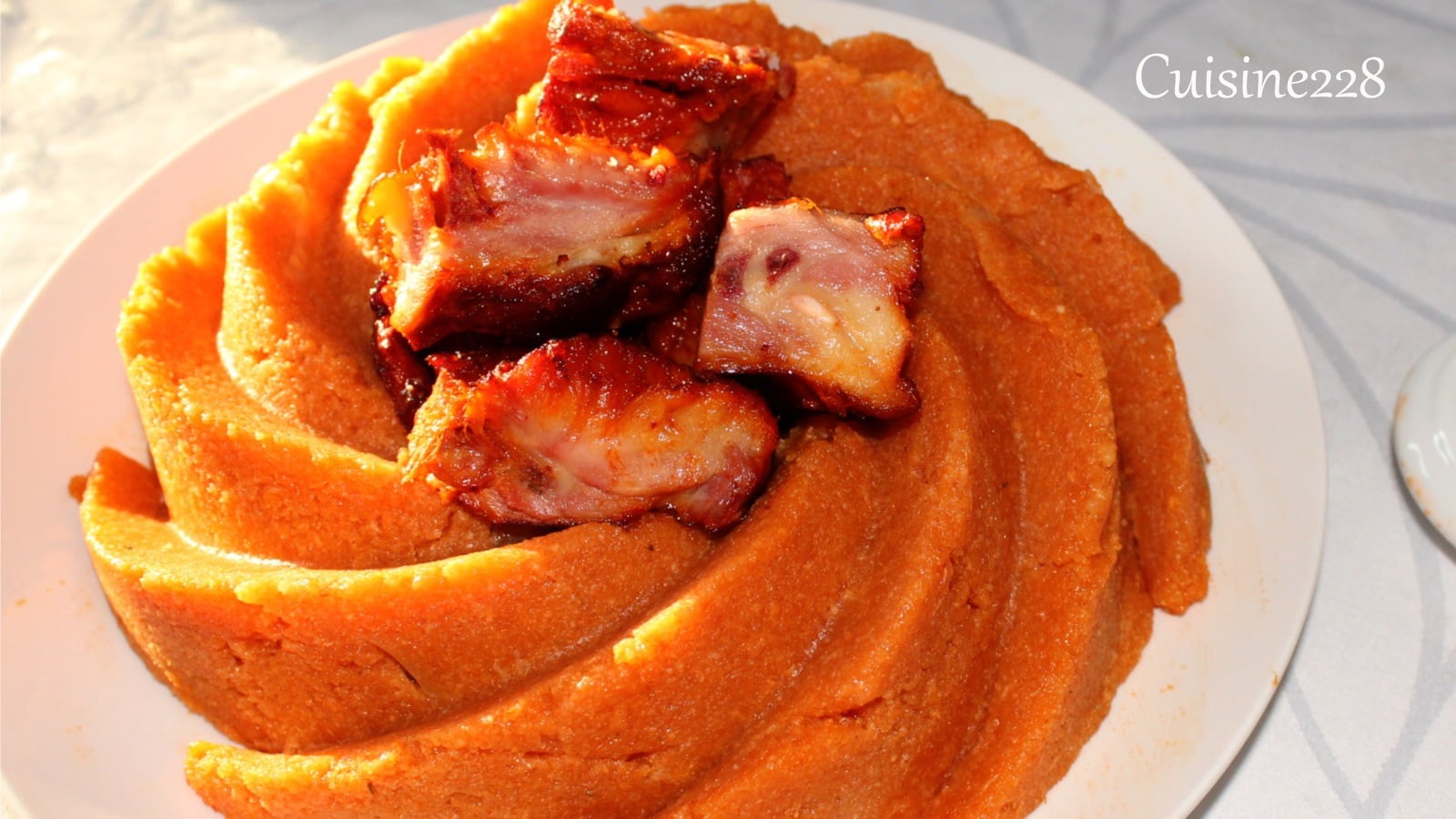
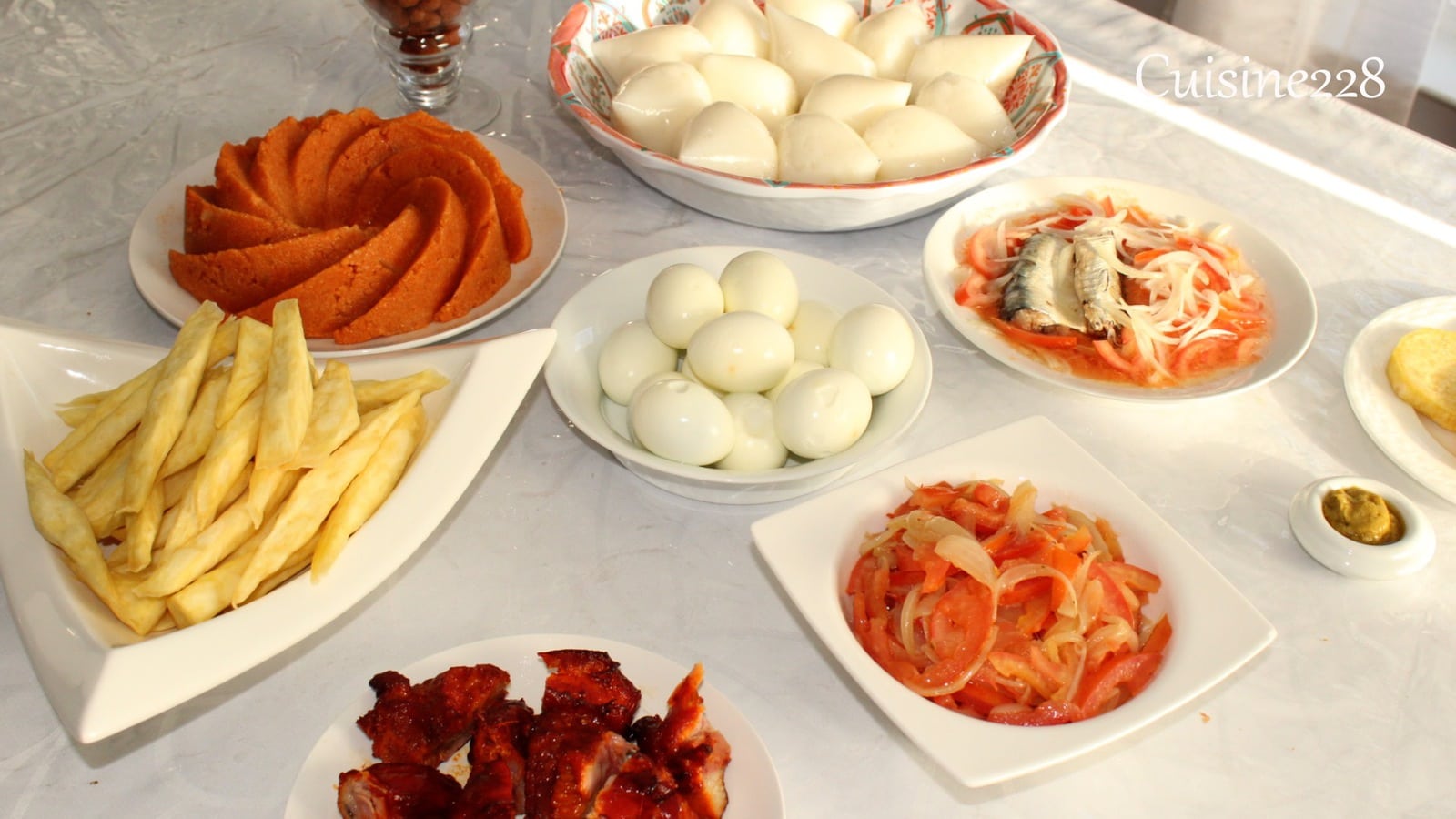
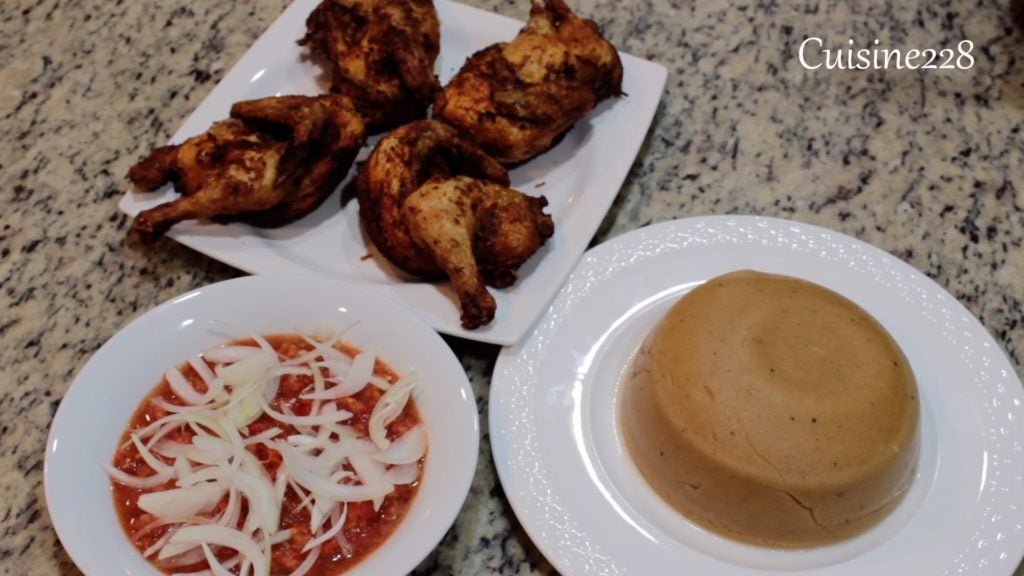
Djinkoumè (Amiwo) with chicken and Yebessessi (Moyo). This is a very common meal in Togo and Benin. It’s the mixture of sauce and roasted corn. Typically, the corn is roasted prior to grounding it, but since i live abroad, it easier to slowly toast the corn flour. The Djinkoumè in Togo or Amiwo in Benin is served with braised or fried meat on the side of Yebessessi or M’gbagba (or dja).
Fried chicken
2 small Chickens
1 tablespoon paprika
1 tablespoon ginger
1/2 teaspoon chilli
3 tablespoon garlic
1 teaspoon Black pepper
1 teaspoon parsley
2 tablespoon salt
2 tablespoon cube
Amiwo or djinkoumè
8 cups corn flour
Salt to taste
1 tablespoon oil
1 tablespoon cube
Yebessessi or moyo
2 cups tomato
1/2 onion
4 peppers
1 tablespoon cube
Salt to taste
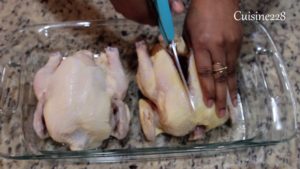
Clean your chicken and cut in half
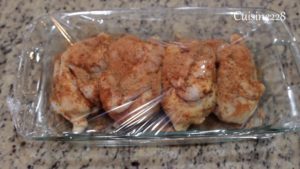
Season your meat
Refrigerate at least overnight
Boil the chicken until tender
While the chicken is cooking, add you flour to a dry pot .
Grill it by turning regularly on a medium heat while turning with a spatula for 20 minutes, then reserve.
When the flour takes a “café au lait” color, remove it from the heat and reserve it.
-If you are roasting too much flour, it does not matter because you can keep it in an airtight container.-
Back to the chicken: Fry until golden on both side
Add 4 cups water (including the chicken stock) to a pan and put on a medium heat.
Mix 1 cup of water and 1 cup of the roast the corn flour and set aside.
A soon as the water start boiling add the corn and water mixture. Add the salt, 1 tablespoon oil and 1 tablespoon cube.
When the liquid start to boil reserve the third.
Add 2 cups of the roast the corn flour and mix thoroughly
If it is not soft enough for you add the broth on the side.
Mix and cover for a 7 min
For the Yebessessi roughly puree all the ingredients together.
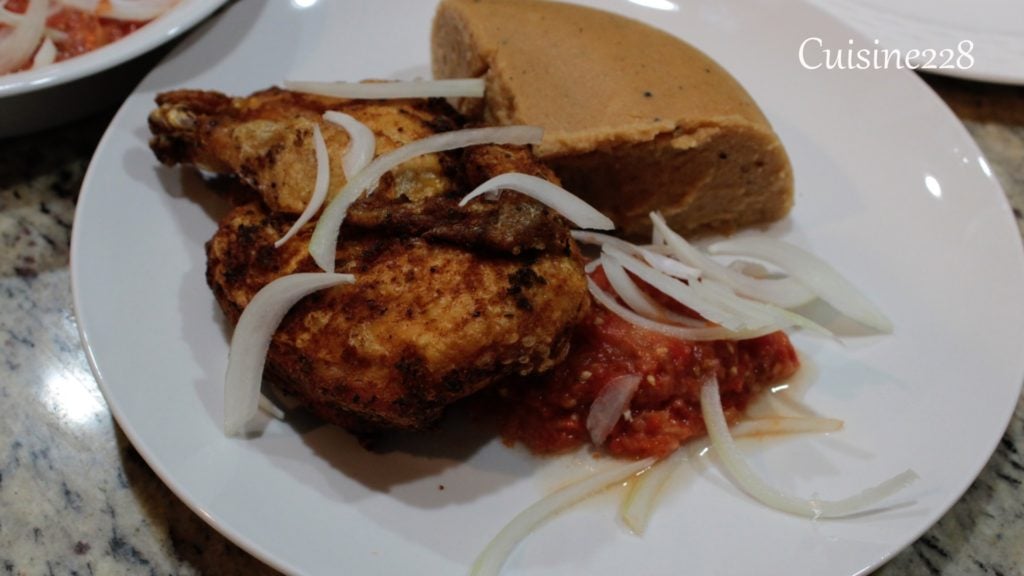
Serve the Djinkoumè with the Yebessessi and fried chicken.